

Anthea Jeffery
Dr Anthea Jeffery holds law degrees from Wits, Cambridge and London universities, and is the Head of Policy Research at the IRR. She has authored 12 books, including Countdown to Socialism - The National Democratic Revolution in South Africa since 1994, People’s War: New Light on the Struggle for South Africa and BEE: Helping or Hurting? She has also written extensively on property rights, land reform, the mining sector, the proposed National Health Insurance (NHI) system, and a growth-focused alternative to BEE.
Articles By This Author

Accelerating – or deterring – off-shore oil and gas production?
The South African state’s crude oil reserves have dropped to some 8 million barrels (enough to meet the country’s fuel needs for just 13 days), the country’s refining capacity has halved and conflict in the Middle East is badly disrupting global oil supplies.

Tribute to Bill Johnson (1943 – 2026)
RW Johnson, “Bill” to his many friends and relations, was educated at Natal University and thereafter, as a Rhodes Scholar, at Oxford University. He was a fellow in politics at Magdalen College, Oxford, for 26 years and remained an emeritus fellow. Bill was an exceptional academic, journalist and author, with the breadth of knowledge and the acumen to probe well below the surface of events – and the courage to keep challenging accepted wisdoms.

The risks in proposed water-use rules
In 1998 the ANC took custodianship of all water resources under the National Water Act but denied this amounted to expropriation. Now, it plans to make race the dominant factor in water-use licensing and water allocation. Given past land reform failures, this could result in not redress but more assets “dying in the hands of the poor.”

Time to jettison the “net zero” illusion
Following last week’s reshuffle of the GNU cabinet, South Africa has a new minister of forestry, fisheries and the environment, the DA’s David Maynier. The country also needs a new approach to climate change: one that is far more realistic than the “net zero” illusion and helps achieve the GNU’s promise of growth, jobs and renewed industrialisation.
Alternative bill, released today, to make mining “investable” again
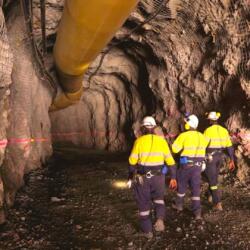
South Africa’s current and proposed mining policies have made it the fifth least attractive country for mining investment, according to the “Policy Perceptions Index” (“PPI”)
What is to be done about the PIE Act?
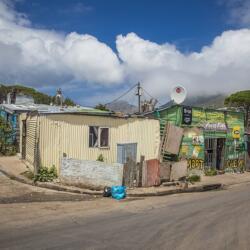
The housing minister’s proposed amendment bill is no solution to the problems posed by the Prevention of Illegal Eviction from and Unlawful Occupation of Land Act of 1998 (“the PIE Act”), as outlined in these pages last week. How then should PIE be changed?
Will the PIE Amendment Bill solve land invasions?
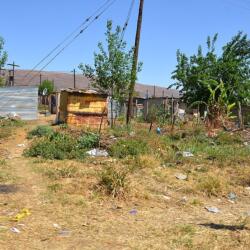
The government claims that an escalating crisis of property hijackings and unlawful land invasions – long encouraged by the PIE Act – will be curtailed by the PIE Amendment Bill, which creates a better “balance.” This claim is false.
To fix SA mining, start by fixing the law
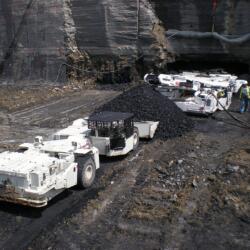
South Africa’s mining industry is becoming “uninvestable.” The country has among the most valuable mineral endowments in the world, but is nevertheless battling to attract new investment – particularly for the exploration vital to the industry’s future.
The BEE billionaires who should “hang their heads in shame”
In mid-May 2026 President Cyril Ramaphosa told Parliament that critics of Black Economic Empowerment (BEE) “should hang their heads in shame”. Though they constantly claimed that BEE was “a holdback for economic growth,” the mining industry showed this to be “false” and “just a slogan.”

The unconstitutionality – and economic folly – of Treasury’s proposed exchange control rules
The Treasury wants to replace its 1961 exchange control rules with new regulations to control capital flows. Its primary objective, however, is to bring bitcoin and other crypto currencies under state control.