There are a few big things about regime change. It is far from rare, is very often chaotic, it usually has a big impact and is very difficult to predict.
The adage laid down by the late economist Rudiger Dornbusch applies as much to regime change as it does to other areas. In economics, Dornbusch pointed out, “things take longer to happen than you think they will, and then they happen faster than you thought they could.”
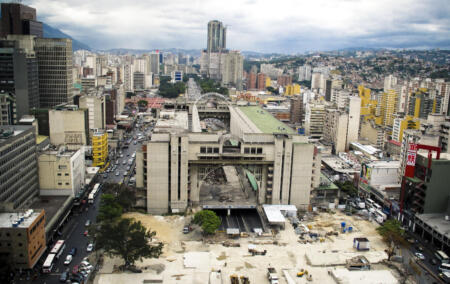
That was certainly the case early on Sunday morning in Caracas. With an economy in free fall, massive hunger, mass repression and a history of stolen elections, Venezuela has been in line for internally induced regime change for years.
For Trump, Venezuela provided the perfect opportunity to begin the clean up of the region of virulently anti-US governments and drug traffickers. The legal niceties about sovereignty and the UN Charter simply do not matter to this Administration.
Iran has also been long in line for regime change, but through heavy repression and the ability to retain the loyalty of their security forces, the Mullahs have defied the odds, so far. But the economy is now under severe strain with exchange rate pressures, high inflation, and water shortages. Since the late 1990s there have been many mass protests against the regime in Iran, but it has been able to crack down with considerable violence.
This time just might be different. After more than ten days of sometimes violent street protests in many cities, the Iranian regime still cannot restore order.
US President Donald Trump’s warning about the US being “locked and loaded” if Iran’s brutality toward protestors continues, might show a higher chance of regime change than ever before. But if the US acts on its multiple threats toward Latin American countries and Iran, it will be highly stretched.
The most difficult part of any regime change is actually running a country after the overthrow of the old regime. The frequent result of regime change, after the fall of a dictatorship, is civil war. That was the result in Iraq, where the fall of Saddam Hussein sparked a Shia-Sunni war and the rise of the Islamic State. After the end of the Cold War, Yugoslavia broke apart and there was a long civil war.
There are also great successes that come about as a result of regime change. In defeating Nazi Germany and Imperial Japan the Allied Powers brought about constitutional democracies and vigorous economies.
The big question hanging over Venezuela is how the US will ensure an economic recovery and transition to elections. Trump said the US would “run the country until such time as we do a safe, proper and judicious transition.”
For the time being elements of the Maduro regime remain in power in Venezuela, and seem to have reached some sort of understanding with the US. That presents dangers in itself as this might allow the Chavistas to consolidate their position in a post-Maduro dispensation. Trump has spoken more about the return of US oil companies than steps toward a democratic transition, further raising uncertainty.
It is not going to be an easy transition. Oil prices are relatively low, much of Venezuela’s petroleum production infrastructure is in ruins and output is a small fraction of what it was when Hugo Chavez, Maduro’s predecessor came to power in 1999.
Added to this is what Trump’s former National Security Advisor, John Bolton, calls Trump’s “indecisiveness and incoherence,” which he says could result in chaos in Venezuela.
The fall of the Mullahs in Iran after nearly 50 years in which no opposition has been allowed to develop and all key posts are controlled by Islamists and the Republican Guard, mean even deeper certainty and greater risks.
Another big thing about regime change is there are often great waves of change that can take decades to work themselves through. This was the case with the collapse of the Soviet Union and its Warsaw Pact allies.
Much of the reason for the timing of the release of Nelson Mandela and the move toward a settlement in SA was due to the fall of the Berlin Wall. In the absence of a threat from international communism, SA would have faced enormous western and global pressure over its apartheid policies, had it not reformed.
The former Chinese Premier, Zhou Enlai is reputed to have told French guests in Shanghai in 1972 that it was still “to early to tell,” about the impact of the French Revolution. That may well be true, although some accounts are that he was in fact talking about the impact of the 1968 Paris student revolt. Nevertheless, the point remains that one never can fully know ahead of time about the full consequences of changes in regime.
But regime change tends to have its own momentum.
The “Arab Spring” was sparked by a street seller in Tunis setting himself on fire after police harassment. The reverberations included the fall of the Tunisian government, the overthrow of Libyan leader Muammar Gaddafi and continuing civil war, the overthrow of Egyptian President Hosni Mubarak, the Syrian civil war and, ultimately the fall of the Assad regime.
The reverberations from the fall of Maduro are profound. Venezuela will no longer be able to provide facilities for Russia, China and Iran. With the end of its Venezuelan fuel subsidy, Cuba might now be high on the list of countries where regime change is pending.
Maduro’s seizure is a full display of Trump’s “spheres of influence” view of the world outlined in the US National Security Strategy document released last year. That hardens the insistence that the US has freedom of action within its own hemisphere.
Although the US has not said it wishes to permanently occupy Venezuela, there are well founded concerns about what the Trump response would be to a Chinese invasion of Taiwan. It also means Trump could act on his threatened takeover of Greenland from Denmark. That would certainly split NATO.
Should the Mullahs fall there are bound to be shudders through much of central Asia and the Middle East. Islamic fundamentalists and Hamas would lose a key sponsor, and Saudi Arabia and Israel would have greater sway in the region.
In coming days SA is due to host “Will for Peace 2026,” a naval exercise that will involve Chinese, Iranian, and Russian vessels. That is a big statement of where the ANC thinks our interests lie.
For South Africa, the seizure of Maduro, if combined with a collapse of the Islamic Republic in Iran, and the end of a socialist Cuba, would be a cause of deep mourning. These three countries are part of South Africa’s ring of fellow revolutionary countries. With a smaller group of revolutionary friends, SA might move a lot closer to Russia and China, and pay the price the US will impose.
The tenets of our foreign policy are slowly unwinding.
[Image: https://commons.wikimedia.org/wiki/File:Caracas_city.jpg]
The views of the writer are not necessarily the views of the Daily Friend or the IRR
If you like what you have just read, support the Daily Friend