

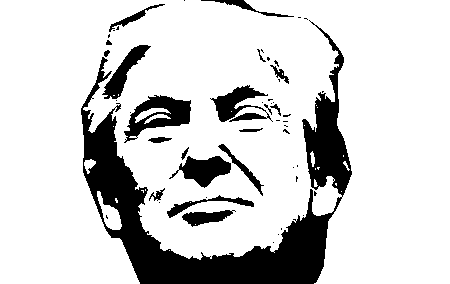
Other governments have been far more effective at understanding and responding to US President Trump. We underappreciate how ‘what-should-be’ politicking blocks solutions.
Spewing facts to dispute allegations of a genocide of white farmers in SA was an unhelpful response, as those claims were mostly a gambit to spur negotiations. Trump wanted to prod our government to engage without provoking a lasting inter-country rift.
His using the term “genocide” coincided with SA initiating a charge of genocide against Israel at the International Court of Justice. The message: if you cause trouble for me, I’ll cause trouble for you. The ANC’s embrace of Iran and Hamas has greatly corroded already strained SA-US relations.
The political value of SA for Trump comes from his linking our ANC-provoked economic woes to ideological biases shared with the Democrats. The effectiveness of both parties has suffered very substantially from overreliance on oppressor-versus-oppressed narratives to justify assorted varieties of patronage-inducing favouritism. Many Democrats now want their party to distance itself from so-called “woke” positions.
Median 25-year-old
A recent opinion piece found on the front page of the Wall Street Journal, “Wall Street Misprices South Africa’s Collapse,” highlighted the dangers in using capital market metrics to assess SA’s prospects. SA is the only country where the median 25-year-old has been condemned to perpetual poverty. This reflects our combining the world’s most severe youth unemployment crisis with the highest income inequality.
The ANC and the Democrats have shamelessly overindulged ‘what-ought-to-be’ politics. Those who counter their ideologically charged flourishes with evidence of what is working elsewhere, are sometimes cancelled but far more frequently ignored. Student protesters of the 1960s launched “the long march through the institutions” strategy of having ardent leftists dominate the curatorship of information. Their success is evidenced by how many leading universities and media organisations now discriminate against hiring those with centrist, let alone right-leaning views. The ANC is very much on the same page.
After more than a half-century of remarkable gains by leftists at indoctrinating students and shaping news by prioritising an oppression-framed narrative, a firm backlash has finally taken hold in the US. Trump has ridden this wave while seeking to expand it. As SA is now seen by many, if not most, lawmakers in Washington as drifting toward “failed state” status, it is valuable to Trump to highlight SA’s idealism-induced hardships.
Today’s global economy continues to expand prosperity − albeit unevenly and inconsistently. Countries that are well governed and that carve out niches in today’s rapidly evolving global economy continue to enjoy rising living standards. Conversely, the ANC’s economic stewardship is easily among the world’s worst and the party shows no interest in adopting the global integration blueprints common among successful economies.
Not be able to subsidise
Free trade should benefit all countries, yet for this to work governments must not be able to subsidise companies and sectors in order to drive overseas competitors out of business. China does this on a grand scale.
Trump’s primary big-picture insight leading up to his being elected in 2016 was that China was exploiting the global trading system. Most countries cheat the system to some modest degree whereas China’s domination of global manufacturing has benefited from, and then levered, much subterfuge.
Central to today’s global trading system is the understanding that countries shouldn’t be able to “dump” goods on the global market at reduced prices to undermine foreign competitors. China has developed subsidising and dumping into a science. Despite being the world’s largest net buyer of goods, by far, the US can’t very effectively combat this on its own. However, by leveraging the US’s position as the world’s largest consumer market, Trump seeks to rejig the world trading system in ways which will make it easier for him to gain the cooperation of other countries to counter China’s predatory trade practices.
Left-leaning information curators who are wedded to ‘what-should-be’ politics won’t acknowledge that there are no nice ways to do this. Similarly minded voters, and the people they elect, are critics, not problem-solving builders.
Democrats were appalled that Trump threatened and insulted the US’s NATO allies. His domestic political foes were then quieted when he exacted huge concessions from Europeans on key defence and now trade issues.
Calling tariffs a tax
The state of politics in the US precludes Trump and his lieutenants from calling tariffs a tax. Rather, much doublespeak is offered.
Over 160 countries use a value-added tax (VAT) but the US isn’t among them. This creates a trade asymmetry. A 2017 Mercatus Center study estimated VAT countries gain a 15–20% price advantage on exports to the US. The US charging a 15% tariff roughly offsets its being disadvantaged for not having a national VAT. There are other legitimate reasons for the US raising its tariffs but, with China dominating global manufacturing by combining hyper-competitiveness and predatory trade practices, and the US consuming and borrowing excessively, this is quite a good one.
None of SA’s political, business or civic leaders could produce a compelling trade proposal to present to the US. Meanwhile, all of today’s high growth countries have found ways to compete successfully within the global economy. Each of them had to transcend major challenges.
ANC comrades are opposed to competing on the global stage, in part due to Marxist influences, yet the larger consideration is that the mortar holding the ANC edifice together is patronage; international competitiveness and patronage are incompatible. This doesn’t, however, explain why our CEOs and other non-ANC leaders can’t articulate a compelling engagement arrangement between SA and the US.
One prospective explanation is our being the country most distant from a top-three economy. However, it seems rather that our geographic isolation has compounded the negative effects of our having so broadly embraced the ‘what-should-be’ thinking that was spurred during our 1990s transition. Our national psyche was not going to be unaffected by the praise and pageantry which persisted for nearly a generation.
Understanding Trump and his appeal is tricky but, here in SA, we should begin by appreciating that the Democrats, which like the ANC, practice ‘what-should-be’ politics, are polling at their lowest approval ratings ever.
[Image: Grégory ROOSE from Pixabay]
The views of the writer are not necessarily the views of the Daily Friend or the IRR.
If you like what you have just read, support the Daily Friend