

There is a clear link between democracy and development across Africa.
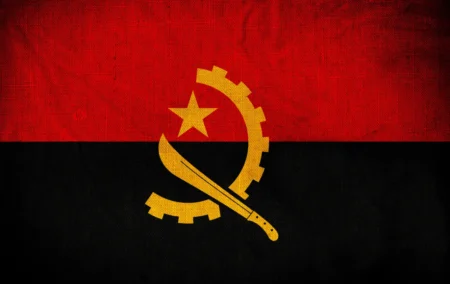
Those classified by Freedom House as having ‘free’ political systems in sub-Saharan Africa – Botswana, Cabo Verde, Ghana, Lesotho, Mauritius, Namibia, São Tomé and Principe, Seychelles, and South Africa (9) – enjoyed in 2024 an average per capita income of $5,988. The remainder, deemed ‘partly free’ (21) or ‘unfree’ (26), averaged a third of that. Angola, my own country, is firmly in the ‘not free’ category with a score of 28, where 100 is determined to be the most free. Angola rated 10 out of 40 on political freedoms and 18 out of 60 on civil liberties.
Democracy promotion and democratic consolidation in Africa are in the interests of African citizens, if not their elites.
Better politics produces better choices, since the political system is more competitive. Democracies in Africa are consistently, too, more open in terms of trade and have vastly better adherence to the rule of law. This encourages investment outside of natural resources, ensuring diversification and relative invulnerability to price volatility. This type of investment radically increases job opportunities, especially in the industrial and services sectors.
The extent of authoritarianism explains the negative relationship between business and government across Africa, summed up in the term ‘political economy’: the relationship between government economic policy choices and people, and how the state affects the market.
Across Africa, and especially in commodity producers such as Angola, the political economy is ‘rentier’, where the elites rely on extracting and sometimes extorting income from rents, usually from foreign entities, rather than developing through improving productive capacity and competitiveness. This small group competes for power and political survival through rent-seeking. Instead of being directed at addressing poverty and instilling the structural reforms required for growth, policy is incentivised to address short-term popular needs through subsidies. The elites prosper while the vast majority simply subsist.
Essentially, as Greg Mills notes in Estado Rico, Estado Pobre, the elites shape policy choices and practices in a manner that enriches themselves before all others.
This takes various forms.
This can happen through procurement contracts, known in South Africa as tenderpreneurship. Another means is in terms of import substitution, where high tariffs on foreign goods penalise the poor while ensuring a local elite gains an uncompetitive market share. Fixed exchange rates are another method where the difference between the government and the market rate creates the conditions for local arbitrage, essentially enabling elites to buy at one (fixed) rate and sell at another (market) price, while at the same time reducing the competitiveness of exports.
List is endless
The list is endless. In other cases, this can take the form of state intermediation in agriculture pricing while preventing exports, ensuring the price for the farmer is low.
The engineered failure of railways to drive road transport monopolies to fuel importers benefiting from the collapse of power grids is another, as is the political engineering around both the volume and the distribution of aid.
In the case of Angola, this rentier political economy is focused on oil.
This century, Angola has exported an average of 500 million barrels of oil annually. The cumulative income of this export figure totals over half a trillion dollars in the 50 years since independence in 1975.
Over this time, Angola has been one of Africa’s top four oil-producing countries, alongside Libya, Nigeria and Algeria. The first commercial onshore deposits were proven in 1955, and in 1968, the first offshore discovery, Malongo, was made.
At independence, production was 100,000 barrels per day. With the discoveries at Girassol in 1996, Angola’s deep-water reserves have driven up production, with output today at just over one million barrels per day. The deep-water fields produce light, sweet crude oil with low sulphur, sought after for processing light, refined petroleum products. Whereas the sector was paying around $3 billion annually to the government in the early 1990s, today this figure is closer to $40 billion a year.
But this story of abundance is also a story of wasted opportunity, of perpetual squander amidst persistent squalor. It is a sad tale of elite accumulation rather than national development. And the reason for this failure lies in the nature of the politics which shape our economy and governance and which influence our daily lives.
Instead of using oil and gas to drive education and diversification, the sector still makes up more than 90% of Angola’s exports and 60% of government revenue. This has been supplemented by a feast of debt to fund mega-projects, the stock rising to $50 billion by 2024.
Prudently and effectively
Instead of oil revenues being used prudently and effectively, the money collected from oil by the government is today being paid to debtors. As a result, billions more must be borrowed each year to fund government expenditure.
Amidst this oil bonanza, the per capita wealth of Angolans has declined from $2,835 in 1980 to $2,630 in 2024. Angolans have got poorer, while the elite have gorged.
By the government’s own estimates, by 2020, around $24 billion in government revenue had been stolen or spent on activities unconnected to the domestic economy: on property, parties and champagne.
This wastage may have eased the political transition, but it increased Angola’s economic challenges arising from a civil war that had left four million people internally displaced.
But this missed opportunity is about much more than facts and figures. It’s about stolen lives, about perpetual dearth and excess.
And the problem is clear. It’s the politics. As Freedom House notes in its most recent assessment: ‘Angola has been ruled by the same party since independence, and authorities have systematically repressed political dissent. Corruption, due process violations, and abuses by security forces remain common. Some restrictions on the press and civil society were eased after President João Lourenço took office in 2017, but that partial opening has since been reversed’.
Not only does the existence of these systems hinder development progress through improving productive capacity, but it also harms the development of open political systems. While elites are reluctant to give up their preferences, in an unhealthy development pact, the relative absence of taxation as a means of state income makes citizens less demanding and politically engaged.
It’s a governance system that incentivises corruption.
Altering this political economy scenario is difficult, requiring both tough-minded leadership and a marathon effort likely over generations.
Stubbornly high
Angola’s poverty rate remains stubbornly high. Over half of its 38 million people live under the benchmark for low to middle-income countries, or one-third under the $2.15 figure. Despite the country’s incredible endowment of minerals and agricultural potential, our people have remained poor while the elite have infamously enriched themselves.
The failings of the ruling party, as elsewhere in the region, lie at the heart of these challenges, and the only way to deal with them is for its citizens to remove these parties from power.
We have a new generation that expects something different from a jaded history of liberation and vainglorious promises. Over 90% of Angola’s population was not born at the time of independence in 1975, and more than two-thirds have been born since the end of the civil war in 2002. They are born free and now expect something different.
This requires new energy and drive from those wishing to see their countries become economically successful so that they serve their people. Greedy elites who cling to power are not the answer. When liberation movements transition into governing parties, they quickly fall into a swamp of corruption and entitlement, dependent on a weakened democracy as they alienate the very constituencies they once liberated.
Angola presents itself as a democracy, but in reality, elections are rigged, and the opposition is suppressed.
In Angola, there is an ongoing assault on the rule of law. The courts are not independent, and the executive frequently interferes in their affairs.
There are no properly independent institutions to hold the government to account. While this represents an assault on human rights, it also undermines Angola’s potential to interact with investors and to conclude meaningful trade arrangements with key partners.
In a country where the rule of law is not honoured, agreements and deals reached with foreign countries are unenforceable and subject to corruption and abuse, driving away investors and alienating key partners in the developing world with whom we should engage in fair trade.
Trustworthy international partner
It is time for Angola to pivot away from this Soviet-style politics, and to become a trustworthy international partner that honours its commitments. Instead of hoping that a party that has misruled for 50 years will somehow change its approach, it is time for a change to a new, energetic, young leadership that understands how Angola should build its economy.
Our countries require reinvention. Their survival depends less on commemorating historical victories and more on forging new, performance-based policy. This resonates with the needs of today’s electorate.
We are ready to bring a new, fresh and people-focused government to Angola. We want to build a partnership with those around the world who believe in free societies, thriving trade and economies that are built on the performance of the people, not the greed of the elites.
The only option is now liberation from the once-liberators.
[Image: https://www.goodfon.com/textures/wallpaper-flag-angola-angola-photoshop.html]
The views of the writer are not necessarily the views of the Daily Friend or the IRR.
If you like what you have just read, support the Daily Friend