

“The American people… When they know the facts, they almost always come down on the side of freedom.” – Ronald Reagan
Media commentators and voters have a responsibility to scrutinise politicians’ personalities and values. Conversely, those whose role models are politicians are often duped. In an ideal world, ruling elites would personify wisdom and integrity. In today’s world, voters should choose those best able to advance peace, prosperity, and freedom.
Narcissist and its near equivalent, megalomaniac, are terms frequently used to describe US President Donald Trump. As president, Ronald Reagan – a former actor with modest academic qualifications – was routinely depicted by leftist and even centrist media outlets in the US and internationally as a naive cowboy, or worse. Meanwhile, many conservatives were troubled by Reagan’s being the first divorcé elected president.
Reagan, the person most responsible for ending the Cold War, was regularly pilloried by the press for asserting that the Soviet Union’s economy was much smaller than what the CIA and other experts estimated. He based his assessment on intuition and gambled accordingly. His strategy for countering the Soviet Union: “We’ll outspend them until it breaks their back.” Such simplistic thinking ridiculed intellectuals’ sense of superiority – especially when it led to much of Eastern Europe being freed from Soviet oppression.
Swashbuckler
Reagan was routinely depicted as a swashbuckler who aggressively boosted military spending. Yet this helped precipitate the fall of the Berlin Wall two years after he travelled to Berlin late in his presidency to say, “Mr. Gorbachev, tear down this wall”—which Paris’ Le Monde termed “pure Hollywood.”
After the Soviet Union collapsed, it became clear that the Soviet economy had been far larger than Reagan’s rough estimate. More importantly however, he was right to presume that the Soviet economy couldn’t sustain an arms race with the US.
Trump’s relationship with the press is far more contentious than Reagan’s was. Is this largely explained by Trump’s personality? Yes. But is Trump president because his abrupt personality suits today’s challenges? If so, how did we get to this point?
Reagan’s generation was shaped by the realism the Second World War inflicted upon it. Today’s fifty-year-olds spent their entire adult lives in the post-Cold War’s highly idealised era – until it ended with Russia’s invasion of Ukraine in 2022. Trump, a big-city billionaire, can connect with working-class rural voters because he so contemptuously challenges the pretensions and overindulged ideals of intellectuals.
Freedom flourished in the immediate aftermath of the Cold War’s demise – the high-celebration mark was inspired by South Africa’s first all-race elections. What followed elsewhere, but particularly here, was a gradual erosion of accountability as ideals were promoted – and then exploited. South Africa has probably been the most adversely affected, as expressed by our ultra-elevated youth unemployment being so deeply entrenched.
Irrespective of whether idealised policies are labelled as DEI, BEE, or localisation, when they systematically reduce competition and global integration, living standards suffer. Diversity and inclusion are both important goals and valuable tools. Unfortunately, they have been ruthlessly exploited to benefit elites and cronies through political packaging – that compounds into indoctrination – using deeply deceptive equity language. The left’s dominance in curating information to suit their narratives at universities and media organisations means dismantling counterproductive constructs inspired by twisted ideals requires a no-holds-barred street fighter. The result: Trump was re-elected not despite his aggressive antics, but because of them.
Intellectuals and their discontents
Francis Fukuyama’s essay The End of History? was published a few months before the unexpected and world-changing fall of the Berlin Wall in November 1989. The essay and the book version, released in 1992, formed the most influential – and the most debated – treatise on political order of the past half century. The book title dropped the question mark after The End of History and added “and the Last Man.”
In the aftermath of the Cold War and the Soviet Union’s end, Hegel’s depiction of history – as a progression of ideas leading toward freedom – became highly compelling. The missing question mark was interpreted as Fukuyama’s acceptance of liberal democracy with free markets as the ultimate model of government.
One passage particularly relevant to today’s debates about identity politics and culture wars is: “In the absence of megalomaniac aspirations, experience suggests that if men cannot struggle on behalf of a just cause because that just cause was victorious in an earlier generation, then they will struggle against the just cause. They will struggle for the sake of struggle. They will struggle, in other words, out of a certain boredom: for they cannot imagine living in a world without struggle.”
The Last Man
Nietzsche’s “Last Man” construct captures his expectations for Europe once material wants are satiated as religion and aspirations are purged. “Last Man” suggests such societies aren’t viable. He died in 1900, yet Nietzsche accurately foresaw today’s embrace of equity and the damage it would cause.
Leftist intellectuals, among others, have been fascinated by Fukuyama’s assertions regarding liberal democracy while showing far less interest in his treatment of the Last Man issues. Yet Nietzsche’s expectations have played out, and most of Europe is in decline demographically, economically, and from a social-psychological perspective.
As various commentators have stressed, Europe has long needed confrontation by an abrupt US president. By suspending inclinations to judge, we can see that Trump’s megalomaniacal personality can be advantageous. The world shouldn’t be like this, but it is.
Trump has renegotiated relations with many countries. He starts by grabbing leaders’ attention through tariff threats. As other countries’ leaders are greatly concerned about job losses, most have been quick to meaningfully engage.
Trump’s tariffs trace to his concerns about China’s predatory trade practices, which he was vocal about before running for president. It’s worth taking five minutes to ask your preferred LLM: “List, explain, and quantify the main ways China systematically violates, circumvents, and exploits WTO rules and explain, with examples, the negative effects on Western and African countries.”
His opponents insist that Trump has no strategy and no ideology. Well, he believes in pursuing peace, prosperity, and – where feasible – freedom through building successful commercial relationships. This has led to notable achievements in the Middle East, Europe, South America, Africa, and parts of Asia and the Indo-Pacific.
The US’s primary adversaries are China, Russia, Iran, North Korea, Venezuela, and Cuba. There is much potential for things to go wrong for Trump but, thus far, he is making it increasingly expensive for these countries to challenge the US. If he can successfully pressure European leaders to do what is in their countries’ long-term interests, Western efforts to advance peace, prosperity, and freedom will align.
ANC leaders refuse to accept that the post-Cold War era of ideals has lapsed. Conversely, Trump insists on prioritising commercially robust deal-making. This is a tug-of-war contest that South Africa and the ANC would be better off losing.
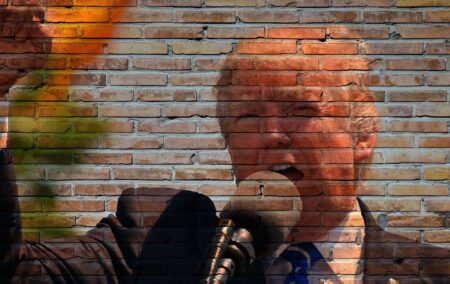
[Image: Pete Linforth from Pixabay]
The views of the writer are not necessarily the views of the Daily Friend or the IRR.
If you like what you have just read, support the Daily Friend