

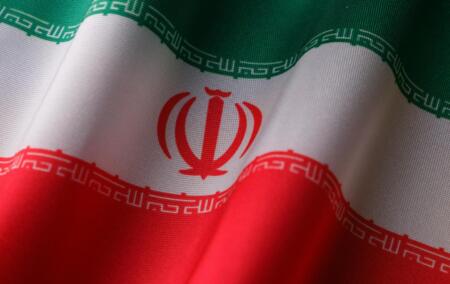
Regime change in Iran would be an historic breakpoint that might be compared to the fall of the Berlin Wall in 1989.
The latest revolt on the streets across Iran and the destruction by Israel of its main proxies, Hamas, Hezbollah, and the Houthis, and the end of the Assad regime in Syria, have greatly weakened the regime. And the Twelve-Day War has shown Iranians that the regime will not be able to survive another round of strikes by the US and Israel.
Since the Islamic Revolution in 1979, Iran has actively sought to export its revolution across the world. It has been a destructive force in world affairs. It has also created a highly oppressive society and a tightly controlled economy with high inflation and stagnation.
Iran has maintained anti-Israel and anti-Western proxies, pursued the development of nuclear weapons and ballistic missiles, and been behind terror campaigns in many countries.
Whatever happens in Iran, it will not be able to play the revolutionary role of the past.
The consequences of revolutions are difficult to predict.
For the moment, the Mullahs may have managed to save themselves with a massive crackdown in which, reportedly, more than ten thousand demonstrators may have been killed.
Even though there may now seem to be an impasse between protesters and the regime, the regime has lost its internal legitimacy and will struggle to maintain order and rule. And it will be difficult for the Mullahs to resolve the economic crisis and try to reform and save themselves.
Execute demonstrators
President Donald Trump has backed down on his threat to take action against the regime after Tehran said it would not execute demonstrators. Yet the possibility of US military intervention remains after Trump’s statement over the weekend: “It’s time to look for new leadership in Iran.”
Even in its death throes, the regime still has power. There is a possibility that it holds nuclear weapons and could use them as a last gasp in an attempt to defend the regime. With its control of the Straits of Hormuz, it could throttle up to 20 percent of world oil supplies.
Key will be when a critical number of the security forces refuse to be part of the crackdown and make a break from the regime. The repercussions from the fall of the regime depend heavily on how the fall happens. It is more likely to be chaotic than orderly, and there could be a number of iterations. But all of them have profound repercussions.
There are many permutations for a regime change. There could be chaos and even civil war. Another possibility is that a former official from the military or the regime’s Praetorian Guard, the Islamic Revolutionary Guard Corps (IRGC), takes charge, and imposes a regime with a new gloss. That may or may not last.
In videos, we hear crowds on the streets shouting their support for the son of the Shah. But crowds on the street don’t often determine the end result. He has promised a democratic pro-West and pro-Israel Iran.
A beacon
If a democratically elected government emerges from the regime change, it would stand out in the region as a beacon. That could mean calls for democracy in neighbouring countries.
For Iran, a fresh revolution that involves the overthrow of the entire edifice of the Islamic Republic will have deep repercussions. The power of the Republican Guard, which is both a security and an economic force, might be ended. Would they fight back against this to preserve their privileges?
Iran has a relatively well-educated population, and with reform and a loosening of the heavy hand on the economy, it could have a highly successful future. With the end of sanctions, assuming the country abandons its nuclear weapons programme, the economy would gain a further boost.
One certainty is that there will be profound implications across the region and the Islamic world from a change in Iran. There is a deep fear among neighbours that regime change would result in chaos in Iran and the region. That is why Turkey and the US’s regional allies were keen to dissuade Trump from bombing Iran last week.
Such a regime change could certainly plant the seed of a revolutionary idea in the minds of populations throughout the Arab world. And the end of a regime that has been in power for 47 years would also show other authoritarians that there is no guarantee against popular insurrection.
Demonstration effect
Much as the Saudis fear Iran, they worry that regime change would involve revolution against an Islamic government, which just might have a demonstration effect.
Another repercussion of regime change in Iran, particularly feared by the Turks, Iraqis, and Syrians, is that with chaos, the Kurds would gain in their struggle to create a breakaway state. The Pakistanis worry about Baluchistan breaking away and joining up with Baluchis across the border in Iran. Once the break-up of a country starts, there is often no telling where this might end, as powerful elements in the security forces and regional politicians might also pursue separatist ambitions.
With a weakening state in Iran and post-regime-change Iran still finding its feet, there is bound to be a shift in the regional balance of power. Qatar with its vast oil revenue and Turkey with its regional ambitions could fill the power gap. Turkey has been the backer of Ahmed al-Sharaa, the current Syrian President who overthrew the Assad regime.
The fall of the Mullahs might mean that the shared enemy of Israel and the moderate Arab countries will be gone. The Muslim Brotherhood and its offshoots are still a threat, but because of its role as a backer of extremist groups and its nuclear weapon ambitions, Iran posed a special threat. That will have repercussions for Israel’s relationship with the countries that have signed the Abraham accords.
China and Russia could be losers from a change in Iran, but that is by no means clear. Most Iranian oil is exported to China and India, and Russia manufactures Shahed drones, designed by Iran, for its war effort in Ukraine. Both countries also liked the idea of Iran as a US enemy. But neither have rushed to Iran’s support. They just might recognise that the power of the Mullahs is coming to an end, and a new reality is emerging.
New reality
SA, along with the Left in the West which sees Iran as a counterweight to US power and imperialism, is struggling to deal with this new reality.
There has been no strong and outright condemnation from the ANC of the shootings of protesters by the Iranian regime. And although President Cyril Ramaphosa gave a command that the Iranian navy should not participate in naval exercises off Simon’s Town last week, they still participated.
At least in the battle of ideas, that means that SA and the Left will be losers in the emerging new reality.
[Image: engin akyurt on Unsplash]
The views of the writer are not necessarily the views of the Daily Friend or the IRR.