
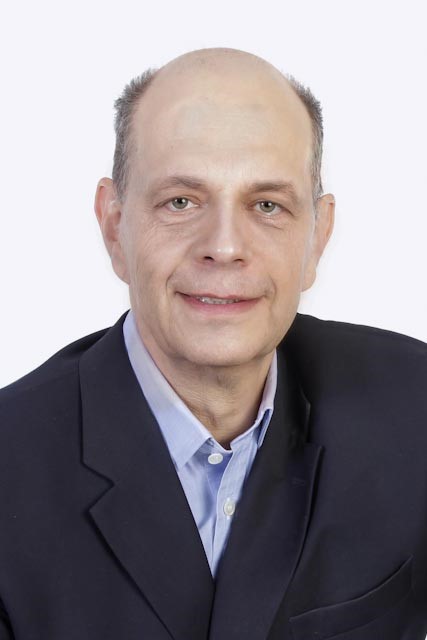

Yesterday, I helped shovel in soil to cover Steven Gruzd’s casket in a grave, in accordance with Jewish tradition. Each thud of the soil landing on the casket is a reminder of a life now gone.
In this case it was also a reminder of the fear and frustration that so many of us feel in Johannesburg about high levels of violent crime, and the sheer inability of the police to address this.
On Friday evening last week, Gruzd, a long-time senior researcher into African issues at the South African Institute of International Affairs, and a journalist, was kidnapped, robbed and murdered.
On Monday morning last week, Chinette Gallichan, a labour lawyer working for the mining company Sibanye-Stillwater, was shot dead outside the Commission for Conciliation, Mediation and Arbitration (CCMA) in central Johannesburg. Some reports describe the shooting as bearing the signs of a contract killing.
Chinette Gallichan was only 35, recently married and a keen runner, and might have crossed the wrong people in a labour arbitration matter. No suspects have been arrested. Lawyers and accountants trying to get to the bottom of corruption and fraud are increasingly frequent targets of hitmen.
On Monday this week, a woman was in a critical condition after being shot multiple times in an underpass in Bedford View. The Citizen reports that there are signs the attack may have been planned.
And on the Cape Flats, there has been a surge in gun violence as gangs battle it out in drug turf wars.
Dedicated
I did not know Steven Gruzd well, but as journalists our paths sometimes crossed. His expertise was in the implementation of the African Peer Review Mechanism, an instrument designed to make African governments more accountable. He was hard-working and dedicated to studying and promoting something that has the potential to make the world a better place. He was a Scrabble champion and actively promoted the game among school children. Gruzd leaves his wife, Mandy, and daughters, Lauren and Megan.
Kidnapping for ransom is an increasingly frequent crime. We will know more about his abduction and murder from the trial of the five arrested at George Goch hostel in Benrose, where his body was found over the weekend.
The shock I felt at these murders was probably because I knew Steven, and was struck by the youth of Gallichan. It was also because both were attempting to make a positive contribution. Abduction followed by murder in Steven’s case, and the possibility that Gallichan’s killing was a hit are also particularly alarming.
I might have been equally shocked by the other murders that make up our average count of around 70 a day. That number comes from the crime statistics for the final quarter of last year, the most recent reading we have of homicides.
SA has a murder rate of 45 per 100,000 people, which means the country has one of the highest rates of homicide in the world. The country’s ranking in the murder rate league tends to go slightly up or down every year, but it is usually in the top five. After 1994 the murder rate dropped substantially with the end of what was in effect a civil war between Inkatha and the ANC, but it then rose from 2011, except for the period of the Covid lockdowns over the two years from 2020.
Inability to govern
Our ANC leaders would prefer to talk about anything but the murder rate, which highlights their inability to govern. They would far rather talk about Israel and Palestine and colonial injustice than joblessness and the breakdown in law and order.
Despite our high murder rate President Cyril Ramaphosa is trying to sell the country this week at the SA Investment Conference as a compelling destination for foreign business. Nothing is likely to be mentioned about our murder rate. And, of course, potential investors do have questions about the death threats from construction mafias.
What our murder rate also highlights is the abject failure of the state to halt the post-1994 decline in effective and honest policing. Meyer Kahn, a former managing director and chair of South African Breweries, was hired to craft a turnaround strategy for the police force in the late 1990s. The Zondo Commission into state capture and corruption made a long list of recommendations in 2022, and the government says half of these have been implemented.
More recently, Business Against Crime has been working to help the police. The Madlanga Commission, which is looking into the extensive corruption allegations raised by KwaZulu-Natal police Commissioner Nhlanhla Mkhwanazi, is hearing a lot that is troubling.
Very little comes out of these efforts due to the lack of political will to deal with inept management and malfeasance in the police. That creates a very low level of trust in the police.
More trust
When Gruzd went missing on Friday, the family turned to a private security force, Community Active Protection (CAP), and the Jewish Community Security Organisation. Obviously they placed more trust in these bodies than in the police.
And there are obvious questions for the police. According to the Daily Maverick some George Goch residents say they have asked the police to conduct raids, but so far there have been none, at least in recent times.
We are highly taxed to finance what is in many ways a failing state. Yet, if we want effective protection we have to pay for private security and, increasingly in Johannesburg, for private fire services.
This is something only the rich and upper middle class can afford. The government talks about its commitment to inequality. Equal access to security would be a good start in reducing inequality.
Where the state delivers there is a compelling moral justification for paying taxes. But when it continues to fail to effectively provide this protection, tax compliance is bound to be eroded.
The collapse of state law enforcement is what paves the way for vigilantism, the spread of gangs and the creation of mafia states. In Mexico the inability of the state to tackle drug cartels has led to the establishment of what are, in effect, warlords. They run much of the state along with their own crime empires.
Tough stance
As the ANC crumbles, there has to be greater political space for a party with a tough stance on illegal immigration and crime. After unemployment, crime is the second highest concern that comes across in Institute of Race Relations polls.
The South African public are gatvol with violent crime and at some stage may feel that they want a draconian El Salvador-type solution.
Three years ago, El Salvador’s President Nayib Bukele embarked on a “war against the gangs”, which has seen the country’s murder rate plummet. He suspended the constitution and jailed more than 90,000 gang members. While international human rights lawyers are critical, the move has been highly popular in the country.
The collapse of the country under the ANC might be pushing South Africans towards draconian-type solutions.
That is what happens when a corrupt ruling party leaves us with the equivalent of a Gotham.
[Image: Screengrab, https://www.youtube.com/watch?v=MCvS1sZNFkc]
The views of the writer are not necessarily the views of the Daily Friend or the IRR.
If you like what you have just read, support the Daily Friend