

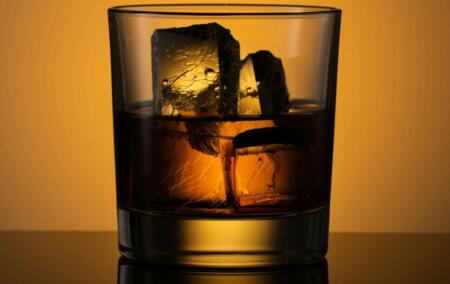
I stopped drinking seven years ago. I sometimes wonder whether that was a mistake.
Oh, how I miss that two-beer feeling, especially with friends. There is nothing like it in the world. I once interviewed Mark Solms, neuroscientist, wine-farm owner, and enthusiastic drinker, who confirmed it to me: “I have yet to come across a substance that can relax a human this quickly, and provide such joy and a sense of community as alcohol.”
He was launching a Cape Jazz Shiraz at the time, a light and fizzy concoction, and one he said he could “have for breakfast” at only 9% alcohol. Churchill drank whisky and soda for breakfast; a modern version in his honour uses rye whiskey, maple syrup and cinnamon. Ernest Hemingway famously embraced alcohol as a key part of life. It was crucial to his creativity and leisure, as he viewed it as a necessary, civilised, and relaxing escape from modern life. It used to be that our big creatives and intellectuals embraced alcohol. For good reason.
The secret to ethanol’s success in human history is how quickly it can cross the blood-brain barrier. Solms is also a neuroscientist and Freudian psychoanalyst, so he understands what a ‘beer buzz’ is exactly. We experience the ‘getting drunk’ process as something pleasurable. If you concentrate, you can feel it happening in real time. A slow sense of feeling warmer, happier and more sociable. For the first few at least. The endorphins, dopamine, oxytocin, and serotonin form a heady mix that slowly helps you drift into a more alive and authentic version of who you are. Booze rewires us for sociability. We talk more, laugh more and find others more attractive through ‘beer goggles.’ Your ego and superego dissolve in a cocktail. You become braver when you are tipsy. You find the courage to be yourself. These are all powerful sociability benefits.
Some researchers are suggesting it is this high sociability quotient of ethanol that might be responsible for civilisation itself. The capacity to sit with an enemy and discuss matters over a libation might have resulted in different groups co-operating and tolerating each other.
Edward Slingerland of the University of British Columbia argues that alcohol was a precondition of progress, not just a companion. In 2021, his “drunk hypothesis” suggested that large-scale, complex societies were able to form with the help of alcohol, a chemical which allowed “fiercely tribal primates to co-operate with strangers.”
Certainly, humans show an unusually high capacity to intermingle and work together compared to other species. Civilisations across the world, including China, Mesopotamia and the Mayan empire raised glasses to the gods, and the Vikings cemented political hierarchy by drinking out of the skulls of their enemies. The Romans dedicated the god, Bacchus to alcohol, thereby acknowledging its place in human endeavour. The Egyptians paid pyramid workers in grog. In South Africa, for many years, workers on wine farms were paid in tots of alcohol, called ‘the dop’ system. And this is where the story becomes problematic.
Tide is turning
Alcohol, for all its gifts, also causes a lot of damage. It can ruin marriages, lives, and careers. While we once thought drinking moderately was good for your health, and provided colour to your character if you are a writing deity like Hemingway, the tide is turning against any consumption at all.
The thought of something like a ‘dop system’ is considered barbaric.
Even the stratification of society is now an outdated concept among the liberal minded. Mark Solms performed quite a remarkable experiment; trying to right the social ills of the past with compassion, ingenuity, and wine. He bought a farm in the Franschhoek Valley in 2001 with the intention of transforming it into a socially responsible and unique collaborative wine estate in which workers would hold title deeds to the lands they toiled. By Solms’s own admission, the grand scheme at Solms-Delta was not accompanied by enough ‘business sense’, and it eventually crumbled, partly with the help of the government stepping in with a business rescue strategy which seemed to make things worse.
The project failed, and the vineyards were abandoned. “I’m from the government. I am here to help,” that old trick.
Every year, the government initiates increased ‘sin’ taxes as a desperate measure to gather income, while showing they are concerned about the damage that alcohol can inflict on communities. It is difficult to gauge how much restricting advertising or increasing taxes has on alcohol consumption, but there has been a shift in the sinners.
Across the globe, in richer countries, people are drinking less. Many people are becoming more health conscious. Sober Octobers have become years without beer. Millennials don’t drink as much as their parents and, as Ozempic sales skyrocket, alcohol sales go down because of its dampening effect on compulsive behaviours.
Chevy to the levee
Hollywood stars are writing dramatic biographies of how they gave up drinking. It is not cool to hang around in pubs with the old boys anymore. You don’t drive your Chevy to the levee*, you stay indoors and become anxious about online arguments instead of having it out over a pint. We point at the hard-drinking, chain-smoking Charles Bukowski like the young ones laughed at Noah: “What a loser!” The world’s top 20 markets decreased by another 2% between Covid and 2024, a continuation of a longer trend. The sale of non-alcoholic drinks is soaring. Have we reached ‘peak booze”?
Winston Churchill is reputed to have said, “I have taken more out of booze than it has taken out of me,” but more informed and anxious generations take a different view. They self-medicate with screen time, hallucinogens, and mindfulness. Not everyone agrees that it is an improvement. It is unlikely that alcohol will disappear from our landscapes, but its consumption tends towards a stratification in our societies – again, that old conundrum. The rich and the poor drink in different patterns. It is an altered state of dop system.
Solms-Delta exists in a different form today. No longer focused on transformation or social equity, it simply sells wine, which will soon be taxed higher, but not as much as whisky will, while zol smokers get off scot-free. Solms just published a book on Sigmund Freud and the neuroscience of mental healing, aligning the two spheres. Freud ‘reorientates us towards what makes us tick,” he says. Rich or poor, drunk or sober, sometimes you need just a few Freudian sips to keep you from going completely mad.
Cheers.
*In case you don’t know the song …
[Image: Skyler Ewing on Unsplash]
The views of the writer are not necessarily the views of the Daily Friend or the IRR.
If you like what you have just read, support the Daily Friend