

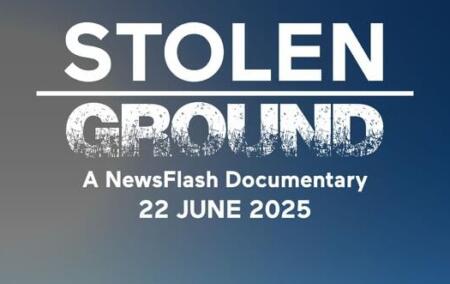
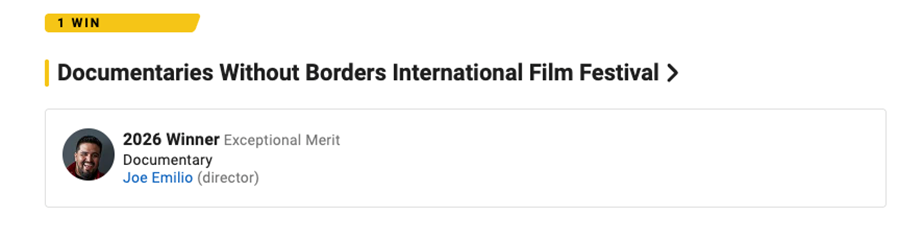
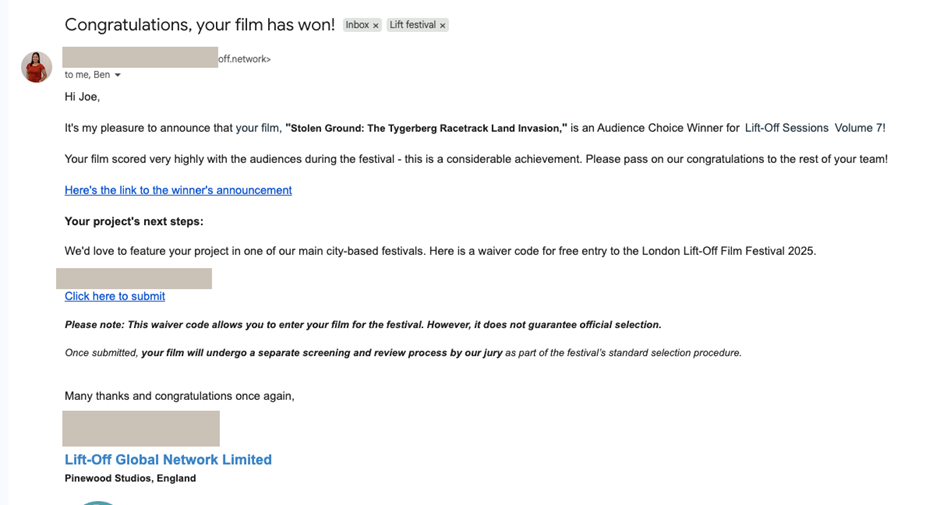
A zero-budget documentary I produced has received two international awards and four nominations. It has been featured in South African media, discussed on national platforms, and viewed by over 200,000 people online. It has even earned an official IMDb listing through international recognition.
And yet, not a single South African film festival has selected it for screening so far.
That contradiction is difficult to ignore.
This is not about losing. Every filmmaker understands rejection. Festivals are competitive, subjective, and often unpredictable. Not every film will make the cut, and that is part of the process.
But this feels like something different.
Because when a documentary is recognised internationally, discussed locally in mainstream media, and still struggles to secure even a single screening opportunity at home, it raises a more uncomfortable question:
What exactly is being judged?
I submitted Stolen Ground: The Tygerberg Raceway Story through FilmFreeway, the same platform used by filmmakers across the world. I followed the same process for international and local festivals. I paid the required entry fees. I ensured that the film met all technical and eligibility requirements.
After being rejected locally, I reached out to multiple festivals to ask for feedback. Not to challenge their decisions, but to understand them. If there was something I had done wrong, I wanted to correct it.
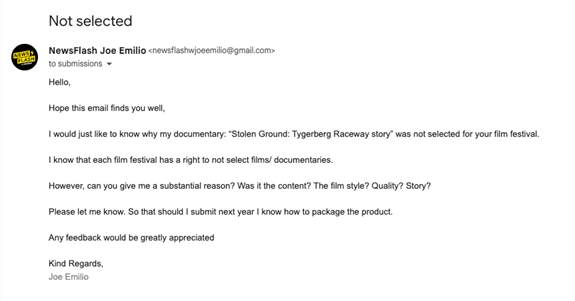
I received no response.
Silence, in this context, is not just frustrating. It is revealing.
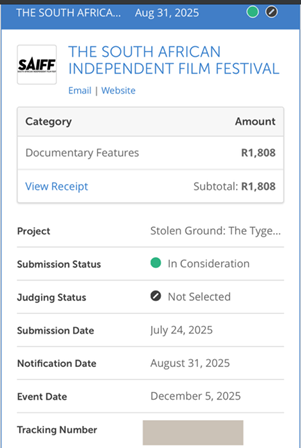
For independent filmmakers, especially those working without budgets, festival submissions are not trivial. They cost money, time, and effort. But more importantly, they represent access, an opportunity to have your work seen, evaluated, and placed in conversation with others.
When that access is denied across the board, and without explanation, it raises concerns about transparency. It raises questions about fairness. And, inevitably, it raises the question of whether all filmmakers are being judged by the same standard.
This is not about claiming bias outright. It is about acknowledging that the appearance of inconsistency matters.
International audiences and judges evaluated the film and found merit in it.
South African media platforms found it worthy of discussion.
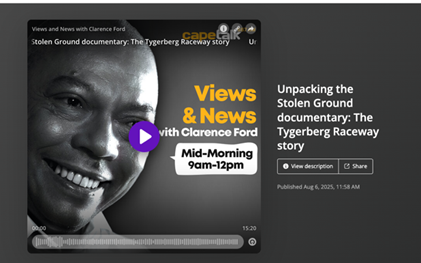
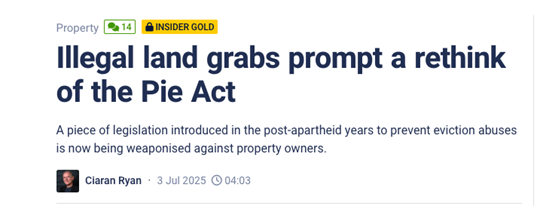
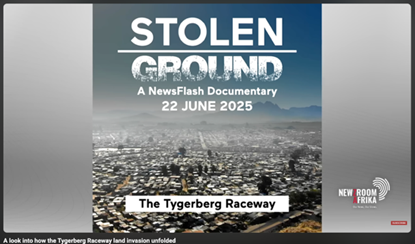
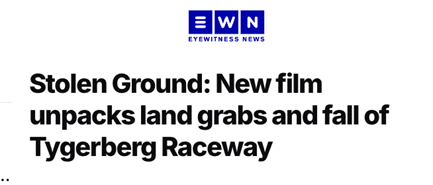
Viewers engaged with it in large numbers. Yet locally, within the formal structures of the film festival circuit, it has so far been excluded.
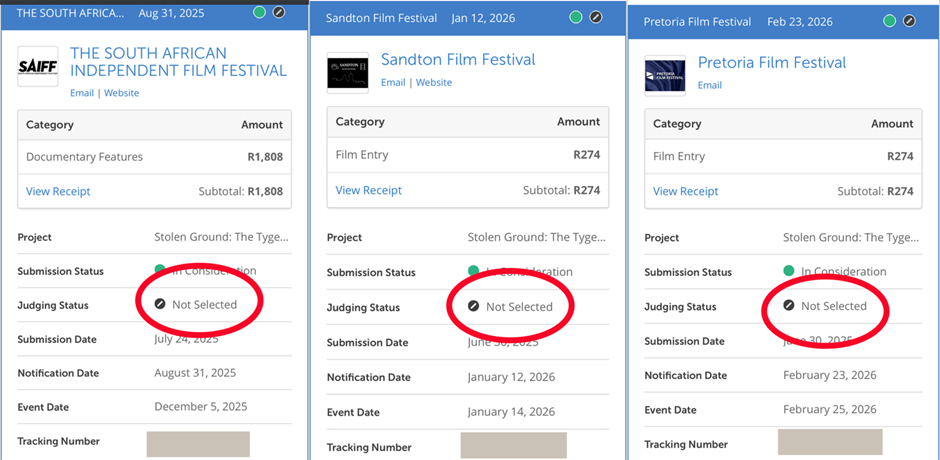
At the time of writing, two additional South African film festivals are yet to announce their decisions. It remains to be seen whether that pattern will change. If even one of those festivals selects the film, it would demonstrate that access is still possible. If not, the question becomes even more pressing. The documentary itself deals with a controversial and politically sensitive issue: land occupation and property rights in South Africa. It presents multiple perspectives and allows viewers to draw their own conclusions.
Could that have influenced its reception locally?
Perhaps. Or perhaps not. But when no feedback is provided, speculation fills the gap left behind. And that is the real issue.
A healthy creative industry should not only celebrate success but also encourage participation. It should provide pathways for new voices, especially independent ones, to enter the space, be heard, and be challenged on their work.
It should also be transparent enough to explain decisions, particularly when those decisions appear inconsistent with broader recognition. This is not a call for special treatment. It is a call for clarity.
If the film did not meet the standard, say so. If there were technical issues, point them out. If it simply did not align with a festival’s programming vision, that is a valid explanation too.
But say something.
Because when there is no explanation at all, it begins to feel less like a selection process and more like a closed door. And closed doors, in any creative industry, should concern all of us. The question is not whether one documentary deserved to be screened.
The question is whether the system that decides these things is as open, fair, and transparent as it should be. Until that question is answered, the silence speaks for itself.
[Image: https://www.imdb.com/es-es/title/tt40754840/mediaviewer/rm534958338/?ref_=tt_ov_i]
The views of the writer are not necessarily the views of the Daily Friend or the IRR.
If you like what you have just read, support the Daily Friend