

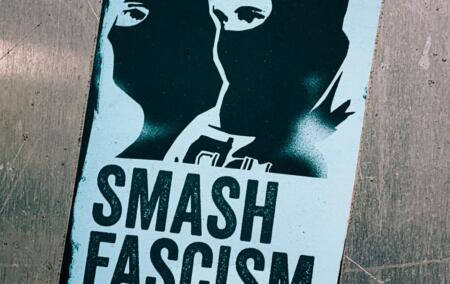
Liberal democracies have become highly skilled at recognising the extremism they were historically organised to oppose. They are far less comfortable confronting forms of extremism that speak the language of liberation, justice, and historical grievance.
For years now, liberal democracies have comforted themselves with the belief that extremism is relatively easy to recognise. It arrives wearing familiar symbols, it speaks in familiar language. It resembles the dangers already embedded in Western historical memory: fascism, racial nationalism, white supremacy, authoritarian populism. The moral vocabulary through which modern liberal societies understand political threat was shaped overwhelmingly by the catastrophes of the twentieth century, and understandably so.
Yet this historical inheritance has produced an increasingly obvious blind spot.
Liberal societies have become extraordinarily sophisticated at recognising extremism in ideological opponents, while growing remarkably hesitant to recognise analogous patterns within movements they regard as morally legitimate.
Donald Trump and Zohran Mamdani sit on opposite sides of the political spectrum. Their ideologies are radically different. Trump emerged from the populist nationalist Right; Mamdani from the activist anti-colonial Left. Treating them as equivalent figures would be absurd.
But both reveal the same increasingly important political phenomenon: democratic societies now apply radically different standards of interpretation, historical association, and moral suspicion, depending on whose extremism is under discussion.
Trump’s ambiguity around nationalist and racial grievance politics is interpreted by critics through the historical memory of fascism and white supremacy. Mamdani’s ambiguity around progressive identity politics, anti-colonial activism, and radical left-wing movements is interpreted by supporters through the moral vocabulary of liberation, justice, and historical grievance. While the ideological content differs dramatically, the rhetorical mechanism does not. To understand why this matters, it is worth beginning with Trump, because the modern Left already understands perfectly well how rhetorical ambiguity functions when it emerges from the nationalist Right.
Trump has repeatedly communicated in ways that allowed extremist or white nationalist-adjacent movements to feel recognised without forcing moderate supporters to confront the implications directly. The moment in which he told the Proud Boys to “stand back and stand by” – language the group itself immediately celebrated online – was only the most famous example. So too was the broader ecosystem of conspiratorial signalling, nationalist rhetoric, online amplification, and selective ambiguity that surrounded his political movement for years.
Same argumentative structure
His defenders almost always responded through the same argumentative structure. Critics, they insisted, were operating in bad faith. Context was being ignored. Language was being weaponised. Opponents were deliberately selecting the most sinister possible interpretation of ambiguous remarks to smear a political movement they already despised.
There is now a widespread public belief that Trump directly described neo-Nazis at Charlottesville as “very fine people”. He did not. In the same press conference, he explicitly stated that neo-Nazis and white nationalists “should be condemned totally”. This matters because factual precision matters. Serious political criticism cannot rest on slogans, selective editing, or politically useful mythology. The correction, of course, does not fundamentally alter the broader pattern.
The birth conspiracy surrounding Barack Obama followed a similar logic. Trump rarely framed it in explicitly racial terms. He did not need to — the political function was obvious. Suspicion was activated, grievance was legitimised, and plausible deniability remained intact. Critics were portrayed as hysterical, while supporters were invited to hear precisely what they already wanted to hear.
Trump’s defenders almost always responded through the same argumentative structure. Critics, they insisted, were operating in bad faith. Context was being ignored, language was being weaponised, and opponents were deliberately selecting the most sinister possible interpretation of ambiguous remarks in order to smear a political movement they already despised.
At times, this critique of the media was justified. Coverage of Trump has often been intellectually sloppy. But it is also true that Trump consistently displayed a peculiar reluctance to draw clean moral boundaries between himself and elements of the nationalist Right that regarded him as politically useful. His rhetoric operated through implication, ambiguity, and selective distance. He rarely crossed fully into explicit endorsement. Instead, he maintained enough uncertainty for extremists to feel recognised, while moderates retained enough ambiguity to dismiss criticism as overreaction.
The modern Left understood this instinctively. It argued, correctly, that rhetoric cannot be separated from historical association. It insisted that politicians bear responsibility not only for what they explicitly endorse but also for the movements they legitimise through signalling, ambiguity, and selective silence. What is striking now is how unstable this principle suddenly becomes, once the ideological direction changes. This is where Mamdani becomes politically revealing.
Governing seriously
Mamdani is not a fringe agitator. He is intelligent, media fluent, electorally successful, and increasingly institutionally credible. Much of his appeal has little to do with the ideological controversies surrounding him. New York is a city exhausted by housing costs, inequality, managerial stagnation, and declining trust in establishment politics. Mamdani speaks directly to these frustrations. His supporters increasingly portray him not simply as an activist figure but as an energetic and competent administrator capable of governing seriously.
It would be intellectually lazy to reduce Mamdani’s support entirely to ideological symbolism or activist politics. The recent budget victory celebrated across progressive circles illustrates this clearly. His coalition includes labour activists, tenants’ groups, municipal reformers, public service advocates, and ordinary Democratic voters who see him as an effective response to affordability pressures and institutional drift. If anything, that makes the rhetorical questions surrounding him more significant rather than less.
The issue is not whether Mamdani can govern. The issue is the ideological ecosystem within which he operates, and the standards of interpretation surrounding that ecosystem. Consider his handling of the phrase ‘globalise the intifada’. For many Jews, the slogan is inseparable from the historical memory of the Second Intifada: suicide bombings, buses torn apart during morning commutes, cafés transformed into crime scenes, civilians murdered in ordinary public spaces. This interpretation is not irrational or fringe; It emerges from concrete historical experience.
Mamdani was repeatedly given opportunities to distance himself clearly from the phrase. He declined to do so unequivocally. Instead, the discussion shifted toward contextualisation. Intifada, supporters argued, simply means ‘uprising’. Critics were accused of collapsing Palestinian resistance into terrorism. The issue became one of ‘speech policing’, selective outrage, and interpretive bad faith rather than moral clarity.
The structure here is remarkably familiar.
Trump’s defenders insisted that critics were deliberately interpreting ambiguous nationalist rhetoric in the most sinister possible way. Mamdani’s defenders make almost precisely the same argument. In one case, the demand is to ignore the historical associations attached to nationalist language; in the other, it is to ignore the historical associations attached to revolutionary anti-Zionist rhetoric.
Again, the ideological content differs profoundly. The rhetorical mechanism does not. There are undoubtedly Western activists who sincerely interpret slogans like ‘globalise the intifada’ through the moral vocabulary of anti-colonial struggle. To them, the phrase signifies resistance to occupation, solidarity with Palestinians, or opposition to Israeli policy. Many likely do not consciously associate the slogan with the deliberate murder of Jews.
Radical ideological actors
At the same time, it is difficult to believe that hardened Islamists, revolutionary anti-Zionists, or more radical ideological actors are similarly naïve about the phrase’s historical associations. Nor is Mamdani himself politically unsophisticated. The ambiguity surrounding slogans such as ‘globalise the intifada’ is precisely what makes them useful. They can be heard by Western progressive audiences as the language of resistance and solidarity while carrying considerably darker implications for those already operating inside explicitly anti-Jewish or eliminationist ideological frameworks. Political movements have always relied on layered rhetoric. Moderates and useful idiots hear justice. Radicals hear permission.
The problem is that contemporary progressive politics often treats this possibility as effectively unthinkable provided the rhetoric emerges from movements regarded as oppressed. Historical association suddenly becomes infinitely elastic. The same political culture capable of parsing obscure nationalist symbolism with forensic intensity becomes strangely naïve when confronted with slogans linked to Islamist violence or openly anti-Jewish political movements. This asymmetry extends beyond slogans into broader political framing.
Mamdani frequently speaks about Israel through the language of colonialism, structural oppression, racial hierarchy, and domination. Within this framework, Palestinian violence is continually contextualised before it is condemned. The moral centre of gravity shifts almost entirely towards power imbalance and historical grievance.
Parts of this critique contain truth. The situation in the West Bank is deeply problematic. Settlement expansion has often been reckless and almost always strategically counterproductive. The occupation of the West Bank has produced moral, legal, and political distortions that even many Israelis openly acknowledge. But the anti-colonial framework increasingly struggles to account for realities that complicate the narrative.
Arab citizens of Israel possess voting rights, parliamentary representation, judicial access, educational opportunity, and participation across public life in ways that would be unimaginable for Jewish minorities across much of the surrounding region. Arab parties sit in parliament. Arab judges serve in the judiciary. Arab citizens participate throughout civil society.
None of this erases the realities of Settler problems in the West Bank. Nor does it magically resolve the conflict. But it does complicate the simplistic colonial binary through which activists like Mamdani often frame the issue.
The occupied territories are not simply interchangeable with Israel proper. Much of the security architecture surrounding them emerged after repeated waves of terrorism, particularly during the Second Intifada. One may debate proportionality, morality, or long-term wisdom. But one cannot simply erase the historical sequence in which Israeli buses, restaurants, and public spaces were repeatedly targeted by suicide bombers.
Rhetorical abstraction
This matters because progressive discourse increasingly treats Jewish security concerns as either secondary or fundamentally illegitimate. ‘Equal rights for all’ becomes a rhetorical abstraction detached from the actual historical fate of Jewish minorities throughout the Middle East. One rarely hears equivalent outrage directed toward states across the region that explicitly define themselves through Islamic identity while possessing effectively no meaningful Jewish population at all, largely because those populations fled, were expelled, or became politically impossible.
Again, the point is not that Israel is morally flawless. The point is that the moral asymmetry surrounding the conflict increasingly produces a political culture in which revolutionary rhetoric directed at Jews is continually softened through contextualisation while Jewish fears are treated as exaggerated, reactionary, or politically inconvenient. Mamdani operates comfortably within this ecosystem.
He does not openly endorse terrorism. He does not explicitly advocate violence against Jews. But he repeatedly declines opportunities to establish clean moral boundaries around rhetoric and movements that many Jews reasonably experience as threatening. The result is a form of political communication in which radicals hear solidarity while moderates are invited to hear only the language of justice and human rights. The pattern extends beyond Israel itself.
At one point, Mamdani spoke about taxing ‘richer and whiter neighbourhoods’ in New York. His defenders interpreted the statement structurally rather than racially. The remark, they argued, referred to concentrations of wealth and historical inequality rather than hostility toward white people as such. Maybe. But the reaction revealed another asymmetry embedded in modern political culture.
Imagine a right-wing populist politician speaking about policy in explicitly racialised geographical terms. Imagine Trump discussing ‘blacker neighbourhoods’ in relation to taxation, policing, or public spending. There would be virtually no interpretive generosity whatsoever. The statement would instantly be treated as racially inflammatory because modern liberal culture recognises racial signalling from the Right instinctively — and often correctly.
Progressive racial language, by contrast, is frequently treated as morally intelligible even when similar rhetoric from ideological opponents would trigger immediate alarm. Structural framing becomes a mechanism through which language that would otherwise appear dangerous is rendered respectable. This is the deeper connection between Trump and Mamdani. Not that they are identical men. Not that Left and Right extremism are morally interchangeable. And not that every activist within their broader coalitions consciously supports violence or authoritarianism. The similarity lies in the political structure surrounding them.
Trump relied on supporters willing to insist that every criticism was media hysteria and deliberate distortion. Mamdani relies on supporters willing to insist that concerns about radicalism, extremism, or ideological excess on the progressive Left are cynical bad-faith attacks designed to delegitimise movements for justice and liberation. Trump’s defenders contextualised nationalist rhetoric; Mamdani’s defenders contextualise radical progressive rhetoric. Each side demands interpretive generosity for itself and historical suspicion for its opponents. What neither side reliably does is apply the same standards inward.
Ideological extremism
The modern Right sees radical progressive politics and immediately recognises ideological extremism, selective moral standards, and the softening of coercive rhetoric when attached to approved causes. The modern Left sees Trumpian nationalism and immediately recognises authoritarian signalling, racial grievance, and flirtation with extremist movements. Both are often correct about the other side.
This problem has intensified because identity politics increasingly organises democratic morality around historical positioning rather than universal principles. Groups understood primarily through the framework of oppression are granted wider interpretive latitude. Their rhetoric is contextualised. Their anger is treated sympathetically. Their excesses are frequently sociologised before they are morally evaluated.
Meanwhile, groups associated with historical dominance are treated through a radically different lens. Their rhetoric is scrutinised aggressively for implication, resonance, and hidden meaning. Their ambiguities are interpreted maximally harshly.
Sometimes this produces legitimate moral clarity. White nationalism genuinely carries terrifying historical implications. But the asymmetry becomes dangerous when societies lose the ability to recognise extremism unless it arrives wearing already familiar historical clothing.
The modern West remains psychologically organised around the memory of fascism. That memory matters enormously. Yet it has also produced a peculiar intellectual blind spot. Liberal societies increasingly assume that dangerous movements must resemble the twentieth century examples already embedded in collective historical consciousness. The comparatively charitable way communism is now often discussed, despite the immense historical death toll associated with communist regimes, reflects both a broader historical amnesia and a declining public familiarity with the realities of twentieth century authoritarianism.
Movements framed through anti-colonialism, anti-racism, liberation, or historical grievance therefore receive a kind of conceptual immunity. Their rhetoric is endlessly interpreted through intention rather than consequence. Their slogans are detached from historical outcomes. Their excesses are contextualised before they are condemned. One saw this very clearly after October 7.
The attack involved the deliberate massacre, rape, kidnapping, and mutilation of civilians, including children and the elderly. All meticulously documented. Yet large segments of activist culture immediately shifted toward contextual explanation. Before bodies had even been identified, the language of ‘decolonisation,’ ‘resistance,’ and ‘historical inevitability’ began circulating across campuses and social media.
Contemporary moral imagination
This does not mean every critic of Israel supported Hamas. But it revealed something important about the contemporary moral imagination. Violence associated with anti-colonial struggle is frequently treated differently from violence associated with nationalism, particularly Western nationalism.
The same political culture capable of instantly recognising genocidal implication in certain forms of far-right rhetoric suddenly becomes hesitant, abstract, and interpretively cautious when confronted with radical movements or slogans framed through the language of liberation. This is the broader moral and political environment in which figures like Mamdani thrive. And it is also why the comparison with Trump matters. Not because they are the same man. Not because Left and Right are interchangeable. And not because every political movement contains equal levels of danger.
The comparison matters because both show how democratic societies increasingly process extremism through tribal interpretive frameworks rather than consistent moral standards. Each side treats its own radicals as misunderstood, contextual, and unfairly maligned while treating opposing extremism as self-evidently disqualifying.
The forms of extremism liberal democracies most easily identify are those they were historically organised to oppose. The forms they struggle to recognise are those that speak the language of liberation, justice, anti-racism, or historical grievance.
A society capable of recognising danger only in familiar form will eventually fail to recognise it at all.
[Image: Jon Tyson on Unsplash]
The views of the writer are not necessarily the views of the Daily Friend or the IRR.
If you like what you have just read, support the Daily Friend