

Peter Swanepoel
Peter Swanepoel is a historian and writer affiliated with the University of Johannesburg’s History Department, where he works under the supervision of Professor Thembisa Waetjen. His research focuses on the politics and institutional cultures of South African cycling under apartheid. He is the co-author of The Daisy Spy Ring: How South African Intelligence Agents Infiltrated and Disrupted the SA Communist Party (Naledi, 2025) and is currently completing doctoral research with funding from the National Research Foundation. He also writes on politics, history, and society, with an emphasis on institutional analysis, historical context, and moral clarity.
Articles By This Author

The privacy dilemma: when protecting the innocent also protects the guilty
We live in an age of exposure. Every transaction, search, and movement leaves a trace. Your phone knows where you’ve been. Your browser remembers what

Naza: The truth, and nothing but the half truth
Naza presents itself as an exposé of Israel’s targeting system in Gaza. But true facts, carefully selected and stripped of context, can tell a deeply misleading story.

Is bigger always better?
Africa is much bigger than the Mercator projection makes it look. Correcting that makes sense. Turning the size of a continent on a map into a question of dignity and justice is another matter.
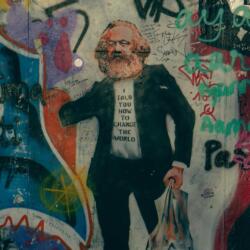
How true facts build false stories
Reading Marx and Engels through a modern foreword is a reminder that you don’t need falsehoods to distort history.

The keffiyeh conundrum
The keffiyeh is worn by many Western academics and feminists as a symbol of liberation. But its history and the societies from which it comes tell a very different story.

More than a flag
The Pride flag at Bishops has sparked a predictable debate about inclusion. The more interesting question is why schools increasingly feel the need to express their values through official symbols at all.

The tragedy of Gaza deserves moral seriousness
The suffering of children in Gaza is real and terrible. But the recent UN report moves too easily from civilian death to deliberate targeting, and in doing so blurs distinctions that serious moral and legal judgement require.

What’s wrong with ‘Professor’ Jiang
Jiang has rapidly become one of the internet’s most talked-about commentators on geopolitics and history. His lectures are often compelling. They are also, I argue,

Beyond the Gini coefficient
The Gini coefficient measures inequality, but it cannot tell us whether a society is free, fair, or open. To answer those questions, we first need to decide what we mean by equality.

Not all cultures are equal
Cultural relativism began as an attempt to understand societies more sympathetically. Over time it became something else: a reluctance to defend liberal values at all. A society that refuses to judge oppressive norms eventually loses the confidence required to defend its own freedoms.