

The latest Q2 2025 employment figures, released on 12 August 2025, once again paint a grim picture of the economic state of affairs in South Africa, and it should be a wake-up call for South Africa’s leaders to pursue a different course.
While the ANC and its Government of National Unity will likely try to spin the 0.3% year-on-year increase in jobs as “progress,” the reality is far less inspiring. In practical terms, the rate at which our government is creating jobs fails to keep up with the growth in our working-age population.
We are not moving forward − we are standing still. In real terms, unemployment is worsening, and millions of South Africans remain locked out of the economy due to policies that keep the economy shackled.
A country facing one of the highest unemployment rates in the world cannot afford to celebrate such feeble progress. Job creation is not just an economic statistic; it reflects a personal reality for millions of South Africans trying to make their own way in achieving a life of dignity, independence and stability, without having to constantly live in fear of not being able to provide for their family.
Without a decisive change in policy that unleashes the economy, allows enterprise to flourish without restricting regulations and allows businesses to do what they need to do, we risk entrenching ourselves in a cycle of stagnation where opportunity remains a privilege, not a right, and where our chance to change course is closing rapidly.
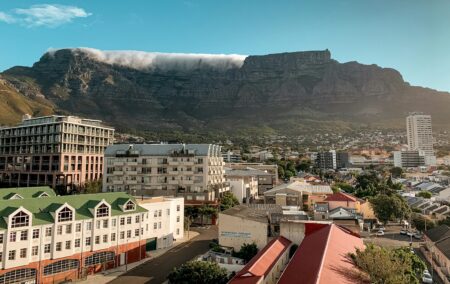
However, all is not totally lost. In fact, one province − the Western Cape − is quietly shining, showing the rest of the country what is possible when the government acts as the platform enabling growth, rather than as an obstacle controlling and stifling the economy.
In the latest figures, it is startling to see that the Western Cape has now overtaken KwaZulu-Natal as the province with the second-highest number of employed people.
This shift is not an accident. It is the result of a more capable, business-friendly administration that focuses on removing barriers to growth rather than erecting them, that capacitates businesses rather than impeding them.
By creating an environment where enterprise can thrive, the Western Cape has demonstrated that the way to drive job creation is to get government interference out of the way and let the private sector lead. This model clearly shows that the government should provide the platform to the private sector to do what it does best: drive growth.
The government can provide the necessary oversight without getting involved, because the notion that government is the only body that can create employment is greatly flawed.
The national government, by contrast, remains committed to an iron grip of control, plagued by heavy regulation, high compliance costs, restrictive labour laws, and chronic policy uncertainty.
Add to this our collapsing infrastructure — from a failing electricity supply to unreliable water systems and dysfunctional transport networks — and you have an environment where businesses are strangled before they can grow, and investors are scared away at the doorstep.
This is not an abstract problem. Every layer of unnecessary bureaucracy delays investment, discourages hiring, and saps the confidence of local and international investors, while also discouraging local owners of SMEs. South Africa is blessed with talent, ambition, and entrepreneurial spirit.
There is no lack of willingness to work, but those qualities are wasted when opportunity is blocked by the very institutions meant to foster it. According to Reuters, South Africa has averaged an annual economic growth rate of less than 1% over the past decade.
For Africa’s biggest economy, that truly paints a dismal picture, and clearly indicates that our economic potential is being stifled by policies prioritizing ideology rather than practical solutions.
The unemployment crisis is not something that can be solved with the push of a button. However if we are serious about breaking the back of unemployment, we can make a substantial dent in unemployment by replacing our current anti-growth posture with one that creates a conducive climate, enabling business to flourish. That means:
- Removing unnecessary regulations and regulatory red tape that prevent small and medium enterprises from expanding.
- Reducing policy uncertainty and consistently pursuing business-friendly policies, ending the bureaucratic delays that frustrate investors.
- Reforming restrictive labour laws to make hiring less risky and more attractive for businesses.
- Fixing infrastructure and basic services so that businesses can operate efficiently and competitively as a result of reliable services.
These are not radical proposals. They are common-sense steps taken by countries such as South Korea and Singapore, that have successfully lifted millions out of poverty through sound, consistent policy-making aimed at encouraging entrepreneurship and promoting investment and competition.
The lesson is clear: prosperity follows when enterprise is free to grow. South Africa must choose whether it wishes to learn and follow a new proven course, or continue to stubbornly follow a path leading to failure.
South Africa’s problem is not a lack of skill, work ethic, or ambition. Our problem is an environment where opportunity is scarce, and the private sector is treated as an adversary instead of an equal partner or even an asset. The Western Cape’s success should be a blueprint for the rest of the country. When government steps back from overregulation and focuses on enabling growth, jobs will follow.
The choice before us is simple: to keep clinging to failed policies that suffocate growth, or to embrace a new path where the private sector is empowered to lead.
Until we make that shift, 0.3% growth will remain our tragic ceiling, and the millions of South Africans seeking work will continue to wait for an economic recovery that never comes.
[Image: Patrick Ward on Unsplash]
The views of the writer are not necessarily the views of the Daily Friend or the IRR.
If you like what you have just read, support the Daily Friend