

The blend of folk beliefs and pop culture exercises a strong pull on all modern cultures. There is something particularly titillating and forbidding about monsters and apparitions that lurk in the shadows, and more pertinently in our consciousness. They stand in for our fears and anxieties, often about the more mundane stresses of our lives.
Probably for this reason, no literary character has been depicted in film more often than Dracula, the aristocratic Vampire, emerging from his Carpathian stronghold: a part of the world about which we know little, and satiating himself on the blood of the living – indeed, taking control of them in the afterlife to become his minions.
The iconic role – Dracula or a Dracula analogue – has been played by such names as Bela Lugosi, Max Schreck, Lon Cheney, Christopher Lee and Gary Oldman. It has also been made and remade beyond the original Euro-American canon, with variants having been made in Turkey (Drakula İstanbul’da, 1953), Mexico (El imperio de Drácula, 1967), Hong Kong(The Legend of the 7 Golden Vampires, 1974), India (Nishi Trishna, 1989) and even a German-South African co-production, directed by Darrell Roodt (Dracula 3000, 2004). There is a version in the so-called Blaxploitation tradition, aimed at an African-American audience (Blacula, 1972), and there are tantalising rumours that even Soviet cinema may have tried its hand at the story (Drakula, 1920, possibly).
This cultural purchase is one that can illuminate many things. In 2004, Robert Guest, editor of The Economist and former Africa correspondent, used such an image in his book The Shackled Continent. His phrase was ‘The Vampire State’. This term, he notes, was originally coined in reference to Ghana. He describes it thus: “It basically means a state, instead of trying to create a framework of laws under which people can pursue happiness in any way they like, it just tries to suck the blood out of the population, just tries to rob them.”
Troubling signs
At the time of writing, this did not describe South Africa, although Guest identified troubling signs. One of these was the extractive relationship then developing between the country’s political elite and business. More to the point, it was apparent at this time that proximity to power was being parlayed into economic fortunes.
Two decades later, extraction has become central to the function of the state. This is so whether in terms of the resources it takes from society through taxes, through mandatory rents on business such as empowerment policy, or through outright graft and extortion. As Gabriel Crouse has found, the country’s fiscal multiplier – the impact of the tax-take on the broader economy – falls below 1. Money taken in taxes does not contribute to enabling economic growth or enhancing productivity; it is fundamentally an exercise in value destruction.
Paul Krugman, economist and academic, popularised ‘Zombie Ideas’. These are concepts that persist and remain popular, despite compelling evidence for refuting them. Rather like the zombies of lore (or horror fiction), they lope through the world wreaking destruction, because that is in their nature, and in the design of their creation.
Here, examples are legion. Agrarian reform is a solution to poverty and unemployment (for a predominantly urbanised society), while South Africa is afflicted by pervasive “land hunger”. Economic growth is possible amid failing logistics and a hostile policy environment. The remedy for almost all failings is greater state control: state-managed health insurance, localisation, a black industrialists fund.
In 2018, then Minister of Trade and Industry Rob Davies put this in all its deluded glory. When confronted by concerns that European businesses had about the South African market, and their dissuasive effects on investment opportunities, he generously offered: “We want to look more closely at what your concerns are, because all of these are areas where we need to be able to exercise our policy.” He then proceeded to announce the Zombie apocalypse: “Localisation is not something we will be able to renounce. Nor are we going to be able to renounce BEE.”
Good horror story
Actually, it’s in the nature of a good horror story that evil is directed. Zombies do not arise spontaneously; something sentient – whether explicitly revealed or veiled in another dimension – animates them.
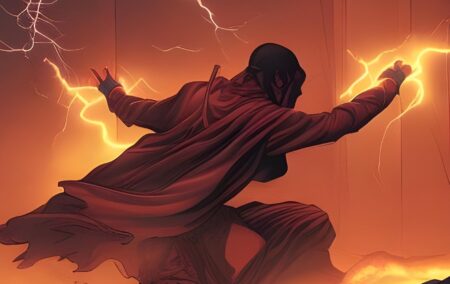
In the latter vein, possibly the most sinister villainy is that of the Necromancer. This is a magic that deals with the dead, communing with them, and invoking them to interfere in the affairs of the living. It has a long literary and cultural tradition, being found in ancient Babylon and in Greece and Rome. It is stridently condemned in the Old Testament, with warnings against the magic of “bone conjurers”, and even an injunction to execute those practising it (not always heeded in reality).
Necromancy inverts and profanes the natural order of life: a situation where a hard boundary exists between life and death. In that sense, it is often taken for the darkest form of magic. In JRR Tolkien’s The Hobbit, a faceless antagonist is identified as The Necromancer (later identified with Sauron of The Lord of the Rings), the avatar of evil in the literary world he created. Sauron, incidentally, is never described physically in the novels, existing mostly in disembodied memories and signifiers, a menace and a foreboding known more by his works than his presence. There is something in that, with a parallel in the criminal syndicates that have penetrated South Africa’s state.
Indeed, where necromancy has been depicted in pop culture, it carries the suggestion that its practitioner is a profoundly dangerous and pathological person, even without aid from the netherworld.
A classic text of the Necromancer’s craft survives in the Bavarian State Library. This is the Liber incantationum, exorcismorum et fascinationum variorum, or the Munich Manual of Demonic Magic. Its authorship unknown, it dates from the 15th century, detailing rites for communing with the dead and for binding and summoning demons. Love, wealth, revenge, power are its rewards, albeit won at a staggering cost to both the user and those at whom the magic is directed.
Feats of necromancy
The Manual sets out the main features of rites required for feats of necromancy. These typically involve three steps: the physical preparation of the environment, through tracing circles on the ground, and setting up displays of occult paraphernalia and symbolism; the invocation of particular words, combinations of letters and physical gestures to bring forth the object of the ritual and shield the necromancer from harm; and sacrifice – maybe offering a gift, maybe a life – as payment for the service of the entity summoned.
This may not end well: attempting to meddle in the natural order of creation opens the door to things that humans cannot comprehend, much less control.
From the profane to the mundane, the economic conduct of much of the South African state for well-nigh two decades mirrors that of the necromancer. It has set the scene with its own grimoires and circles in the form of weighty policy documents, such as the National Development Plan, and the more hallowed and arcane texts such as the Freedom Charter, along with the proliferation of institutions, commissions and directorates to oversee them. It has intoned its intentions in the hallowed halls of Parliament, foreign chanceries, and investment conferences, liberally sprinkling them with incantations from an arcane occult lexicon: “transformation”, “sustainability”, “representivity”, “empowerment”, “non-alignment”, “revolution”.
Say them often enough, or with enough conviction, and they may become real. Or perhaps people will believe them to be real.
And then it involves sacrifices. Raising the dead or summoning a demon exacts a high price. Sometimes, this is measured in the very life of the necromancer, or of his subject. This is the terrain of government policy that seeks investment, while demanding that investors cede large portions of their equity. Investment is sacrificed for the ‘right’ investment.
It is the terrain of panic at unemployment, while new employment-equity demands threaten to close down non-compliant firms. Jobs are sacrificed in pursuit of a demographically apportioned workforce. It’s about an education system that struggles to impart literacy and numeracy, but demands bureaucratic control over functioning schools (and in the case of Pretoria High School for Girls, is relentlessly hounding it). Education is sacrificed on the altar of ideology and political dogma.
Blaze of light and revelation
Kill the economy to resurrect it. It is the hope that reality can be ignored, and that at some indeterminate future point, all will come together in a blaze of light and revelation − perhaps when the final incantation is chanted (think here of endless dialogues and commissions). Intone about the “developmental state” while its vampiric incarnation feeds from the economic jugular. Call this, as some do, “magical thinking”, but note that it’s a dark form of magic, cast for venal ends.
Indeed, as part of these rites, a destructive political scene has been conjured up. In the absence of the economic fortunes that would satisfy an aspirant population, the country’s political class – specifically the African National Congress and its offshoots – have struck out at enemies, real or perceived. A divided, stressed society cannot afford this. It introduces more ill-feeling and resentment, reduces the capacity for compromise and deliberation, and makes resolving the underlying crises even less possible. Evil begets evil.
This is the Necromancer’s society. The Necromancer tries to raise the dead in his own service, and contaminates those around him for his own ends.
Interestingly, around the time that the Munich Manual was written, an interest in science was gathering momentum. The Italian polymath Leonardo da Vinci dismissed necromancy. He termed it “foolish”, and the province of “small wits”. Were it real, he wrote, necromancy would be a weapon from which none could hide.
Leonardo was, of course, associated with scientific rather than esoteric enquiry; wrestling with the realities of the operations of the world was central to his work. He conducted some 30 dissections of animals and humans to understand how their bodies functioned. This was reflected in his art, which still beguiles and fascinates today. (The Munich Manual, by contrast, is a curious, obscure cultural artefact). He also evinced a profound interest in engineering, producing numerous designs for machines centuries ahead of his time.
The world as it is
This is the thinking that grapples with problems as they exist. It seeks solutions based on the evidence of experience and takes seriously the lessons that come with both failure and success. It is the stuff of pragmatism and difficult choices. It accepts the world as it is, operating within the limits of the possible, not relying on sorcery or illusion or self-deception to bend reality.
Less dramatic and certainly less performative than the economic necromancy that characterises much public policy now, it is from the approach of a Leonardo da Vinci that South Africa might find its salvation. For now, it lives with the very real and very mundane horror of ongoing national decline.
(Shout-out to agricultural economist Wandile Sihlobo whose contribution last week – “The ‘zombie ideas’ that continue to distort the reality of South Africa’s agriculture” – prompted the initial thinking for this piece. Cast the spell, as it were…)
[Image: Travis Anderson from Pixabay]
If you like what you have just read, support the Daily Friend