

The casting of Lupita Nyong’o as Helen of Troy in an upcoming film has sent the white right into a righteous fury.
I am thoroughly delighted for Lupita Nyong’o.
Have a look at this interview with her on CNN’s Inside Africa, from November last year.
Nyong’o has a Master’s degree in acting from Yale and is fluent in four languages. The Mexican-born Kenyan actor reveals that after winning a best supporting actress Oscar in 2013 for her breakout role in 12 Years a Slave she had hoped to get a few offers of lead roles.
Instead, she got more offers… to play slaves.
She wanted to “change the paradigm of what it means to be African”, however, so she rejected them on principle, content to play fewer roles instead of “perpetuating stereotypes that are expected of people from my continent”.
In the meantime, she completed acting’s grand slam, the “EGOT”, adding an Emmy Award, a Golden Globe Award and a Tony Award to her rapidly expanding trophy shelf. She has also written a best-selling children’s book, Sulwe, about a little girl who comes to accept her midnight-coloured skin.
Yet other than a co-starring role in Wakanda Forever, Nyong’o’s principled stand against being typecast as a stereotypical African woman meant that she has not landed the sort of standout roles that one might expect from someone with her acting chops.
Until now. In Christopher Nolan’s keenly awaited adaptation of The Odyssey, Nyong’o has landed not one, but two major roles: as Helen of Troy, and her sister, Clytemnestra. Good for her!
Firestorm
Not everyone is enamoured with her midnight-coloured skin, however. Her face launched a thousand outraged posts on X and Reddit, particularly from the white right.
The casting of Nyong’o as Helen of Troy – the mythic figure whose beauty was said to have “launched a thousand ships” – and Zendaya (whose father has Nigerian ancestry) as the goddess Athena, has been decried as everything from “desecration” of Homer to cynical Oscar bait.
This uproar reveals less about fidelity to ancient Greek texts and more about a petty, racially charged insecurity on the white nationalist right that has no place in a free society committed to artistic expression and individual talent.
Everyone has the right to criticise bad art, of course. I am not defending Nolan’s casting choices here. In fact, I’m rather doubtful about the idea of using the same actor for both Helen and Clytemnestra, since that seems to undermine Helen’s mythical status as the most beautiful woman in the world. But then, makeup can probably fix that, and we don’t know what the two characters will look like, yet.
What raises my hackles, though, is when “historical accuracy” or “textual fidelity” is used as a sanctimonious fig leaf for racial gatekeeping. That betrays the principles of non-discrimination and merit that should define our culture.
Musk and friends
Always ready to defend Western civilisation against the swart gevaar, Elon Musk has been among the most prominent critics, repeatedly blasting Nolan for the choice.
Musk accused the director of “desecrating Homer” and “defiling” the epic purely to chase Academy Awards, implying the casting was a checkbox for diversity quotas rather than a genuine artistic decision. He endorsed posts questioning whether Nyong’o could credibly represent “the most beautiful woman in the world,” suggesting it undermined the Homeric narrative.
Matt Walsh, the Daily Wire commentator, took direct aim, posting that “not one person on the planet” views Nyong’o as the epitome of supreme beauty. (Wow!)
His critique framed the decision as absurd on its face, tying it to broader complaints about “woke” Hollywood ignoring the European, fair-skinned archetype long associated with Helen in Western art and prior films.
Other conservative commentators, Greek media, and online voices have piled on, arguing for “historical accuracy” in depicting ancient Hellenic characters.
They point to Homer’s descriptions of “white-armed” goddesses and classical beauty standards rooted in Mediterranean features, claiming colour-blind casting here erases European heritage and panders to modern ideology.
Zendaya’s role as Athena has drawn similar flak, though less intensely, with some calling it a mismatch for the goddess of wisdom in a Greek context.
Nolan has defended his choices as interpretive art, but the backlash persists, with calls for boycotts and claims that this undermines Western civilisation.
These arguments often wrap themselves in high-minded concerns about myth, heritage, and storytelling integrity. Strip away the rhetoric, however, and the core objection is racial: a black woman cannot embody the “face that launched a thousand ships” without it being political.
Definitely not racist
These conservative commentators will swear high and low, with a straight face, that they are absolutely, definitively, categorically not racist.
They believe in merit, they’ll explain. They believe in authenticity. They believe in historical accuracy.
And then they will spend the better part of a week losing their minds because a black actress has been cast as a figure from Greek mythology – a civilisation that predates the concept of race as we understand it by roughly two millennia, and whose gods, last time anyone checked, do not exist.
Nolan has also decided not to portray the Greek gods and goddesses as immortal beings striding human-like onto the battlefield, but showing them instead as the natural forces with which the gods were associated.
Helen of Troy herself was hatched from an egg, laid by either Leda, the Queen of the Spartans, or the goddess Nemesis. Either way, Leda or Nemesis was raped by Zeus in the form of either a swan or a goose, and produced either one or two eggs. If one, the egg produced Helen, Castor and Pollux, leaving Clytemnestra’s origin a bit vague. If two, the first produced Helen and Clytemnestra, and the second Castor and Pollux.
That would make Helen and Clytemnestra ovarian twins (to coin a phrase).
The meaning of Helen’s “white arms” (or more accurately “white elbows”), is not entirely clear to Hellenists (which I assume Musk and Walsh are not). Like many adjectives in Homer’s work, its meaning is likely metaphorical, thought the most common interpretation is not that it defined her race, but that she lived a life of luxury indoors and did not work outdoors in the sun.
In any event, Helen of Troy is entirely mythical. There is no evidence that she ever existed as a historical figure, whether white, black or avian, nor that her varying descriptions in ancient Greek texts were ever meant to be taken literally.
In fact, it isn’t even clear that Homer existed. Most scholars of the ancient Greek texts consider the Iliad and the Odyssey to have been composed by different authors, and view Homer himself as a fictional character.
What makes the Homeric epics notable is that they are the oldest extant written versions of legends and myths from a centuries-old oral tradition. Taking anything in them literally, and going on about “historical accuracy”, is downright simple-minded.
Familiar pattern
The outcry about casting a black person in a traditionally white role is not a new phenomenon. It has played out with remarkable consistency in recent years, and the pattern is always the same.
A major studio casts a non-white actor in a role previously assumed – assumed, mind you, not specified – to be white. The internet erupts.
Words like “woke,” “agenda,” and “historical accuracy” are deployed as though they are serious academic arguments.
Think-pieces proliferate. Podcasters with angry faces and bold red titles record hour-long videos about the destruction of Western civilisation.
And then the film comes out, and the world continues to turn.
Troy, redux
It isn’t the first time Troy features in such a controversy. In 2018, the BBC aired a television series, Troy: Fall of a City, in which British-born actor David Gyasi, of Ghanaian descent, was cast as Achilles, arguably the central hero of the entire Homeric tradition.
The reaction from certain quarters of the internet was, to put it charitably, unhinged.
The complaints clustered around a few familiar themes. Achilles, they insisted, was specifically described as fair-haired in the Iliad. This is technically true – Homer does use the epithet xanthos to describe Achilles’ hair.
It is also true that Homer describes the gods transforming themselves at will, that Achilles’ mother is a sea-nymph, that his armour is forged by a god in a supernatural forge, and that the entire plot hinges on the intervention of deities who perform supernatural feats at will.
The commentators demanding racial fidelity to Bronze Age epic poetry were, apparently, entirely comfortable with the other creative liberties.
What was remarkable about the Troy backlash was its sheer intensity relative to its stated justification. If this were truly about faithfulness to Homer, one might expect equal outrage about the countless other departures from the source material that every single screen adaptation of Troy has made since cinema began.
One might expect protest letters about anachronistic dialogue, about the compression of a ten-year war into a miniseries, or about the removal of divine intervention that forms the entire structural backbone of the Iliad.
One did not see those protest letters.
What one saw was a focused, specific, energetic outrage, only about the skin colour of a fictional Mycenaean hero. Draw your own conclusions.
Black mermaid
In 2019, Disney announced that Halle Bailey, a supremely talented young black actress and singer, would be playing Ariel in the live-action remake of The Little Mermaid.
The backlash was instantaneous and, by any rational measure, completely absurd.
Ariel, let us be very clear, is a mermaid. She is a fictional half-human, half-fish creature who lives in an underwater kingdom ruled by her father, a man with a trident who commands the ocean. She has a friend who is a crab voiced by a Jamaican-accented Daveed Diggs. She falls in love with a prince after a sea witch steals her voice in exchange for legs.
She’s a talking fish-person, and people are upset about the historical accuracy of the colour of her skin?!
The people insisting that Ariel must be white because she is depicted as white in a 1989 animated film – itself an adaptation of a 19th-century Danish fairy tale in which Ariel has no specified race whatsoever – were, without apparent irony, the same people who would roundly mock the left for being overly sensitive about racial representation in film.
The hashtag #NotMyAriel trended. Videos of children – children – reacting with joy to seeing a black actress playing their favourite princess were downvoted and mocked.
A number of commentators produced, with apparent seriousness, arguments about the melanin levels appropriate for creatures living under the sea. This sort of absurd dross was written, by adults, on the internet, in the 21st century.
Hans Christian Andersen, whose story this ostensibly is, was a Danish author who wrote a tale about the agonising cost of transformation and unrequited love. He did not specify his mermaid’s race. He specified that she had a voice like no other and that she suffered tremendously for love.
Halle Bailey, as it turned out, has a voice like no other. The film received strong reviews for her performance specifically.
And after all that, Western civilisation did not end.
Black gods
Beginning in 2011, a Norse god, Heimdall, was played by a London-born actor with west-African roots, Idris Elba.
The defenders of whiteness were outraged, demanding racial authenticity in what they described as their own ancestral mythology – Norse paganism. None of the critics actually practised Norse paganism. Most had no Norse ancestry. None worshipped Norse gods.
And all of this took place in the Marvel Cinematic Universe, which is populated by comic book superheroes including a green rage monster, a billionaire in a flying metal suit, and a man who shrinks to the size of an ant. But no, the colour of Idris Elba’s skin is unrealistic.
The Council of Conservative Citizens – a white nationalist organisation, it should be noted, not a mainstream conservative group, though the sentiment bled considerably beyond their borders – formally protested the casting, calling it “an attempt to attack the defining myth of European civilisation”.
This is the MCU we are talking about. Thor. A film in which Anthony Hopkins plays Odin eating in a golden feast-hall while wearing an eye patch, and a magical hammer acts like a boomerang.
That isn’t the “defining myth of European civilisation”. If you want a “defining myth of European civilisation”, perhaps start with the myth of white supremacy.
Elba, for his part, responded to the controversy with magnificent brevity. He noted that he was an actor, that Heimdall was a fictional character, and that he had rather enjoyed playing him. He has since reprised the role multiple times.
Asgard, somehow, survived.
The deeper absurdity here is that Norse mythology – the actual Norse mythology, the Eddas, the sagas – is an extraordinarily rich and strange body of literature in which Odin hangs himself from a tree for nine days to gain wisdom, in which the world was created from the body of a giant, and in which a god’s most prized possession is a hammer that returns to his hand. The people most exercised about Idris Elba’s presence in an adaptation of this mythology were not, by and large, scholars of Old Norse literature or adherents of Norse paganism.
They were people who had seen a Marvel film and decided that this particular creative liberty – a black actor – was the one that crossed the line.
Cleopatra
In 2023, Netflix released Queen Cleopatra, a documentary drama featuring Adele James, who has Jamaican ancestry, in the title role. The backlash was, by this point, entirely predictable, though it reached new heights of intensity.
Egyptian commentators and scholars objected – on the basis of North African identity politics distinct from American culture-war dynamics. Egypt filed a legal complaint. A rival Egyptian production was commissioned specifically as a rebuttal.
Intertwined with these Egyptian concerns was the familiar Western internet outrage machine, which seized on the controversy as further evidence of a “woke agenda” to “erase” white history.
The historical Cleopatra VII was likely Macedonian Greek with a dash of Persian. She was indeed not what we would today consider black. So the Netflix casting did take a liberty that is more historically questionable than, say, casting a black actor as a figure from mythology with no specified ethnicity.
But the outrage machine conspicuously failed to notice, or noticed and dismissed, the fact that Elizabeth Taylor, who played Cleopatra in the most famous film adaptation of 1963, was a white British-American actress. Cleopatra was not white British-American. Vivien Leigh was considered for the role. Claudette Colbert played her in 1934.
For decades, Hollywood cast definitively white European actresses as an Egyptian-Macedonian queen without a murmur from the people now up in arms about “historical accuracy”.
It’s not about “historical accuracy”
The principle of historical accuracy, it seems, was not the principle at stake. It had never been the principle at stake.
Where were these defenders of ethnic identity and amateur film critics when Mel Gibson cast Jim Caviezel as Jesus in The Passion of the Christ? Caviezel is a white American Catholic with Swiss, Slovak and Irish ancestry.
Jesus was not white. Jesus was Jewish. He had Semitic features, and likely had olive-brown skin, dark hair, and dark eyes.
Where were these people when Angelina Jolie played the role of Mariane Pearl, the wife of kidnapped journalist Daniel Pearl, who was actually of Afro-Cuban descent?
Where were they when Emma Stone played Allison Ng, a Chinese-Hawaiian person, in Aloha? Or when Jake Gyllenhaal played Dastan in Disney’s Prince of Persia? Or when Mickey Rooney played Mr. Yunioshi in Breakfast at Tiffany’s? Or when Rooney Mara played Tiger Lily, a Native American character, in Pan? Or when Joseph Fiennes portrayed Michael Jackson? Or when Scarlett Johansson played Major Mira Killian in Ghost in the Shell, which is based on a Japanese manga? Or when Tilda Swinton played a Tibetan man in Doctor Strange? Or when Jenette Goldstein played private Vasquez, a Hispanic woman, in Aliens?
White actors have a long history of landing roles portraying non-white characters, contradicting the fictional or historical source material. Often, they’ve worn makeup to darken their skins to do so.
Where were Elon Musk and Matt Walsh then?
The pattern
Step back from any individual controversy and the pattern is so consistent, so reliable, so mechanically reproducible that it constitutes something close to a law of internet culture.
The outrage is selective. It activates for black actors in roles previously depicted as white. It does not activate, or activates at vastly reduced intensity, for other departures from historical or textual accuracy. It does not activate for white actors playing non-white historical figures – a practice so deeply embedded in Hollywood history that it has its own academic literature. It rarely activates for anachronisms, for time compression, for dramatic invention, or for the wholesale reimagining of plot and character that every single adaptation necessarily involves.
The outrage is emotional rather than principled. It comes dressed in the language of fidelity to source material, of respect for history, of concern for artistic integrity. But it never – never – survives contact with the question: “And where was your outrage when…?”
Because there is always a when. There is always a prior adaptation, often celebrated by the same people, that took liberties of equal or greater magnitude with everything except the one variable that activates the outrage.
It isn’t even the first time that Helen of Troy was played by a black actress. Orson Welles cast Earth Kitt as Helen in his 1950 staging of Dr. Faustus. Tamara Tunie played Helen of Troy in the New York Shakespeare Festival’s production of Troilus and Cressida at the Delacorte Theater in Central Park in 1995.
The outrage is always disproportionate and unidirectional. The casting of a black actress as a mermaid produced more sustained, angrier, more coordinated online response than many genuinely consequential cultural and political events happening simultaneously.
The energy invested in these controversies – the videos, the threads, the petitions, the hashtags – represents a remarkable expenditure of passion about something that, by the logic of those involved, should be a minor artistic quibble.
Why? Why does it matter this much?
Confident culture
A genuinely confident culture does not need to police the skin colour of its mythological figures.
The Greeks themselves were remarkably unbothered by this – they depicted Egyptians, Ethiopians, and Persians in their art with curiosity and, frequently, admiration. Memnon, the Ethiopian prince who fights alongside the Trojans, was considered one of the great heroes of the Troy cycle. The ancient world had complicated, contextual relationships with geographic diversity that map very poorly onto modern racial categories.
The people most loudly claiming to defend Western civilisation through their outrage about casting decisions are, ironically, demonstrating a profound insecurity about that civilisation.
Cultures that are genuinely secure in their heritage, genuinely proud of their artistic traditions, genuinely confident in the value of what they have produced – those cultures can easily tolerate, and celebrate, a black actress playing a mermaid without experiencing an existential crisis.
The Odyssey is one of the foundational texts of world literature. It has survived three thousand years, multiple civilisational collapses, the destruction of the culture that produced it, translation into hundreds of languages, and adaptation into every possible medium. The idea that it cannot survive the casting choices of a Christopher Nolan film is not a statement about the fragility of the Odyssey. It is a statement about the fragility of the people making the argument.
Artistic freedom is a genuine liberal value. It means that filmmakers, directors, writers and casting agents have the right to make interpretive choices – including choices about race – without those choices being treated as political acts of aggression.
It means that a black actress can play Helen of Troy not as a statement about race, but because she is talented, because the director wanted her, because art is interpretation, and representing myth is not subject to “historical accuracy”.
Of course, audiences are free to dislike those choices. Criticism of art is as legitimate as the art itself. But legitimate criticism of artistic choices and a sustained, emotionally overwrought campaign to establish that certain roles belong by right to people of a particular racial background are not the same thing.
One is engagement with culture. The other is something considerably less admirable.
Exposing themselves
When someone tells you that casting a black actress as Helen of Troy violates historical accuracy, they are telling you something quite specific. They are telling you their racial preference, and that preference is white.
Classical liberals believe in treating people as individuals, not as representatives of racial (or any other) groups. We believe in artistic freedom. We believe in the free expression that allows critics to voice their displeasure, and the freedom of artists to ignore it. We believe in a culture robust enough to tolerate a rich diversity.
I can’t wait to see Musk’s fragile white head explode when someone casts a black actor as Jesus. (Oh, wait, it’s been done, sort of.)
The ancient Greeks believed that their myths were living things – stories that could be retold, reinterpreted, reimagined by each new generation to find new meaning. They were right. The myths have outlasted everything else. They will outlast this manufactured, racist “controversy” too.
The only thing that looks genuinely fragile, in the end, is the self-image of the people most upset about it.
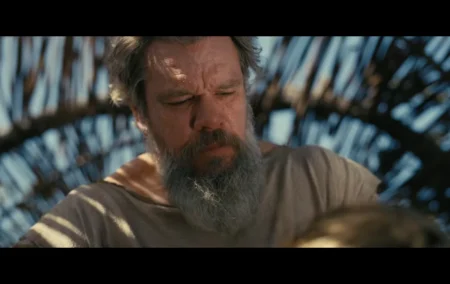
[Image: Couldn’t they have got an old Greek guy to play Odysseus, instead of Matt Damon? Screenshot from official trailer for The Odyssey.]
The views of the writer are not necessarily the views of the Daily Friend or the IRR.
If you like what you have just read, support the Daily Friend