

The ANC leadership’s response to the deindustrialisation that the party’s policies provoke is ill-conceived.
Business Day’s reporting of the plan began: “The ANC is pushing preferential electricity tariffs, export controls and infrastructure investment for SA’s chrome and manganese industries, in a move aimed at stopping factories from shutting and heeding long-standing industry warnings of creeping beneficiation decline.”
The article inspired many valid critiques of the plan in the comments section. Three further considerations are highlighted here. First, beneficiation is a political construct not supported by economic logic. Second, SA’s households can’t afford to subsidise poorly conceived industrial projects. Third, ANC leaders disregard how global economic growth relies on efficiency gains.
Having abundant reserves of a natural resource provides no assurance that a country can efficiently process it to climb the value chains in global supply networks that rely on it. Bulk shipping is cheap. Chrome should be smelted in countries with low-cost reliable electricity.
The ANC presumes that as SA has by far the world’s largest chrome deposits, it can tax the exportation of the unprocessed mineral to support local beneficiation. While this seems reasonable, it is risky and it ignores unjustifiable indirect costs. Nor does it overcome our being less efficient at smelting than China.
Scientific advances
It seems unlikely that large deposits of chrome will soon be located in other countries, but an export tax tempts such an outcome. Nor does it seem likely that a substitute for chrome’s key uses, such as creating stainless steel, will soon be discovered. Yet betting against scientific advances and innovations has never been riskier.
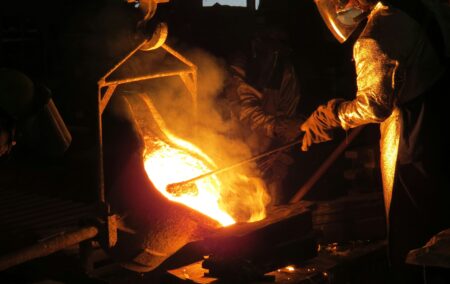
Chrome ore is smelted with iron to produce ferrochrome which is a key ingredient for making stainless steel. China, the world’s largest producer of ferrochrome, benefits from low energy costs, economies of scale, advanced smelting technology, and being the largest consumer of the alloy. The ANC wants to offset China’s low energy cost advantage through “preferential energy tariffs”. They want SA’s consumers to pay more for electricity, or in taxes, to fund subsidies for smelting facilities.
While energy subsidies can increase industrial jobs, we can confidently anticipate that the overall number of jobs will decline. As SA households will have to pay more for electricity, or in taxes, they will have less money to buy local goods and services. Notwithstanding corruption and incompetence provoking punchy headlines, it is the mixing of localisation policies with overburdening households that is the centrepiece of the ANC’s tragic economic stewardship.
Whereas the ANC favours creating auto manufacturing jobs through raising import tariffs, Australia cancelled such subsidies about a decade ago leading to the loss of at least 40,000 well-paid jobs. What isn’t directly observable is how many jobs were created through Australian consumers having more income once the subsidies were abolished. Australia’s current unemployment rate is 4.2%.
Profoundly misguided
Most SA households are poor and many that are better off struggle to service their debts. Given such core economic considerations, it is profoundly misguided to further overburden SA households to protect a modest number of jobs in a sector where SA is fundamentally uncompetitive.
A society that relies on overfishing within an internal lake cannot benefit from finding ways to overfish ever more aggressively. ANC policies have entrenched the world’s most severe youth unemployment crisis by insisting on localisation-driven growth despite a large majority of our households being in financial distress.
We have low growth and ultra-elevated unemployment for lack of fishing in open seas – in the global economy – for ways to serve deep-pocketed consumers. This is what propelled the world-changing rise of Asia. Whereas we insist on believing this requires raising education outcomes, the rise of Asia was predicated on raising competitiveness through specialisation in global supply chains. Beneficiation leans in the same general direction but it mistakenly presumes that resource endowments provide competitive advantages. Rarely is this the case.
A great reckoning awaits us, but we are distracted by widespread corruption alongside investment shortfalls and romanticised expectations of entrepreneurs saving the day. Investors know better than to invest in overfished operations. Countries that dare to do so steal from their children – as presaged by high youth unemployment.
Economic stagnation
Our low level of capital mobilisation is much more a symptom than a cause of our economic stagnation. If our companies and entrepreneurs were fishing competitively in the open seas, that is, in today’s high growth global economy, funding would not be a limiting factor.
The binding constraint acting on our economy is access to adequate purchasing power. Every year this gets worse as another roughly 250,000 young adults who have remained unemployed years after leaving school become, in effect, permanently marginalised. The purchasing power of very few of our households is increasing. Servicing debt becomes ever more overwhelming as growth and employment stagnate.
Our policy makers don’t understand why our unemployment crisis seems so intractable for the same reason they don’t understand why preferential electricity tariffs are a terrible idea. They don’t understand the basics of economic development – nor are our economic debates sufficiently well informed.
[Image: Francisco Fernandes on Unsplash]
The views of the writer are not necessarily the views of the Daily Friend or the IRR.
If you like what you have just read, support the Daily Friend