

There is a moment after a public controversy when the noise dies down but something still feels unsettled, as if the real issue has not been confronted. That is the feeling I had watching the recent storm around Amanda Rinquest, who is a senior official at Black Sash, and her strong public efforts to pressure a state-owned venue into cancelling a musician’s performance because of his political views.
The discourse was loud, emotional, and typical of our hyper-charged online culture. But beneath the surface sits a deeper tension that young South Africans like me cannot afford to ignore. What happens when the guardians of constitutional rights forget that those rights apply even to people they disagree with?
As someone from Soweto who was schooled in a system shaped by the Constitution, I grew up knowing about Black Sash as one of the moral anchors of our democracy. Their members literally wore black sashes as a form of mourning for the erosion of civil liberties; they risked intimidation to protect freedoms. This shows that their historical record is clear. They opposed censorship, stood up against state suppression of speech, and defended the rights of ordinary people to assemble, protest, and express unpopular views. That legacy is something many of us still look up to, and it is why this moment demands a frank conversation.
Amanda Rinquest is the National Education & Training Manager at Black Sash, a position that carries significant symbolic authority. When someone at her level publicly participates in a campaign to de-platform a musician for his political stance just because it differs from hers, it does more than express a personal opinion. It blurs the line between private activism and the institutional values of Black Sash that she is meant to uphold. And this is not just an incidental detail; it matters because she doesn’t speak from the position of an anonymous citizen but from the vantage point of a leader in a civil-rights organisation known for resisting exactly this type of pressure.
Amanda reposted calls for Kirstenbosch to scrap ‘The Kiffness’ show. As if that was not enough, she publicly alerted her followers to the X account of his mother with the remark that she “seems worse than him” which is not just inconsiderate, it is reckless. It exposes an inconsistency between her role and her actions that cannot be swept aside under digital discourse.
Impact
Whether she intended to harm is not the point, because intention does not always align with impact, and in this case, directing online attention toward an older woman who is not a public figure in an attempt to shame her could not have been right. The Kiffness’s mother has since said she felt threatened, and that is honestly something no leaders in the human-rights space should take lightly. They are at the forefront of teaching the nation about dignity, and ought to embody it.
We must bear in mind that this is not a debate about whether people like ‘The Kiffness’. Some don’t and that’s okay. They see him as provocative, political, and often polarising. But democracy does not require us to admire the people protected by rights, it requires us to protect those rights anyway. It is the responsibility of every person to do so, especially those who are leading organisations as impactful and important as Black Sash. You do not defend freedom of expression by silencing those you don’t find palatable. You defend it precisely when the speaker irritates you, because that is when principle is tested, and this was one of those moments.
What troubles me most is how quickly the conversation slid from criticism of a musician to pressure on a state-owned venue to drop him entirely. Once public institutions start bending to ideological pressure by a group of people and disregard the needs of others, we enter dangerous territory. South Africa knows this all too well. If public venues can be weaponised against certain voices today, who becomes the next acceptable target tomorrow? A journalist, a lecturer, or a student activist? Where is the line drawn, and why is it that some people seem to decide on it regardless of the values set by our beautiful Constitution?
Growing up in the township where I did, I have seen how power dynamics come to play in real life. Silencing rarely arrives in a noticeable way because it starts subtly, with one person pushed off a platform, then another, until it feels normal and it starts being a cycle. Soweto itself is proof of how this happens. The township wasn’t a natural settlement but a deliberate creation of apartheid engineering, designed to keep black people far from Johannesburg’s economic and political centres, to limit our mobility, weaken our organising power, and restrict our voices.
Forced removals
Our streets were shaped by forced removals, by permits that controlled movement, by a system built to make Black expression difficult and easy to suppress. Growing up in such a place teaches you to recognise the early signs of silencing, because you inherit the memory of how quickly rights can shrink when only some people are allowed to speak. This is why I believe that the principle should always matter more than the personality. I come from a community that has lived with the consequences of selective freedom, and I know how dangerous it is when society starts deciding who deserves a platform and who doesn’t.
What adds another layer of contradiction is Rinquest’s own public identity. She is not just a rights educator at Black Sash. She also speaks forcefully on issues of global justice. In Muslim Views, she is quoted at a pro-Palestine march as a member of “Christians for a Free Palestine,” calling for universal justice and reminding South Africans that moral struggles transcend religion. That message resonates with many young people, including me. I believe justice must be consistent and universal. But that is why her behaviour in this instance is so deeply contradictory. You cannot advocate for universal justice in one context and then actively contribute to silencing lawful political expression in another.
Selective universality is not universality at all. If the struggle for dignity is truly universal, then dignity cannot be withheld from those whose politics we dislike. And upon calling for justice in Gaza, we should not tolerate injustice in our own backyard. If we demand that others respect our speech, we must respect theirs, even when it stings.
Some people have argued that Rinquest was merely exercising her own freedom of expression, but this argument collapses under scrutiny, because there is a difference between saying “I disagree with this artist” and using public pressure to influence a state entity to cancel him. Freedom of expression gives us the right to criticise, not to shut down the rights of others.
Public pressure
The line matters especially for someone in her position. When a rights educator leans into the power of public pressure to eliminate a performance, the implication is clearly that those who hold institutional roles can decide which voices deserve to be heard. That is incompatible with the ethos of an organisation built on resisting suppression. Black Sash has always reminded us that power must be held accountable. That should not exclude the power exercised by its own leaders.
Beyond the personalities involved, there is a broader concern about our society. Social media has made it easy to replace engagement with punishment. Instead of arguing with ideas, people try to erase the person expressing them, and instead of confronting difficult discussions, we attempt to remove the speaker. This habit is corrosive to democracy. It teaches us that disagreement is intolerable, that the answer to discomfort is cancellation, and that ideological homogeneity is the highest good. But South Africa’s democratic story has always been the opposite. We flourished because we learned to hold difference in the same room without demanding silence. We cannot build a society where rights depend on popularity.
As a teacher in training myself, I worry that young people watching these debates might conclude that activism is about eliminating opposing voices rather than confronting them with better arguments. That is the opposite of what our constitutional order stands for. This incident could have been one of those fleeting online dramas that disappears after a few days. Instead, it has become a national moment of reflection, because the contradictions are too glaring and the principles too important.
Not beyond redemption
Amanda Rinquest, like any other person expressing their views, is not beyond redemption. Nothing about this moment needs to permanently define her. But the importance of her role means that her missteps carry weight, and it is crucial that she acknowledges that.
South Africa needs leaders who apply principles consistently, not only when it suits their ideological position. If someone at the helm of rights education can be inconsistent about free expression, then what hope do we have of teaching the next generation to honour it?
Our democracy cannot survive on selective constitutionalism. It requires courage, humility, and the willingness to protect the rights of even those who challenge us: especially those who challenge us. This moment is not one of failure, it is a reminder that South Africa’s democratic values require vigilance at all times. Freedom of expression is not a reward for good behaviour, it is a right. A right that we either defend for all, or that we risk losing for everyone.
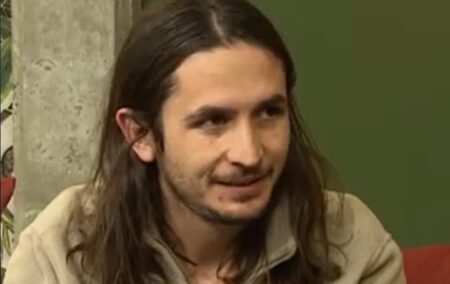
[Image: Screengrab]
The views of the writer are not necessarily the views of the Daily Friend or the IRR.
If you like what you have just read, support the Daily Friend