

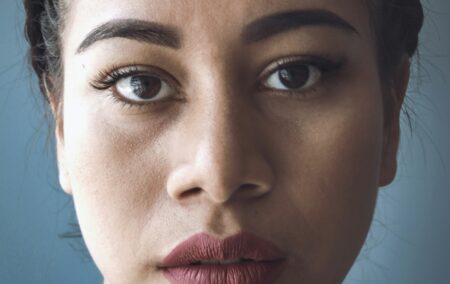
The 2025 Miss Universe contest just happened in Thailand. The world’s premier bodybuilding contest occurred a month before. This time of the year also sees a number of movie award events. All of the above are contests of physical appeal to some degree.
These contests persist in the face of criticisms ranging from lack of religious modesty to appearance being an arbitrary, undignified and inequitable way to evaluate people. We see some kind of judgement of physical attractiveness in every culture throughout history.
Obviously, differences in physical appearance are important to humans, but why? Evolutionary biologists point out that certain physical features are signs of youth, health, vitality and fertility. All of these in turn are related to either the ability to secure food and other resources, provide protection or to reproduce.
Signs that are related in that fashion will become sought after by others i.e., will be attractive to them. Even those who reject the theory of evolution will admit that these features are both reliable signs of health or fertility and so on, and that they find them attractive.
In women these signs will be a fat content and distribution that results in a larger hip to waist ratio, noticeable breasts and a general softness; fuller lips; strong shiny hair; youthful and unblemished skin; bright eyes (large in most cultures but not always); a smaller jaw and nose (a retention of juvenile features), and a certain regularity that suggests good genes and the absence of illness.
There is a global tendency for females to have a lighter complexion than men, and so many cultures find that attractive in women (or talk of dark, handsome men). Many assert that blondness in women is attractive, but I could never work out why until I mentioned that to a young lady cutting my hair. She told me that blond hair makes people look younger and suddenly it made sense. Incidentally it is not actually true that blond women are more attractive than non-blonds. Long thick hair is, however, a plus.
In men a lack of fat is attractive. A lean gut, neck and jaw signals youth, health and strength. Other positive features include being somewhat taller than the lady and having some width and volume to the shoulders. A full head of hair is usually a plus. Women frequently mention other signals of strength, confidence, ambition and engagement with life, such as strong hands and forearms or an upright posture, as attractive.
Basic grooming, an occasional acquaintance with soap, a sense of humour and nice eyes also count guys.
More attractive
Studies have compared the differences between average female and male faces. If you use those differences to exaggerate a photo of a woman in the female direction, that usually makes her face more attractive. These are often features that also make the face more juvenile. The reverse does not work for men.
Hypermasculine male faces seem to imply danger to women but do seem attractive in certain contexts. Women find different things attractive in different parts of their cycle, for example, looking more masculine when she is maximally fertile, looking less masculine when she is not fertile … and sporting an axe in your head when she is premenstrual.
The US General Social Survey includes an interviewer estimate of the interviewees’ attractiveness; 13.3% of women between 18 and 30 years old are ‘very attractive’ and only 2.8% are ‘very unattractive’. A tiny bit more than half rate as ‘attractive or better’ and only 6% rate as ‘unattractive to some degree’. The label ‘about average’ applies to the not unattractive 44% in the bottom half, i.e., ‘average’ falls entirely within the below-average half.
The picture for men in the same age range is very similar; 11.5% ‘very attractive’, 4% ‘very unattractive’ and ‘average’ being within the bottom half.
I would sum this up by saying about 1 in 30 women are hot, another 1 in 10 are very appealing, half in all are at least attractive, another 44% ‘so-so’, and 6% face rejection because of their looks, with 1 in 74 judged outright ugly. I think those proportions do not change with time. We tend to grade looks on a curve rather than by some objective aesthetic criteria. A certain minimum fraction needs to be appealing, and a certain maximum fraction unappealing, in order to keep breeding sustainable.
Modest factor
A few factors contribute to these judgements. Age is a surprisingly modest factor. The unattractive above 50 years old do not lose anything and the attractive only a little. In the US excess weight is somewhat unattractive. So is something about lower socio-economic status and less education. That something is not the low intelligence common to both.
The point is that attractiveness seems to be nature’s method of identifying the best candidates to preserve the species. If so, aesthetic preferences are hardwired and important. However, there are non-breeding related consequences too.
Good looks increase your chances of being employed and your pay when you are. People think you are nicer and more honest. You are probably healthier in that good looking people live longer on average. You face higher odds of a guilty verdict in a criminal case if you are ugly and quite generally people will be mean to you.
These are utterly unfair, and maybe as a society we should try to guard against them – but given our evolution we face an uphill battle.
The views of the writer are not necessarily the views of the Daily Friend or the IRR.
If you like what you have just read, support the Daily Friend