

The recent decapitation of Venezuela’s regime and America’s withdrawal from 66 supra-national organisations signals a new era in global politics.
Donald Trump does not want to be leader of the free world. He wants to be emperor of the western hemisphere.
The recent capture of Venezuelan dictator Nicolás Maduro is illustrative of a number of things.
Of course, the US is quite right that the nationalisation of the Venezuelan oil industry at the expense of multinational oil companies, under Maduro’s predecessor as socialist strongman, Hugo Chávez, amounts to theft. Venezuela ought to give those assets back. The US is also correct that Maduro was the dictator of a failed socialist narco-state that acts against American interests, and doesn’t deserve to be in power.
Unilateral action to topple him, however, steps over an important line in the sand.
Peter Swanepoel, in his excellent analysis in these pages, has said everything I would have wanted to say about how American unilateralism undermines the rules-based international order, and that the ends do not implicitly justify the means.
No more fig leaves
We now know that the US is quite prepared to violate the sovereignty of other countries if Trump deems it to be in America’s interest, despite the Trump campaign’s promise to be the party of peace. Canada, Mexico, Cuba, Colombia and Denmark have been put on notice: take Trump’s threats seriously.
Another is that the US is not interested in promoting freedom and democracy, even as a fig leaf for mercenary self-interest.
After Maduro’s capture, the US did not turn Venezuela over to its duly elected anti-Chavismo leaders, Edmundo González Urrutia or María Corina Machado. Instead, the Trump administration is content to do business with the cowed and headless remains of the Maduro regime, now under the command of former vice-president and fellow socialist, Delcy Rodríguez.
This flies in the face of America’s commitment, 21 years ago, to quit supporting authoritarian regimes for the sake of stability and self-interest.
“For 60 years, my country, the United States, pursued stability at the expense of democracy in this region here in the Middle East, and we achieved neither,” said Condoleezza Rice, George W. Bush’s secretary of state, in a 2005 speech in Egypt. “Now we are taking a different course. We are supporting the democratic aspirations of all people.”
There are three explanations for this foreign policy u-turn.
The first is that the Trump administration is not prepared to go to the expense and trouble of building a democracy, having seen in Iraq and Afghanistan (and Libya and Syria, where they didn’t even try) how hard it is to do so.
Trump wants obedience; he wants to dominate countries by the crude exercise or threat of power, not voluntary partnerships with sovereign members of the free world. When he says “America First”, he really means to say he cares nothing about the hopes, aspirations, freedom and prosperity of non-Americans.
The second is that Trump has always viewed war purely as a means to secure resources. He demonstrated it when he made support for Ukraine conditional on its acquiescence to a massive mineral resource grab. He demonstrated it again in Venezuela.
Remember all those exaggerated claims by anti-Americans that the US was an imperial power that was only ever in it for the oil, or to make defence contractors rich? With Trump, those accusations are embarrassingly true, and he makes no effort to hide it.
The third reason why Trump didn’t turn Venezuela over to the opposition is resentment that Machado won the Nobel Peace Prize he – like a jealous child – won’t stop saying he deserved more. And perhaps this reason was most important to Trump’s fragile ego.
Isolationism
On Wednesday, the White House announced that Trump has withdrawn America from a long list of supra-national organisations, treaties and conventions – 31 UN organisations, and 35 non-UN groups – on the grounds that they “no longer serve American interests”.
I’ve long been an opponent of some of these groups, and have expressed concern that UN organisations and other global groups are driving ideological agendas with which I, as a classical liberal, simply cannot agree.
One example is the World Health Organisation, which has gone far beyond its original remit of fostering international cooperation in the fight against infectious diseases, to promoting expensive universal healthcare programmes, prohibitionist measures against tobacco, and authoritarian policies to combat so-called “lifestyle diseases”.
Another is the Intergovernmental Panel on Climate Change and the UN Framework Convention on Climate Change, from which the US has now also formally withdrawn.
The White House’s list includes many unsurprising groups, and I can only applaud Trump for ditching them. However, it also includes names that are a lot harder to explain.
Why, for example, would the US withdraw from a forum dedicated to internet freedom, or a multilateral counter-terrorism organisation, or a group that mobilises resources to support education in crisis-affected countries?
I think the more important signal to be read than which specific organisations the US chose to leave and which not, is that the Trump administration does not want to be bound by supra-national agreements and treaties, and also doesn’t want to influence them, either.
This is at root an isolationist moves, and that will have important consequences for the world as we know it.
A new mercantilist order
In the early modern era, the great powers of Europe engaged in relentless competition for dominance in a world shaped by colonial control and empire-building.
The great economic fallacy upon which these rival empires built their mercantilist worldview is that prosperity is a zero-sum game. They did not view trade as mutually beneficial, but imagined that there were winners and losers in every transaction.
If an Englishman bought a pound of cheese and a bottle of wine from a Frenchman, so the logic went, England was the price of a pound of cheese and a bottle of wine poorer, and France was that much richer.
It didn’t occur to them that the Englishman was an actual pound of cheese and bottle of wine richer, and the Frenchman no longer had his cheese and wine. They counted only the flow of currency, and not the flow of value in goods and services.
It did not occur to them that the Englishman was now richer because he valued what he bought higher than the money he spent, and the Frenchman was now richer because he preferred the money over the goods he sold.
Nations also believed – much like the environmentalists of today – that global wealth was essentially finite. Economic success, therefore, depended on outcompeting rivals by amassing gold and silver, controlling exclusive markets, and preventing capital outflows.
Spanning roughly the 16th to 18th centuries, this era of empire was characterised by a tight coupling of state and economy, the use of both hard and soft power to project influence and control across the world, and deploying militarily-supported monopolies through colonial expansion to secure resources abroad.
That the acquisition of literal boatloads of gold and silver from the New World led to inflation did not dent the mercantilists’ faith in the virtue of accumulating specie. Instead, they blamed the greed of bestial immigrants, merchants and moneylenders.
Many of them were Jews, of course, and we all know how scapegoating Jews ended up.
Liberalism and prosperity
As mercantilism began to give way to free markets and free trade during the 19th century, the economic fortunes of the world began to improve rapidly.
Because honest trade is for the most part beneficial to both parties to the transaction, we discovered that voluntary trade actually creates wealth, rather than merely redistributing it.
Slowly, the age of mercantilist empires gave way to a global order rooted in liberal norms, free trade, and institutional cooperation. This transition led to an extraordinary rise in prosperity, cutting right across society.
Until the mid-19th century, 80% of the world’s population still lived in poverty. By the 21st century, that share had fallen below 10%.
Economic output per capita (and consequently, income), which had remained relatively stagnant for millennia, began to grow exponentially. Wealth had always been concentrated among a small aristocracy, while the vast majority laboured as serfs and peasants. Now, relative comfort and security was for the first time in history within reach of the metaphorical man in the street.
Enter Trump
As I’ve written before, Trump’s pronouncements on economic matters demonstrate that he shares the zero-sum view of trade of the mercantilists.
He strongly believes that America’s ability to import more than it exports is not a signal of economic vitality and strength (which it is), but a sign that foreign countries are taking advantage, enriching themselves at the expense of Americans.
Like the mercantilists, he sees only the flow of currency, and not the value of the goods and services the currency buys. Like the mercantilists, he directs the economic discontent of his followers at out-groups like trans people, immigrants and other people who don’t look or act like “all-American patriots”.
Now, his foreign policy stance confirms that a new imperial age may be upon us. Trump’s foreign policy, rooted in economic nationalism, transactional diplomacy, and strategic rivalry, bears all the hallmarks of a reconstituted imperial logic.
If the 20th century was the age of globalism, multilateralism, and liberal hegemony, then the Trump Doctrine signals the onset of a 21st-century neo-mercantilist imperialism, where power is once again measured not by noble ideals or mutually beneficial alliances, but by great power dominance and resource plunder.
Trump has consistently framed both trade policy and military power as tools to reclaim economic sovereignty from foreign exploiters.
Fundamental break
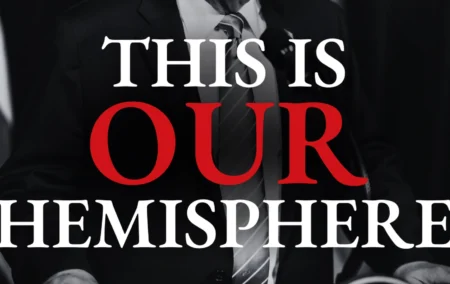
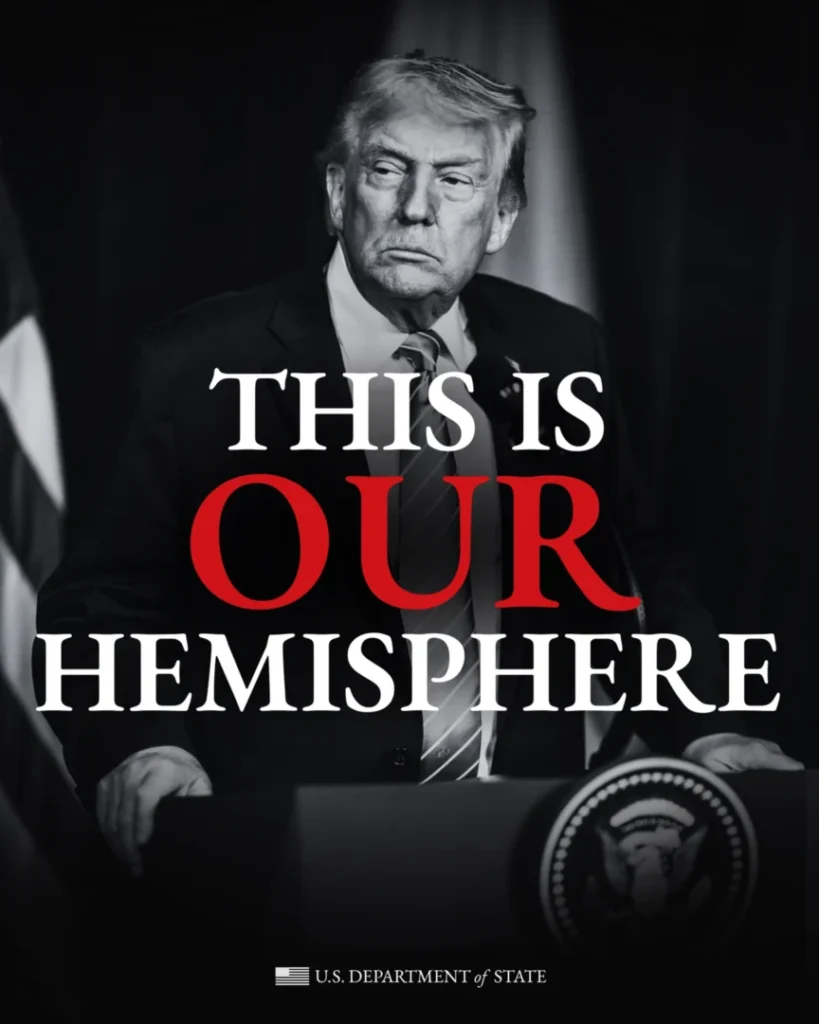
This shift is not a mere deviation from liberal economic orthodoxy; it is a fundamental break, and it is epitomised by the White House claim, “This is our hemisphere.”
Making a possessive claim of dominance over a sphere of influence is the language of an emperor, not of the leader of the free world.
It revives the paradigm of economic warfare as a function of statecraft, where tariffs, sanctions, and subsidies are deployed not to facilitate global trade and even out market disruptions, but to discipline adversaries and reward allies.
It is the mercantilist logic of the imperial court brought into the 21st century: wealth is earned for the state by trading protection for resources, rather than for and by the people engaging in open, mutually beneficial trade.
The pursuit of exclusive zones of influence, which he shares with China’s Xi Jinping and Russia’s Vladimir Putin, reveals a deep imperial impulse.
Trump’s foreign policy also discards the post-war ideals of multilateral peace and cooperation, in favour of unilateralism and great power rivalry.
Instead of seeking to reform institutions like the World Trade Organisation, the World Health Organisation, and the United Nations, Trump considers the implicit restraint on unilateral power to be against America’s interests, and has simply sidelined and openly attacked them.
Instead of long-term multilateral engagement, Trump has pursued direct, leader-to-leader negotiations with rivals and allies alike – all framed as deals to be made, not rules to be followed.
This return to personalist, transactional diplomacy reflects the power politics of imperial courts more than the liberal democratic norms of post-war diplomacy.
Imperial rivalry
Critics have long debated whether the postwar American-led order constituted an empire. I have always argued against this view.
Under presidents from Truman to Obama, the US maintained global economic hegemony, but declared its ambitions in language of liberal internationalism, promoting democracy, free trade, and human rights.
Since the peace and prosperity of the modern era is built on exactly these values, and global trade is an essentially voluntary enterprise between private individuals and companies, the label “imperial” never really seemed appropriate.
Now, Trump has abandoned this ideological cover. He does not pretend to spread universal values. He does not pretend to be benevolent. Instead, he has reduced foreign policy to a series of bargains and protection rackets.
This shift is crucial. It is one thing to use military power and economic leverage to promote a world of peaceful cooperation among sovereign nations. It is quite another to use this power purely to pursue resources to benefit America.
As global powers realign and institutions fragment into spheres of influence centred upon the US, Europe, China and Russia, the stage is set for a return to imperial rivalry, not unlike that which defined the early modern world.
Trump’s America has rejected the illusions of a cooperative world, and in doing so, reawakened the nationalistic, imperial instincts that history has never fully buried.
Trump has recast the United States as an empire not of ideas, but of interests.
The world has lost the greatest defender of the values of mutual tolerance, rules-based cooperation and free trade – values that produced the greatest boom in broad-based prosperity that history had ever seen.
We have lost the leader of the free world.
[Image: Our Hemisphere Cropped.webp]
The views of the writer are not necessarily the views of the Daily Friend or the IRR
If you like what you have just read, support the Daily Friend