

Why moral clarity does not justify discretionary power.
There is little difficulty in condemning the regime that presided over Venezuela’s collapse. Over more than two decades, first under Hugo Chávez and then Nicolás Maduro, the country’s economy imploded, its institutions were hollowed out, elections were emptied of meaning, and dissent was progressively criminalised. Hyperinflation rendered salaries worthless, millions fled the country, political opposition was met with violence and intimidation, and the state increasingly functioned as a vehicle for regime survival rather than public governance.
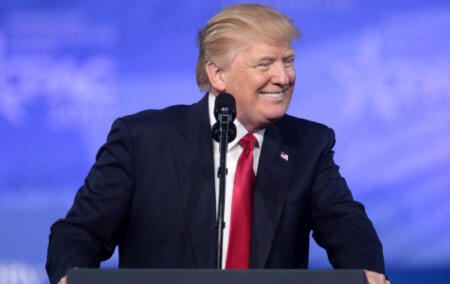
In early January, US forces reportedly carried out a unilateral military operation in Venezuela that resulted in the capture and removal of Nicolás Maduro from power. President Donald Trump subsequently declared that the United States would “run” the country until a transition could be arranged. The operation was conducted without prior congressional authorisation or international mandate, and has been justified variously on humanitarian, security, and economic grounds.
If legitimacy is measured by consent, accountability, and institutional restraint, the Maduro government forfeited it long ago. There is nothing especially challenging or original in saying so.
What is challenging is what follows from that judgement.
The moral clarity that accompanies the fall of a widely despised regime can be intoxicating. It encourages a subtle but powerful slippage: from the claim that a government deserved to fall, to the claim that the way it fell must therefore be justified — or at least not worth troubling over too much. It is here, in that slippage, that outcome-based morality exerts its greatest pull.
The hardest question raised by Venezuela is not whether Maduro deserved to fall, but whether the fall of governments can be left to the discretion of powerful states without corroding the very rules that restrain power in the first place.
Illegitimacy does not automatically legitimise force
It is a mistake to assume that because a government lacks domestic legitimacy, any external action against it becomes legitimate by default. Condemnation and coercion are not symmetrical acts. One can judge a regime harshly — accurately — without thereby authorising force against it.
This distinction is not a matter of pedantry. The post-1945 international order was constructed precisely on the understanding that moral consensus about ‘bad regimes’ is unstable, contested, and often shaped by interest. The prohibition on unilateral intervention does not deny that tyrannies exist; it denies that individual states may decide, on their own authority, when force becomes permissible.
Sovereignty is often derided as a shield for despots. In practice, it functions as a brake on discretionary power. Once the decision to intervene is detached from collective authorisation and procedural constraint, legitimacy migrates from rules to results — and from law to power.
Condemnation is cheap. Coercion is not. The former can be universal; the latter must be constrained.
The constraint problem: what limits power?
The central problem raised by unilateral regime change is structural rather than sentimental. If powerful states may remove governments they judge to be criminal, corrupt, or destructive, what principle remains to constrain power once that judgement is made?
Appeals to intention are insufficient. Few states describe their own actions as predatory or self-serving. History offers little reason to believe that power, once justified by moral certainty, will reliably restrain itself.
Rules that bind only the weak are not rules at all. They become instruments of discipline rather than principles of order. Once unilateral intervention is normalised, restraint depends not on shared norms but on prudence, reputation, or exhaustion—none of which are stable foundations for international politics.
The danger is not that every intervention is wrong, but that once discretion replaces constraint, the line between enforcement and domination becomes indistinct.
Russia, Ukraine, and selective principle
Any discussion of Venezuela inevitably invites comparison with Vladimir Putin’s invasion of Ukraine. The comparison must be handled carefully. These are not the same kind of wrongdoing. Russia pursued territorial conquest, denied Ukraine’s legitimacy as a political community, and sought permanent absorption. A US operation aimed at regime removal does not share those features.
Yet difference of kind does not eliminate similarity of category. In both cases, a powerful state used force inside a weaker sovereign state without collective authorisation. From the standpoint of international norms, that similarity matters. To be clear, this is not a moral equivalence, nor a claim that the stakes, intentions, or consequences are comparable; it is an argument about how norms are eroded, not about who bears greater blame.
This is where an uncomfortable contradiction emerges — particularly among some contemporary conservatives. Many were rightly appalled by Russia’s violation of Ukrainian sovereignty, yet appear far more relaxed about unilateral US action in Venezuela. This is not best understood as simple hypocrisy. It reflects a deeper logic: legitimacy is derived not from rules, but from who wields power and for what civilisational purpose.
In this view, sovereignty violations by rivals are intolerable; sovereignty violations by the hegemon are corrective. The problem is not moral confusion but hegemonic exceptionalism. Once that logic is accepted, the rules cease to be general constraints and become conditional permissions.
If sovereignty matters only when violated by one’s enemies, it does not matter at all.
The tragic-choice argument
At this point, objections of fence-sitting are predictable — and misplaced. International politics frequently presents tragic choices: decisions between morally unsatisfying alternatives rather than clean solutions.
Maduro’s regime deserved to fall. That judgement is straightforward and defensible. But a world in which governments fall at the discretion of powerful states is worse than one in which some bad regimes endure. Not because endurance is just, but because discretion is dangerous.
This is not an argument for moral paralysis. It is an argument for moral discipline: the recognition that certainty about villains does not produce certainty about methods.
As some commentators have noted, it is possible to judge the removal of a criminal regime as an objective good without endorsing the means by which it occurs. The harder question is whether success itself should be allowed to confer legitimacy after the fact.
A direct challenge to the reader
At this point the argument must become explicit, not merely analytic. You are free to judge the action in Venezuela as right or wrong. But if you judge it as right, you must accept the rule it establishes.
If you are comfortable with your worst enemy — Russia, China, Iran, or some future rival — invoking the same logic, citing similarly ‘good outcomes’, and acting without collective authorisation, then proceed. That is the world you are endorsing.
If you are not comfortable with that — if you recoil at the idea of your adversaries exercising the same discretionary power — then you cannot coherently endorse it when exercised by your own side.
This is the cost of consistency. You do not get to keep the rule when it restrains others and discard it when it restrains you.
Outcome-legitimacy versus rule-legitimacy
The Venezuela episode exposes a deeper disagreement about what ultimately legitimises force. On one side lies rule-legitimacy: the view that adherence to procedures and constraints confers legitimacy even when outcomes are grim. On the other lies outcome-legitimacy: the belief that morally attractive results can justify the means used to obtain them.
Many contemporary liberals fall squarely in the first camp. They oppose Russia’s invasion of Ukraine and, for the same reasons, oppose unilateral regime change elsewhere — even when the target is a regime they despise. This is not inconsistency; it is normative coherence.
By contrast, populist and nationalist traditions tend to prioritise decisiveness, strength, and discretionary action. For them, legitimacy flows from action and result rather than rule-following. Once outcomes are allowed to confer legitimacy, legitimacy becomes situational — and power becomes self-justifying.
Outcome-based morality is tempting in everyday life as well: we forgive procedural shortcuts when they produce results we like, and only rediscover our commitment to rules when those same shortcuts are used against us.
This is the seduction of outcome-based morality: it feels pragmatic, humane, and unsentimental, but it is also structurally corrosive.
‘But what about genocide?’
At this point, a predictable objection arises: does this argument imply that intervention is always wrong, regardless of circumstance? What about genocide?
The answer is no — and this isn’t splitting hairs. Genocide and mass atrocity are governed by a separate body of collectively articulated norms, including doctrines such as the R2P (Responsibility to Protect). These doctrines are themselves contested, unevenly applied, and often honoured more in rhetoric than in practice — but they nonetheless represent an effort, however fragile, to anchor legitimacy in collective authorisation rather than unilateral discretion.
Whether those doctrines have been applied consistently or well is a separate debate. What matters here is that they represent an attempt — however imperfect — to locate legitimacy in collective authorisation rather than unilateral discretion.
Venezuela does not meet those thresholds. Its catastrophe is real, but it is not genocide. To collapse these categories is to erase the very distinctions that make norm-based restraint possible. Once every grave injustice becomes a licence for unilateral force, restraint disappears entirely.
None of this implies that the only alternative to unilateral force is passive condemnation. Diplomatic isolation, sanctions, asset seizures, support for civil society, international criminal processes, and sustained multilateral pressure are all imperfect tools — but imperfection is the human condition of politics. The point is not that these measures always succeed, but that they preserve the distinction between judgement and domination.
The outcome problem: what comes after removal?
Even if one sets aside legality and principle, the empirical case for confidence in Venezuela’s ‘after’ is weak. Much of the moral defence of intervention relies, implicitly, on an assumption of improvement.
Removing regimes has repeatedly proven easier than replacing them. The US demonstrated overwhelming capacity to topple governments in the Iraq War and the War in Afghanistan. In both cases, initial military success bred confidence that proved misplaced. Institutional collapse was underestimated; post-regime governance was far harder than anticipated; and outcomes diverged sharply from initial promises.
Venezuela’s institutions have been hollowed out over decades. Patronage networks, security services, criminal groups, and economic interests are deeply entangled. Power vacuums are not neutral spaces; they are contested arenas. The danger is not merely disorder, but the emergence of new forms of authoritarianism, dependency, or violent fragmentation.
Even if one brackets legality entirely, the historical record gives little reason to believe that externally imposed regime change reliably produces the outcomes its advocates promise.
Domestic legality and executive power
The erosion of constraint is not confined to the international sphere. In the US, the constitutional authority to initiate war rests with Congress, not the president. Unilateral executive action is permissible only in cases of imminent self-defence. That threshold is difficult to sustain in Venezuela’s case.
This formal allocation of authority has, of course, been steadily eroded over decades, as successive administrations of both parties have expanded executive discretion in the name of necessity and speed.
Whatever one thinks of congressional dysfunction, bypassing legislative authorisation mirrors the international pattern: outcomes overriding procedures, discretion replacing restraint. The logic is the same. Power, convinced of its own necessity, sheds its limits.
A realist’s problem, not a liberal fantasy
You don’t need liberal idealism to see this. In fact, the argument sits comfortably within a sober realism. Realists care about predictability, precedent, and restraint because instability invites counterbalancing and escalation. Norm erosion increases uncertainty; uncertainty increases conflict.
From the Soviet interventions in Eastern Europe to the American invasion of Iraq, norm violations justified as exceptional have repeatedly triggered counterbalancing rather than compliance.
From a realist perspective, outcome-based morality is not prudence. It is short-termism dressed up as decisiveness.
Conclusion: restraint as moral discipline
The problem with removing dictators by force is not that dictators do not deserve to fall, but that the power to decide who deserves to fall cannot be safely entrusted to anyone.
Restraint is not moral indifference. It is moral discipline: the recognition that rules exist not to protect villains, but to prevent judgement — however righteous — from becoming licence.
Venezuela tempts us with moral clarity and the promise of resolution. The seduction lies in believing that good outcomes can safely replace good rules. History suggests otherwise.
[Image: https://commons.wikimedia.org/wiki/File:Donald_Trump_%2832758233090%29.jpg]
The views of the writer are not necessarily the views of the Daily Friend or the IRR
If you like what you have just read, support the Daily Friend