

“Neither do people pour new wine into old wineskins. If they do, the skins will burst, the wine will spill and the skins will be ruined. Instead, they pour new wine into new wineskins, and both are preserved” – Matthew 9:17(NIV)
Within the spirit of the season and in thinking of this new dispensation of South Africa post Apartheid it occurred to me that the problem with thinking of this dispensation as a new South Africa is that fundamentally speaking it is not all that new.
The state simply picked up from where the old dispensation was and continued employing government diktat and engineering to create a racialized elite and a very government based public sector middle class while the black majority largely still languishes in poverty, poor education and terrible life outcomes.
The state also levied punishingly high taxes in both instances at both the corporate(40% during apartheid but resource heavy industry got carveouts vs 27% now) but the apartheid government could offset that for business with incredibly cheap labour costs. Personal taxes were also high but only truly levied on the white minority as they were the ones allowed to have the good jobs.
All of this is to simply say that South Africa has truly never tried economic freedom, never had a state with a lean government that didn’t impose high taxes and social engineering on people and never done the imaginative work to build a state and a society where people are truly free to pursue their own economic freedom. In other words, it has just been new wine in old wineskins and the results have been as you would expect.
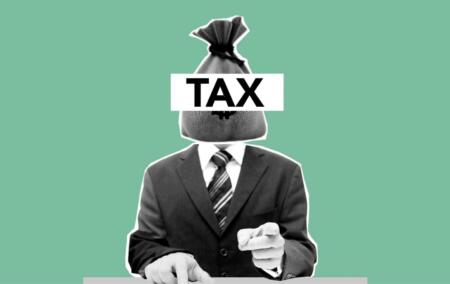
I realise that in many ways this will be an imaginative exercise rather than anything grounded in actual current day realities however personally I am not adverse to introducing imaginative thinking into the ether and in particular in this article I want to focus in on the taxation side with the framing that South Africa would be much better off across the board if the country was oriented towards growth and value creation rather than the redistribution and “equality” engineering we have now.
Reduce corporate taxes:
Even without thinking too much South Africa would benefit by reducing corporate taxes to the same rate as Botswana at 22% and 15% for priority sectors like manufacturing to not only become more competitive, but if it is accompanied by regulatory reform and labour market reforms, it would encourage firms to re-invest capital and not limit hiring. This should be especially true for a sector like manufacturing which is labour intensive and can absorb all of the sadly and admittedly low skill young people our education system is producing. Instead of this where otherwise bored and unemployable young people would gain work experience and value and an income, our government’s commitment to redistributionism and social engineering means the main conversation is R370 grants and how to fund basic income grants which at the upper bound poverty level(R1634 per month) would not likely pay more than any kind of job and would have the effect of freeing up the fiscus to pay down our sovereign debt and pour money into valuable social goods like education and (hopefully) quality healthcare.
Our high tax rate also discourages small business formation. A corporate career is much safer and potentially lucrative for our best and brightest and comes without the tax and compliance headaches and capital risks that starting a small business has. Being a business owner in South Africa simply is not lucrative enough, does not incentivize existing businesses to expand and invest and hire more.
Extractive actors like tenderpreneurs who are diverting money from value creating investment to consumption are doing great though.
Tax breaks that support family and wealth creation:
I am a firm believer that being able to start well financially will help South Africans be more resilient and so we should take lessons from the Poles who, in order to, incentivise their most highly talented young people to stay within Poland instituted a system where those young people below 26 do not pay income taxes up to earning 85 000 zloty(R400 000) a year. I firmly believe South Africa should adopt the spirit of this idea and adapt it to suit our own circumstances and economy and in fact should work in conjunction with attracting highly skilled young people from all over Africa with rare skills our economy needs(the right way to set up immigration) with sensible pathways to citizenship, rather than those young people choosing Europe and the US. I am sure the much lower cost of living and not paying taxes could work to sway some in our favour.
I believe the same principle or spirit should be applied to taking the boot off the neck of middle class families and having a child tax credit for each child that fizzles out at some point. Both these tax breaks for young people and families support a broader commitment to facilitating value based value creation through both saving and to having more disposable income which can be spent in the real economy.
Another potential tax break(which has been mentioned in a previous article) is tax exemptions on cars that cost less than R125 000 with perhaps the caveat that those cars be produced in the Nelson Mandela Bay region with the right regulatory framework that doesn’t make it prohibitively expensive to produce them.
For the 861 000:
According to the statistics from StatsSA for Q4 2024 there are 861 000 people employed in domestic work in South Africa, a significant reduction from the pre-pandemic number of 1.2 million. It is here that I believe that the carrot works better than the stick. Rather than mostly ineffective minimum wage laws paying domestic workers should be a tax credit designed to not only formalize the work of domestic workers so they qualify for UIF but that it should be done in such a way to incentivise higher pay for those already employed and encourage more hiring for the over 330 000 who’ve lost their jobs post the pandemic.
Domestic workers are part of the remittance senders who are the thin line between a rural South Africa that chugs along and a full-blown humanitarian crisis in our countryside. Domestic work pays more than any grant and would pay more than any basic income grant government can dream up.
[Image: https://www.pexels.com/photo/illustration-of-man-with-money-bag-of-taxes-on-neck-6289059/]
The views of the writer are not necessarily the views of the Daily Friend or the IRR.
If you like what you have just read, support the Daily Friend