
UNITA’s Reset from Guerrilla Movement to Government
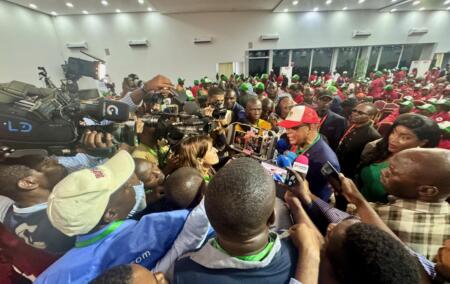
The end of November 2025 saw the conclusion of UNITA’s 14th Congress at the party headquarters in Viana in the suburbs of Luanda. Some 1251 delegates cast their vote for the president who will contest the 2027 national election. Votes were placed in transparent containers lining the hall, each vote held up and called on counting, with time for objections given before the winner was declared.
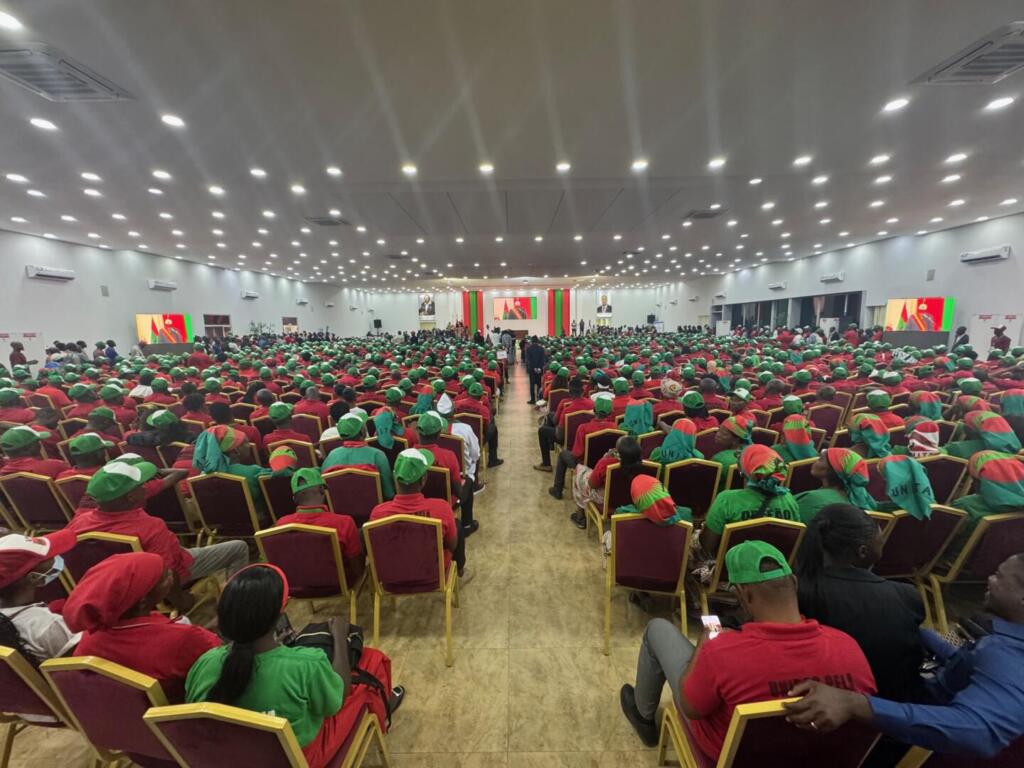
Adalberto Costa Júnior took over 90% of the vote, cementing him as UNITA’s unrivalled leader and a serious challenger in 2027 to the president of the People’s Movement for the Liberation of Angola (MPLA), which has ruled Angola since 1975.
UNITA has come a long way since its formation as a Maoist guerrilla movement in Muangai in Angola’s eastern Moxico Province in March 1966. The party flag, comprising a sun with 16 rays (for Angola’s then provinces), green for hope, and a cockerel (to awake the people) is dominated by red, representing the blood that was spilt by the fight for independence, though UNITA bears its share of responsibility for the more than 300,000 deaths during the ensuing civil war.
Now, the hope for the future rests not in its past as a guerrilla movement, but as a political insurgency in changing the way, said the losing party presidential candidate Rafael Savimbi, and scion of the founder, ‘that Angolans think about the world and each other.’
UNITA, formed as the National Union for the Total Independence of Angola (União Nacional para a Independência Total de Angola), was long associated with Rafael’s father, Dr Jonas Savimbi, who soon after led the group of a dozen soldiers to China for nine-months of military training. The last of the dozen, General Samuel Chiwale, now a statuesque 81, was present at this year’s Congress.
UNITA fought alongside the MPLA and the initially pre-eminent National Liberation Front of Angola (FNLA) in the independence war which ended with the Portuguese coup in April 1974 and Angola’s independence the following year. Then began a long guerrilla struggle against the MPLA and its Soviet and Cuban backers in the civil war which ended with Savimbi’s death in combat in 2002.
Mao had written of his own struggles that ‘The guerrilla must move amongst the people as a fish swims in the sea.’ Following the collapse of the power-sharing Alvor Agreement in 1975, the military defeat of the FNLA and the withdrawal of South African troops south of the Cunene to then South-West Africa, Savimbi had little alternative but to cut a deal with apartheid South Africa for military patronage while becoming a client of the CIA for the supply of Stingers among other military technology. For a time, UNITA was among the world’s pre-eminent guerrilla movements, swimming in the rural sea, presenting itself as an African movement distinct from the multi-racial urban elite of the MPLA. Not for nothing did it campaign under the slogan ‘Socialism – Negritude – Democracy – Non-Alignment’.
With the end of the Cold War and the curtailing of American and (some of the) South African support, hope was placed in the UN-brokered ceasefire and September 1992 election. But this ended in disagreement, violence and a return to civil war.
General Abíilio Kamalata Numa was present at the 14th Congress this weekend. Thirty-three years ago, he was one of thirteen people present in Dr Savimbi’s party when the rebel leader was killed in action near Lucusse in Angola’s Moxico province on 22 February 2002.
The general’s biography reads like Angola’s political history. Like Savimbi, Numa was born in Moxico and joined UNITA in 1974 at the age of 19 immediately after his seven years of high schooling. Initially based in Benguela as a political secretary, he was integrated into the guerrilla army after independence from Portugal in November 1975 and the outbreak of civil war between the liberation movements. By 1979 he had been elevated to the role of political commissar for communications, and the following year was made the commander of this section.
In 1982 he was the chief of staff to Savimbi, and the next year was appointed political commissar of UNITA’s armed wing, FALA, the Armed Forces of the Liberation of Angola, replacing General Geraldo Sachipengo Nunda (later Chief of the General Staff of the Angolan Armed Forces, known as the FAA). Thereafter, Numa took charge of the central south front, overseeing the battles of Cuito Cuanavale, Cassambo and Kaombo. In 1988 he was sent to command the northern front until the end of the war. With the signing of the 1991 ceasefire, Numa joined the Joint Military and Political Commission (JMPC) as second in command to the then Angolan army chief, General Joao de Matos.
With the collapse of the 1992 election and the ensuing violence, Numa fled back to the northern front. By 1997, he was second in command of a rebuilt FALA to General Altino Bango Sapalala, Savimbi’s son-in-law, who went under the nom de guerre ‘Bock’, with General ‘Kanhali Vatuva’ (Mário Vasco Miguel) as the political commissar. Before the civil war resumed in 1998, negotiations continued between Savimbi, based in Andulo and the government in Luanda, facilitated by the UN envoy Alioune Blondin Beye. This process, however, collapsed amidst mistrust and the death of the Malian Beye in a plane crash in June.
Numa was among those who rather favoured, in Mao’s thinking, to control ‘useful’ areas, as opposed to cities that were difficult to defend, especially those in the diamond-rich Cuango in the province of Lunda Norte. In the end, Savimbi’s ideas prevailed. That decision ‘trapped’ UNITA into the central area, placing a premium on logistics and air supply. When UNITA lost its main airbase at Andulo, the die was cast.
Rehabilitated by Savimbi, from 2000 and, especially after the events of September 11, 2001, ‘Dr Savimbi,’ recalls Numa, ‘started telling us that there would be trouble ahead’. Even though the sanctions against UNITA had been imposed in 1993, from 2001 especially, the Americans, he says, ‘saw UNITA as a danger’. Starved of his principal source of external income through diamonds, UNITA’s movements were increasingly constrained. Savimbi realised then that he would not last long, ‘his remaining cause being the survival of the party’, according to Numa. Manoeuvres were conducted on a limited basis in Savimbi’s home area of Moxico, which he knew well, and had the hope of finding food. ‘People by then were dying of hunger, and troops were leaving, going home and defecting. We had no fuel and had to walk everywhere,’ remembers Numa.
‘Dr Savimbi started to manage only the time of his end,’ says Nuna. ‘He was very clear. He said goodbye to us. He gave very clear orientation to some of his leaders, including General Samuel Chiwale, the senior general. He said that General Dembo should direct the party after his death, but he died from his diabetes and exhaustion just after Savimbi.’ Chiwale, the last of the dozen doyen, later became an MP.
And then, the inevitable end.
‘Our column, numbering between 300 and 400 men, was being pursued by a very strong FAA offensive. It attacked on 18 February [2002] and our column divided. Dr Savimbi, and Generals Sammy and Dembo and their families grouped into one, General Kamorteiro into another, and myself into another to guard the rear,’ remembers Numa. ‘The same day, Dr Savimbi’s commando was captured.
‘My group of five met up with Dr Savimbi on 20 February. He told me that his group separated again in the jungle into a group of eight people, including his wife Valentine. On 21 February I left the place we met at to look for the main column. On the evening of the 21st we slept in a small clearing. On the 22nd, very early in the morning, we began our march to the east. At around 7 or 8 o’clock, on the right corner of the Luo River, we felt an attack. It was an attack on the column of General Big Joe. We were obligated to change our path to the north-east. Around 12 we spotted a drone circling, doing recognition, an Israeli plane.’
Contrary to legend about Savimbi recklessly using his satellite phone as he had given up the fight and expected to be captured, ‘he was very careful’, says Numa. ‘All the time we used the phone, we had to be 40 kilometres from him. But it was always easy to see where we were from the air, due to desertification.
‘We stayed seated until about 1 o’clock when we started moving again. I was in the front when I detected footprints. There was a lot of moss there as it had been raining, so we could not exactly work out where it was from, but we could see that it was from military boots. Dr Savimbi said it could be their military or UNITA, and gave orders to go on into the depths of the forest. When we were in a safe place Dr Savimbi told us to camp, and I sent out a mission to scout for the enemy. I stood always in the same tent as Dr Savimbi. From 20-22 February, I always stood in the same tent as him. I asked him if I could use the solar panel to charge my batteries as we wanted to watch the football that night.
‘When I left the tent, I heard screaming and shots, and I saw Dr Savimbi running. We all ran in different directions into the forest. I saw that Valentine, Dr Savimbi’s wife, was wounded in the leg. After twenty minutes of shooting I heard a helicopter coming. I then realised certainly that Dr Savimbi had died. Also, when we were running, we heard a fusillade of shooting, presumably the shots that were directed into the body of Dr Savimbi. That was it, the 22nd of February.’
Savimbi’s bloody corpse had at least 15 bullet wounds. It was displayed on state television to confirm his demise, later to be interred in a tomb in Luena in Moxico. Numa was chased for another two weeks. By then General Paulo Lukambo ‘Gato’, the UNITA secretary general was negotiating with the government. ‘I managed to reach a place to contact him [Gato] by radio – to let him know that I was still alive. After the Luena peace agreements were signed, I went to Moxico on 2 April, and arrived thereafter in Luanda on 2 May. I knew that I was being chased to be executed,’ he smiles, ‘as I was once part of the FAA, and they did not want to see me again.’
Gato was also present at the UNITA Congress. UNITA’s past is today another political party.
Savimbi’s death sparked change not only in Angola but in UNITA, starting with the introduction of contested elections in the party in 2003. Democracy followed in Angola in 2008. In 2022 under President João Lourenço the MPLA declared victory in the tightest election race yet, sneaking over the line with 51.2% of the vote, down from 61% in 2017. UNITA was given 44%, sharply up from 27%.
Costa Júnior created a Patriotic Union to contest the election, upon which the Constitutional Court attempted to evict him in November 2021 as the head of UNITA just ten months before the election. But Lourenço’s attempts to block him in this way was neatly sidestepped by the UNITA leader who assembled another Congress the following month at which he was re-elected.
Now, Lourenço faces a challenge not only from a resurgent UNITA, but from his own party as he would have change the constitution to stand again in 2027. To do this he would have to co-opt not only his own party rivals but also UNITA. Costa Júnior’s popularity in UNITA suggests this is unlikely.
The MPLA’s fall from untrammelled power is unsurprising. Around half of Angola’s 37 million people live on less than $2 a day despite the country’s riches in oil, agriculture and minerals. But this belies a dependency on resources and the creation of an elite-based political economy. Angola pumps more than a million barrels of oil a day; in the early 1970s the country was the fourth-largest coffee producer world-wide with 230,000 tonnes from 2,000 plantations countrywide. Today a combination of nationalisation and war has seen this figure fall to less than 10,000 tonnes.
Luanda, a city which the Portuguese designed for 300,000, now has perhaps 20 times that number living in its sprawl, where the gush of oil money feeds an elite lifestyle. The obvious wealth of the famous Marginal circling Luanda Bay is in stark contrast with the circumstances of the bulk of citizenry which survives on the trickle of the economy’s margins and the maelstrom of its traffic.
While rejecting the 2022 results, UNITA’s leader Adalberto Costa Júnior, an electrical engineer, decided not to take the fight to the streets, but to regroup for 2027.
And the wheel keeps turning. At the UNITA Congress, Costa Júnior had to fight off a challenge from Rafael Savimbi, the 13th child (of 30) of Dr Savimbi, and previously UNITA’s foreign affairs spokesman. ‘I have made the decision to challenge for the leadership,’ explained Rafael before the vote, ‘for several reasons, the most important of which is to defend democracy starting with our own party, and to give the youth a chance. We need,’ he says, ‘to show all of Angola that democracy starts at home.’
At the conclusion of the Congress, with Costa Júnior declared the overwhelming victor, thousands sung, linking hands while turning them in a circulation motion, punctuating the song with Para traz, nunca para frente sempre, ‘Never backwards, always forwards’.
The question for foreign interests – led by Europe, the US, Russia and China – is whether the MPLA will be willing to hand over power come 2027. Possibly excluding Moscow, which has an interest in destabilising the oil market along with the West, external actors are invested in stability not change or, for that matter, democracy.
But outsiders don’t have the deciding vote. With Angola’s population projected to double to around 75 million by 2050, and with an average age today of under 18, the choice for outsiders is rather: work with local agency or run for the hills.
Angola’s electoral path will depend less on what the outside world thinks, than how organised UNITA will be and whether the MPLA can respond to the challenge beyond instinctively channelling its inner Soviet and clamping down on the opposition. While its changed its ideological ways from Marxism to unfettered capitalism, the MPLA has failed to reform politically in the manner of UNITA and admit the error of its authoritarian ways.
Costa Júnior has adroitly steered the party to a place where its future is less determined by the past and its ability to wield violence, than how it thinks and organises for the future. From a family of eight, he left Angola at a young age to be educated, staying on in Europe as a UNITA representative first in Portugal and later in Rome, where he also studied public ethics at the Gregorian University.
Displaying restless energy, as UNITA leader he continuously tours the length and breadth of the country, both to touch base and understand better the needs of his constituents. Not only does he recognise the need for the party to do more to better protect its vote in the next election, UNITA is also on a registration drive, aiming at more than one million members in Luanda alone.

The engagements countrywide help also to shape UNITA’s agenda for governing. ‘When we win the next election, I will immediately convene a dialogue to determine and get buy-in to our programmes, which need to focus on the people’s needs,’ says Costa Júnior, ‘including water, roads and electricity. I will not expect the country to develop by trickle-down economics.’
UNITA’s upward trajectory is feared by the MPLA, already beset with factionalism around the sharing of rent and whose turn it is to eat. Costa Júnior is very aware of the risks, learning lessons from the manner in which Tanzanian and Ugandan authorities, among others, have clamped down when the opposition starts looking like a government-in-waiting. ‘I plan not only to govern with UNITA members,’ he is at pains to point out, ‘but to include others. The scale of our challenge is that we need the best people for the best job.’
He expects dirty tricks and possibly worse, including the recent fabrications emerging from MPLA sources of Russian support for UNITA, presumably intended to throw European and US support behind the ruling party.
The weighting of those around the celebration dinner table the night after the Congress was clearly titled towards ongoing and upcoming political and logistical battles rather than talking about the past. While a few of those present may have enjoyed historically deep roots within the party including General Chiwale’s son and a daughter of Dr Savimbi, the conversation was on the future, on delivering electoral victory through getting better organised as a political party.
In 1986, at the height of the Cold War, President Ronald Reagan met with Dr Savimbi at the White House. Reagan emerged stating his support and enthusiasm for UNITA’s prowess, envisioning a UNITA ‘victory that electrifies the world.’
Today its peace and process and the absence of violence that would do the electrifying, offering UNITA a government leadership opportunity over which it has fought for 60 years.
This would have wider appeal with democrats across Africa, placing authoritarians from Tanzania to Cameroon on the back foot. But don’t expect outsiders to want this more than locals; indeed, they might just prefer democratic change less than autocratic stability.
UNITA’s democratisation offers hope, like the green in its flag, that change starts at home.
Mills and Hartley attended the UNITA Congress in Luanda as observers for the Platform for African Democrats.
[Image: Ray Hartley]
The views of the writer are not necessarily the views of the Daily Friend or the IRR.
If you like what you have just read, support the Daily Friend