

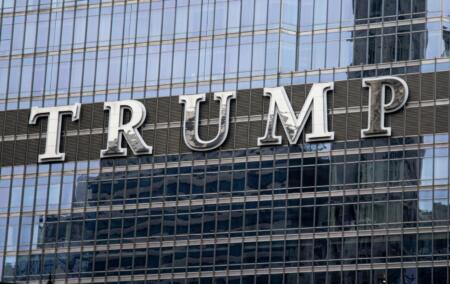
The most important reason why US President Donald Trump wants a Nobel Peace Prize is central to South Africa’s declining international standing.
Many people and groups insist that international law and morality should guide international relations and dictate geopolitics. The operative word in that sentence is dictate.
Such people are not builders or creators, nor do they hold dear ideas like freedom, innovation, or aspirations. They clothe themselves with high ideals but they are mostly driven by a desire for power expressed through the ability to tell others how they must live.
Realism versus liberalism
Among scholars, two schools of thought have long dominated the field of international relations, realism and liberalism*. Realism sees the world as a tough, competitive place where nations prioritise security; trust is low and self-interest rules. Liberalism believes cooperation, international institutions, trade, and democracy can make the world less brutal and more peaceful over time.
Trump, a flashy, womanising, Ivy League-educated, New York City property developer, has gained the support of most rural and small-town working-class Americans because he has long fulminated against intellectual elitism. Trump and his MAGA movement firmly favour realism in international relations.
The fact that hard-left liberals* hold so much power traces to a long march over many decades to dominate key institutions. Hardened leftists outnumber conservatives at most of the West’s elite universities and media houses by more than ten-to-one.
The liberal bias in international relations reflects similar dominance of supra-national institutions such as the EU, UN, IMF, World Bank, etc.
These mostly lifelong bureaucrats are committed to entrenching their power. They do this by discriminating in hiring and promoting to favour those who pay homage to their catechism. Those who are most successful at perpetuating their biases are awarded prizes. The most coveted of these is a Nobel Peace Prize.
They have little discernible appetite for pursuing solutions to conflicts that could sully their inflated image of themselves. When then-President Joe Biden labelled Russia’s president a war criminal, he made clear that he would not lower himself to negotiating with Vladimir Putin. Europe’s governing leftists are worse still as they sneer at the notion of redirecting funding from social projects toward military deterrence.
A half-dozen of his predecessors had failed to get Europe to adequately fund its defence. Then Trump combined insults and coercion – made possible by a massive ground war in Europe – to persuade NATO’s European members to sharply increase their military spending. They sold themselves on the idea, in part, by packaging it as an economic growth initiative.
Europe’s free ride
The version of a rules-based international order that liberals crave was an option when the US was the sole superpower during the early phase of the post-Cold War period. Then China systematically gamed the WTO’s most crucial enforcement mechanism. This, combined with China’s domestic economic difficulties, has led to a set of “involution” policies which will accelerate de-industrialisation in many countries.
Leaders in Canada, the UK, and the EU are quickly catching up with their South African counterparts in putting self-serving leftist ideological biases ahead of national interests.
Russia’s 2022 invasion of Ukraine struck at the heart of liberals’ rules-based order. Countering this attack requires far more resolve than Europe’s leaders have been able to muster. Instead, they complain that the US is an unreliable partner. What the US is guilty of is decades of hubris which led to its subsidising Europe’s defence to an extraordinary extent. According to US Treasury Secretary Scott Bessent, the US has spent $22 trillion more on defence than the other NATO members combined since 1980.
Abundant evidence makes clear that European leaders, like ours in South Africa, focus primarily on their own selfish interests. The current Greenland issue is merely the latest example and, like so many others, it has been poorly framed by the media.
The EU would be much safer if the US had free rein over Greenland. They want the US to invest heavily in defence capabilities on the island despite Denmark’s “sovereignty” over the island being subject to Greenlanders’ consent. Nothing stops a country, such as China, offering a better deal than what the Danes offer. This despite the willingness of far-left leaders in Canada and the UK, among others, to undermine their countries’ long-term interests in return for short-term benefits offered by Beijing.
Those who adhere to the liberal school of international relations believe 57,000 Greenlanders are entitled to sovereignty over what has become an incredibly strategic island nearly twice the size of South Africa. Realists would rightly ask, “What happens if Russia or China invades Greenland?” Of course this would be immoral and a stark violation of international law but such considerations don’t deter invaders. European leaders would expect the US to prevent or repel such an invasion.
Europe’s leaders appear to have learned little from the misery Ukrainians are enduring. Rather, they want like-minded liberal media voices to frame the Greenland issue in terms that encourage audiences to see themselves as jurors and to prosecute Trump, in the court of public opinion, for making threatening demands.
A full analysis of the issues would include the prospective value of Greenland’s mineral deposits and claims it could make to deposits near the North Pole. Of course, Trump would be open to negotiating some royalty-sharing arrangement but Danish and EU leaders would rather pretend they are taking a principled stand.
All the while, Trump and his team are diligently seeking a peace deal for Ukraine. How surprised would anybody be if at some point a deal is within reach if only the US would generously provide support? Might Trump then insist that the Danes and the Europeans promptly agree to a sensible deal regarding Greenland?
Trump’s realist path
Trump’s best-case scenario is that something like that happens while the governments in places as diverse as Cuba, Iran, and Venezuela are abandoning the policies which have undermined their peoples’ interests and threaten their neighbours. In his view, Trump should then win a Nobel Peace Prize.
Of course, he is motivated by various factors, but if the committee were to award Trump the prize it would be acknowledging that the liberal school of international relations had been greatly overindulged.
Trump has little choice but to revert to a realism-grounded set of foreign policies as Russia and China have been so effective at dismantling the rules-based international order that liberals cherish. This by itself erodes the ANC’s international standing.
In addition, various high-profile exemplars of this now passé world order have said little or nothing about Iran’s government killing thousands of unarmed protesters. This list includes: the African Union (AU); the Shanghai Cooperation Organisation (SCO); the Arab League; the International Committee of the Red Cross (ICRC); Médecins Sans Frontières (Doctors Without Borders); Save the Children; the World Health Organization (WHO); and Greenpeace.
It seems quite unlikely that Trump will be able to help establish a path to peace and democracy in Iran. But it is abundantly clear to these organisations that they have no potential to influence the regime in Tehran. They also know that the protests wouldn’t have happened without Israel and the US showing a willingness to punish the IRGC.
The ANC has built its foreign policy positions and its international standing on the presumption that the rules-based liberal international order will be sustained – or that it will be overthrown through some Global-South alternative. The party aligns closely with governments actively opposed to the liberal international order and seemingly indifferent to the interests and wishes of their people.
Meanwhile, surveys have identified jobs as South African voters’ top priority. Yet ANC policies have entrenched the world’s most severe youth unemployment crisis and solutions remain elusive.
Trump has clearly expressed his disappointment with the EU, the UN, and various other supra-national organisations. He believes he can be much more effective at ending wars and sustaining peace than such organisations.
If he can negotiate peace in Ukraine and subdue the violent suppression of citizens in countries like Iran, he wouldl deserve a Nobel Peace Prize. People across the world would then better appreciate that overindulging liberal ideologies contributed needlessly to much suffering.
It is this recognition that Trump craves, as it would greatly validate both his presidency and his pivot toward realism. ANC leaders need to appreciate that, as this pivot was well-justified, it is not likely to be reversed.
*by the US definition alone
[Image: Mason Hassoun on Unsplash]
The views of the writer are not necessarily the views of the Daily Friend or the IRR.
If you like what you have just read, support the Daily Friend