

On Monday 9 February I was informed that a committee intimately involved with promoting cycling said it would not support my request to Parliament for a review of the 25-year concession granted by Transnet Freight Rail to a consortium to repair the line on the George-to-Knysna route – best known as the Outeniqua Choo Tjoe route – and operate the old steam train.
They felt that foregoing the huge opportunities and benefits that this rail revitalisation/upgrade would provide would significantly exceed those of a cycling trail, which I had proposed, but indicated that they would be happy to assist me in investigating any opportunity for sharing sections as part of a new cycling route.
Because the committee had not provided an argument for its decision I debated with supporters for days, concluding that if this committee had not understood the reason for the request, the same might be true for those asked to review it. We wondered what part, or parts, of the reasoning were unclear and how we could possibly find out?
Ivo Vegter’s Daily Friend piece, There’s always one, isn’t there?, of 13 February, telling us in detail where the difficulties are, could not have been more perfectly timed. In response to the headline, my response is: “Yes, I am one!”
The Garden Route Cycleway Association (GRCA) did not just pop up in 2024 to spoil the fun.
Before going back to the late 1950s, though, let me say that we are very happy that there are people who love old steam trains, who know how to restore them, are keen to operate them and can afford to do so. That gets our full support.
I left school knowing that I wanted to design and manufacture motor vehicles, yet ended up studying architecture, where students are given a series of building design projects. Unlike a spelling test where one might get anywhere between 0/10 and 10/10, here, so long as one mades an effort, 0/10 was virtually impossible. My team’s assignment was to design a parking garage in central Pretoria at a time when only two such dedicated multi-story buildings were known to exist.
Pretoria had been laid out in the days of donkey carts, horse carriages and ox wagons. Since ox wagons do not have a reverse gear they must make a U-turn to go in the opposite direction. The main streets were therefore wide and unsurfaced, but as cars replaced animal-drawn conveyances the central two lanes of the street were tarred, leaving wide paved sidewalks with jacaranda trees.
Motorcars allowed the city to expand rapidly in all directions, and when people drove instead of walked to town there was insufficient space to park their cars. When they parked on the sidewalks, space for pedestrians was reduced; and reduced further when extra lanes for traffic were required. Some streets were even forfeiting their jacaranda trees.
Here was the justification for the construction of multi-storey parking garages for those who did not see that cities intended for people and trees were now to be cities for cars. Buildings that had open balconies had to be hermetically sealed, artificially ventilated and heated, as air was toxic.
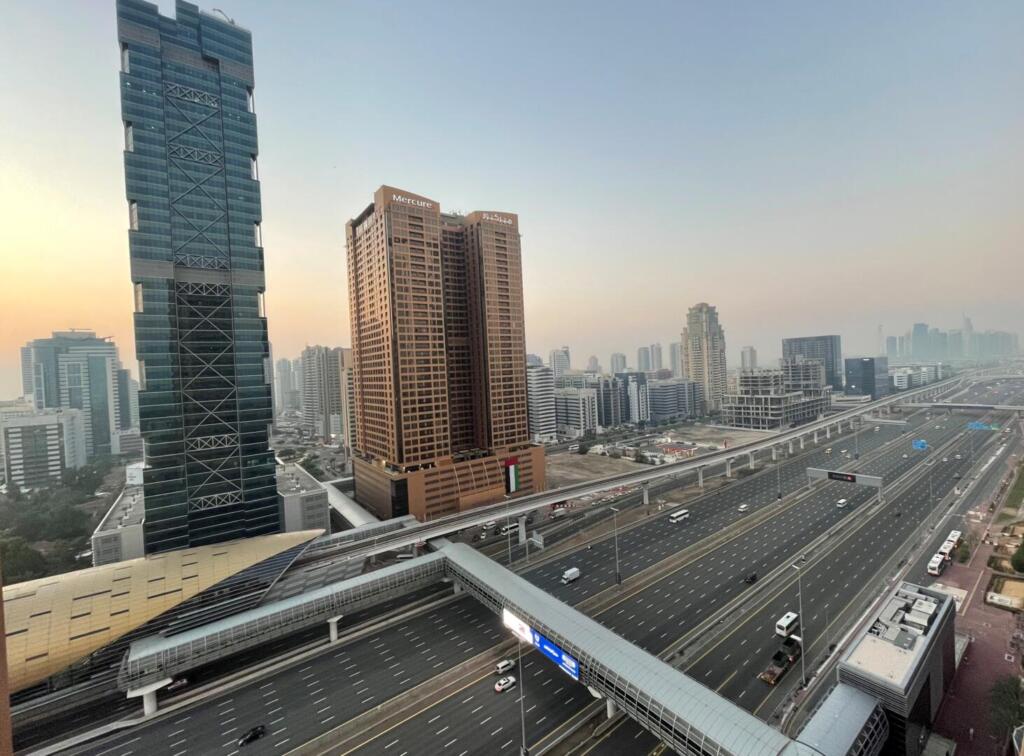
Is this the future [Image: Dubai COP28, Richard Stegmann]
I submitted an essay explaining that Pretoria (indeed the world) needed some other personal power-assisted transportation solution as parking garages would encourage people to acquire cars, compounding the situation. The lecturer was unmoved: “No design, no marks!” What part of my argument, I wondered, had I not explained clearly?
I met Bill Mylrea, a civil engineer, in 1969 when we worked on innovative methods of building houses. Later we explored making mopeds. In early 1973 we found that we had each taken to cycling, recognised that urban traffic congestion had all but eliminated cycling and had independently begun dealing with the problem.
Bill had gathered over 2,000 signatures supporting a petition for car-safe cycling which he’d presented to the unimpressionable City Engineer. However, the City Traffic Planner and Rotary were helping me to gather information from twelve big schools on bicycle use which the City would process. At Bill’s suggestion we formed the Western Province Pedal Power Association in 1976 (now Pedal Power Association) to represent those interested in cycling for recreation, commuting and touring; for which the provision of a network of car-safe, continuous, practical and enjoyable bicycle paths would be required.
It is hard to understand now that a cyclist’s social status was zero, that bicycle shops fixed inexpensive basic, heavy and mostly black bicycles, punctures and buckled wheels and sold cheap battery lamps, pumps and valve tubing. Our new association, run by volunteers, had twenty members who paid an annual fee of R1 and received a monthly newsletter.
The City formed a sub-committee to consider our request, and explained that the network of bicycle paths we requested would be a major expense. Proof was required that there were more than 20 cyclists. We asserted that cyclists would appear if given the opportunity to ride around the Peninsula on car-free roads and were permitted to prove it.
The naysayers were united. TV was very expensive, the Internet and social media unheard of, radio had limitations and so we turned to the city’s three daily newspapers. With R20 in the kitty and one small advertisement in one paper for one day costing R120 we needed considerable help. None of the dailies would risk it.
Eventually we had an introduction to The Cape Argus promotions officer. He saw the dangers inherent in a flop and was petrified, but was persuaded when I offered to write a weekly column for three months ahead of the event. Then with further haggling the paper agreed to risk adding its name – creating the Argus Cycle Tour in 1978.
The sight of 500 cyclists in flip-flops, takkies and T-shirts on the start line astounded everyone. It was a such a success that it was to be repeated again in 1979 when more than 1,000 entered and success came when the City invited us to produce a proposal with cost estimates for the first stage of the proposed Peninsula-wide network of bicycle paths.

Start of the inaugural Argus Cycle Tour [Image: supplied]
We had begun work on the network years previously,so the proposal only took six weeks and was approved with funding in 1979. Cape Town was then well up with Melbourne in Australia, where bicycle planning and bicycle path construction was underway.
The Argus Cycle Tour soon became the world’s largest mass-start road race and in time the Cape Argus withdrew in order to focus on its core business. Because the cycle tour had established itself as Cape Town’s premier annual tourist attraction, supporting numerous permanent jobs and charitable organisations, it is today the Cape Town Cycle Tour under the umbrella of the City and caters for even greater numbers of participants. All this is well documented.
Today Australia is way ahead of South Africa and forging ahead with the provision of bicycle facilities. Cape Town had dropped the ball early on, but today pedestrian and cycling mobility are its top priorities. Progress is slow because of the extreme difficulty in retrofitting meaningful improvements while catering for ever increasing traffic volumes. The Cape Doctor (the south-easter wind) hasn’t been able to clear the air for decades and cyclists have literally taken to the hills.
George-to-Port Elizabeth proposal
In 1999 I presented a proposal to the Garden Route district municipality for a 350km cycle route to be created between George and Port Elizabeth, showing that it had the support of the Western Cape’s tourism minister. One obstacle cited was that of cooperation between the Western Cape and Eastern Cape provincial governments. Ignoring that, I participated in Bitou (Plettenberg Bay district) municipality’s public process of development planing and succeeded in 2004 in having the Bitou portion of cycleway route included in its final document.
At the VeloModial International Bicycle Conference in Cape Town in March 2006 I presented that 350km proposal. Later that year, when the storm severely damaged the George-Knysna railway, we formed the Garden Route Cycleway Association to compete vigorously with The Friends of the Choo-Tjoe for the use of the reserve.
Transnet Freight Rail was both in total control here and distracted by major issues elsewhere. After a few years Transnet closed further discussion as the repair costs were excessive, the line was not profitable and the steam train — using the facilities Transnet provided — required a R10m annual subsidy, roughly equivalent to R38 million today. We (and I assume The Friends) agitated for the corridor to be protected, as alternative uses of the Touwsrivier-Ladismith rail corridor were lost when that service was terminated after the 1981 storm destroyed the line and landowners reclaimed the land.
Although I have written extensively on the subject I had yet to get around to writing an account of why and how the Pedal Power Assocation was created and how the Cape Town Cycle Tour relates to the history of cycling and to the two great bicycle science revolutions. When, in my early 80s, I woke up one morning in a hospital, partially paralysed, having suffered a stroke, I realised that I had better write that book. THE GREEN MACHINE was published in September 2023.

In November I met with Bitou officials to discuss the future of the defunct George-Knysna rail reserve, which is when I learned that Transnet had offered that 25-year concession.
Transnet confirmed that bidding had closed and that it was only interested in a steam railway option.
I petitioned Parliament to intervene to allow more debate on the matter. In reply we heard that Parliament was not able to interfere in the bidding process. I therefore initiated a public petition to show that there was, indeed, considerable support for the alternative use of the old rail corridor for non-motorised transport, or nowadays, non-motorised mobility.
I feel sure that Ivo, with his Dutch background, will understand the array of benefits that walking and cycling facilitate.
The one-week wonder of the Cape Town Cycle Tour has established the tourism and economic benefits that the promotion of cycling produces. It proves how difficult it is to retro-fit facilities for safe and enjoyable cycling within established urban fabric. South Africa needs to create year-round urban non-motorised mobility and to promote ecotourism.
The impact of motorised transportation on cities, their surroundings and their human inhabitants cannot be disregarded; nor can the fact that the air we breathe, the weather patterns we knew or our natural environment are being impacted negatively. These are universal and existential concerns. A non-motorised-mobility Rail Trail would respond positively to seven of the seventeen United Nations Sustainable Development Goals. These 2015 UN goals target 169 areas of sustainable development covering social, economic and environmental issues which UN Member States have committed to making a reality by 2030.
Sharing the permanent public way
The value of this remarkable continuous, independent, car-free, pathway linking George to Knysna, seen from another much broader perspective, raised the question of sharing it more than twenty years ago.
Since trains cannot swerve and have difficulty stopping, denying the pubic access to a rail reserve is sound. That also implies that the railway is a barrier between the land either side of it and some other non-motorised mobility option must be found. The consortium told us that the legal status of the old rail reserve was now that of a permanent public way, giving the public permanent access to it; or, if the pubic so chooses, it may be used as a railway, in which case the public does not have access other than via the train service.
The remote possibility of finding an alternative non-motorised mobility route produced a suggestion in about 2010 for an independent Steam Park in the Garden Route.
A steam train service must generate income. This would come from paying passengers travelling between George and Knysna, or various portions of the route. Ticket sales must be at several outlets and passengers found who are willing to travel for three hours in one direction in the morning and three hours travelling back in the afternoon. Alternatively the train must transport refuse for a living or be filled with wealthy tourists wishing to spend a few days travelling to the Victoria Falls and back.
The steam train cannot extract revenue from kids jumping up and down screaming, “Look, mommy, there goes the steam train!” while it burns coal or oil, and certainly not if it is replaced by a diesel-electric loco.
The Steam Park proposal, however, suggests a new railway around the perimeter of a lake. A level track for fuel economy with water for firefighting and producing steam, and wonderful viewing. A circular track of, say 10 or 12 km, would guarantee low installation and maintenance costs and provide for frequent short trips that are much cheaper yet far more profitable.
A single point at which ticket sales for the local experience – or for trips to the Victoria Falls – would be available every day of the week. Visitors would know where to go for a close-up view of the machine, a chat with the driver, to go for a ride, get information on steam trains or for refreshments while the kids go round and round the track. When the train is not operating pump-trollies and rail-bikes could be available for hire. The Steam Park would be in sight of, and accessible from, the N2 and the Rail Trail that would promote its history. The independent facility would be controlled by The Friends, there would be no threat to the environment, and it would be profitable and a powerful tourist attraction.
In my view, it was unreasonable that Transnet, a state-owned entity, should be the arbiter, unilaterally deciding the 25-year future for the Garden Route and Southern Cape.
I therefore wrote to the Speaker suggesting that Parliament review Transnet’s award, and call for impartial and plausible estimates to be made of the merits of this permanent public way being given to a Rail Trail, with or without a Steam Park, or steam train service exclusively.
What reason is there for objecting to Parliament, as the highest arbiter of public interests, being asked to make this decision based on plausible evidence when the consequence could affect the lives of hundreds of thousands of individuals for 25 years or longer?
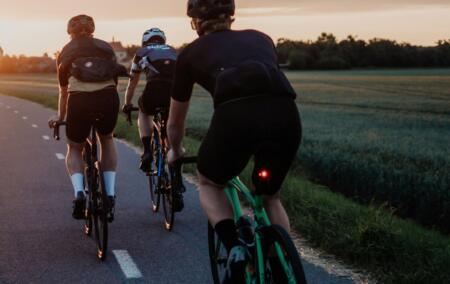
[Image: David Dvořáček on Unsplash]
The views of the writer are not necessarily the views of the Daily Friend or the IRR.
If you like what you have just read, support the Daily Friend