

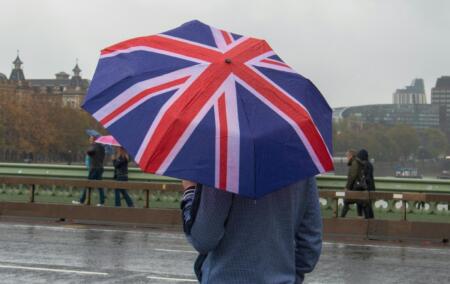
A friend of mine who lives in London was here a few weeks ago. I realised that with Trump, Ukraine/Russia, Middle East, AI and the rest of it there has been little space in my brain for the unpredictable and labyrinthine turns of UK politics. I asked him to give me the short version.
There is no short version.
But first, why should anyone but the citizens of the UK care? It is a middling country that no longer can claim much material impact on the world stage, if you exclude (some) sports and the arts (nobody else gets close to a good British TV drama).
But I do care, because the language I speak is English, and all things English are deeply embedded in my cultural DNA.
Now that Peter Mandelson, Starmer’s erstwhile ambassador to the US, has been arrested (another Epstein-related casualty hot on the heels of Prince Andrew), the chances are better than even that Starmer will be gone soon.
The removal of a prime minister is an arcane affair in UK politics with various Machiavellian options available, but he is certainly in trouble. One may be tempted to pin his demise on the now evidently ill-advised appointment of Mandelson, but it was much more than that. A series of stumbles, oopsies, reversals and even a bit of chicanery have hollowed out public confidence in both Starmer and his Labour party (who did not get into power on their own merits; it was more that the opposition had rendered themselves unelectable).
There was an undisclosed-gifts scandal and a series of policy proposals which were awkwardly back-pedalled after public outcry (removal of winter fuel payment support for pensioners, inheritance tax on agricultural land, income tax increases). Nothing looks as weak as to propose something publicly and then quietly shelve it at the first sign of pushback. Competence and conviction are not the first words that come to mind.
Staggering
The polling numbers are staggering. According to Ipsos, Starmer’s approval ratings after 14 months were the lowest of any prime minister in the past 50 years, with Labour’s support dropping by nearly 14 points — the second-largest decline for a governing party in post-war political history. By January 2026, just 18 per cent of Britons held a favourable opinion of Starmer, while 75 per cent viewed him unfavourably — a net rating of −57, the lowest ever recorded by YouGov for any prime minister other than Liz Truss. Even among those who voted Labour in 2024, fewer than four in ten retained a positive view of their own prime minister.
That’s Starmer then. But the more interesting story here is what happens if he (and his party) become just another footnote to history. The UK is famous for rising and falling governments and the chattering classes are famously fickle. They have bounced between the conservative Tories and the more lefty Labour for, I don’t know, like forever.
But it won’t be the Tories replacing Labour this time; they are all staggering around like punch-drunk twits while still trying to recover from the Sunak era. The largest vote-getter will likely be Nigel Farage’s Reform UK party, currently polling at 28%. Not a plurality, you understand. The public is pissed off enough to give no one over 50%. Even the Greens are surging (currently at 17%), not so much on save-the-planet kumbayas, but more out of voters’ disgust with everyone else.
Incoherent and confused
Nigel Farage? A more uninspiring figure is hard for me to imagine. He has run like a thousand times and never been taken seriously. He offers an incoherent and confused melee of positions – anti-immigration, anti-diversity, Brexit-praising, mass deportations, withdrawal from international human rights frameworks, deep cuts to foreign aid, and a scepticism towards net zero.
His policies are Trumpian. He is not. He looks a little like the weakling on the playground waiting resignedly for his face slap (not an objective observation, to be sure, but appearances count). Still, he may soon get his chance in the sun. The deeper problem is that Reform UK is, at least to my reading, a party built on a single emotional proposition: that the old establishment has failed, and that blowing it up is preferable to reforming it. That proposition currently commands more than a quarter of the British electorate, and perhaps it is not that irrational. It plays into the prevailing narrative of “punish the bastards” (the same narrative that has been playing out in the US by both parties over the past decade).
But the logic of disruption stops at the point where someone has to fix the NHS waiting lists, negotiate trade terms with a suspicious EU and deal with a fractious immigrant problem. Farage’s politics were forged in opposition only. Governance requires patience, compromise, and the ability to disappoint your own supporters without losing them. Farage is untested – one wonders whether he can navigate these tricky obstacles of realpolitik.
And his team? Marina Hyde of the Guardian had this to say: “Like a 1970s rust-belt serial killer, Nigel Farage is painstakingly assembling around him the political corpses of Boris Johnson’s final, terrible cabinet”.
If Reform UK’s rise continues, Starmer may try to tack right on culture and control. If the Greens keep climbing, he may offer more visible social-democratic ambition. Either way, the era of managerial centrism as a stable resting place looks over, as does Starmer.
And that may be the most important point of all. Mandelson’s arrest is not merely a scandal. It is a symbol of a governing class still revolving around old operators, old networks, and old assumptions, long after the public has decided it wants something else.
What it wants, unfortunately, is not yet clear. Which is how countries end up with very noisy and unpredictable politics. And that is so un-British.
[Image: Nick Fawlings for Unsplash]
The views of the writer are not necessarily the views of the Daily Friend or the IRR.
If you like what you have just read, support the Daily Friend