

The Taca Taca copper prospect sits at over 3500 metres on the Argentina side of the Andes. Reputedly named after the noise of the rail-line – Tacatacatacataca – which connects the Argentine city of Salta to Antofagasta on Chile’s coast and opened in 1948, the Tren a las Nubes (‘Train to the Clouds’) wends its way up and over 4200 metres, across 29 bridges and 13 viaducts and through 21 tunnels.
The railway was built to serve the borax mines of the area. Now, underthe leadership of President Javier Milei, once more Argentina – the ‘land of silver’ – is turning to mining as a motor of growth, this time focusing on lithium and copper.
The market is there. The question is can Argentina put in place sustainable policies and act quickly in getting to the front of the queue? The answer, so far, appears to be ‘Yes’.
Approximately 700 million tonnes of copper have been mined globally, much of it since the beginning of the 20th century. With the green energy transition, construction needs and data centre demand, the market for copper is projected to reach over 40 million tonnes annually by 2035, nearly double what is mined today.
While one-quarter of this total will probably be sourced from recycling, the remainder will have to come from new mines. Undeveloped deposits contain an estimated 2.1 billion tonnes of additional copper, notably from Latin America and Africa which together hold over 60% each of global copper and lithium reserves. Both are key to the green energy and data revolutions.
Chile and Peru already produce about half of the current global copper supply. Chile is also responsible for 30% of lithium, ranking second globally behind Australia and ahead of China.
The province of Salta in Argentina’s northwest borders on Bolivia and Paraguay to the north and Chile to the west. Its haciendas and fields of corn, sugarcane, citrus and soya illustrate its agricultural base. But it’s under the soil where is untapped potential lies.
Salta is within the ‘Lithium Triangle’ encompassing also Chile and Bolivia. Along with Chile and Peru, Argentina also makes up the central Andean region holding roughly 40% of the world’s total copper reserves. The Taca Taca deposit has the potential for 300,000-tonne per annum copper production over more than 30 years.
Milei’s government hopes that mining will help to translate its ongoing and painful policy reform efforts into practical results. Still, this future will have to look past the history of mining in Argentina, one of fits, starts and disappointments in lagging behind regional peers due to a weak policy framework and anti-mining political and environmental opposition. Legal frameworks have also varied wildly between regions, causing investor uncertainty since provinces own their resources.
Milei came into office in December 2023 promising to take a chainsaw to government to cut spending and to take the country out of its serial bouts of collapse and recovery. Since it joined in 1956, Argentina has entered into 23 programmes with the International Monetary Fund, the highest number of any country.
A flamboyant personality with a distinctive ‘Wolverine’ look (including Stanley Bakeresque sideburns straight out of the set of ‘Zulu’), and a combative personal style, Milei is viewed by critics as a far-right, reactionary, populist and libertarian, El presidente motosierra (‘chainsaw president’) or El Loco (‘the madman’), and by admirers such as Elon Musk as a “fantastic” leader.
The South African-born entrepreneur and former DOGE supremo has said he is a “big fan” of Milei’s approach to reducing the size of government and controlling inflation.
President Donald Trump says of his Argentine counterpart that he is his “favourite president”, also describing him as a “great gentleman” and a “MAGA” leader, in this case to Make Argentina Great Again.
After the Argentina mid-term elections in October 2025, Trump congratulated his Argentine ally on his party’s sweeping performance.
“Congratulations to President Javier Milei on his Landslide Victory in Argentina. He is doing a wonderful job! Our confidence in him was justified by the People of Argentina,” wrote Trump on Truth Social. He said that Milei “was a big winner and had a lot of help from us. He had a lot of help, I gave him support, very strong support.” The United States granted Argentina US$20 billion in financial aid through a currency swap and the purchase of Argentine pesos.
These plaudits would be music to Milei’s ears, who has presented himself as a leader of the global far-right.
“We must put an end to the garbage of socialism once and for all,” said Milei at the Conservative Political Action Conference held in Buenos Aires at the end of 2024. There he launched attacks against several other leaders, including Spain’s Pedro Sánchez, Brazil’s Lula da Silva, and Colombian president Gustavo Petro.
Following Trump’s second win in the US presidential election, Milei proclaimed: “New winds of freedom are sweeping through the world.” The Argentine president called this moment “a historic opportunity to change the world,” and emphasized the importance of “the cultural battle,” urging the far-right to unify and “co-ordinate internationally to prevent leftists from gaining ground anywhere.”
To a crowd dominated by supporters from his La Libertad Avanza (‘Freedom Advances’), Milei said that “‘We must put an end to the garbage of socialism once and for all”.
And this past weekend at his announcement in Miami of the creation of the ‘Shield of the Americas’, a geo-political alliance made up of Milei and eleven other regional leaders to target narco-terrorism and undo China’s “trade offensive”, Trump recalled his support for Milei. “I want to thank the members of the coalition, most of whom are friends of mine. Some I met recently, but most are friends, many of whom I supported. They took that support and won big,” he said.
The war in Iran is another point of intersection.
The Islamic Republic has been a strategic ally of Cuba and Nicaragua, and previously of Nicolás Maduro in Venezuela. There is evidence that Tehran has financed Hezbollah through Mexican and Colombian drug cartels. In 1992 and 1994, Hezbollah carried out two terrorist attacks in Buenos Aires, events that have been traced back to Tehran via bomb-making facilities in Paraguay.
The language and personal idiosyncrasies risk however obscuring the importance of the Argentine’s message: big government has to be cut without which the tail of bureaucracy will continue to wag the dog of development.
The manner in which Milei has gone about this is as extraordinary as it was probably necessary in Argentina. Since the advent of Peronism, the progenitor to left-wing Latin American populism, in 1946, the government has consistently been bankrupted by unsustainable deficit spending. The latest cycle of this endless boom and bust habit had led, by 2023, to 211.4% annual inflation, the highest level in three decades, and a parallel exchange rate three times greater than the official number. Poverty in reached 41.7% in the second half of 2023, affecting 19.4 million Argentinians, one product of high inflation. Child poverty (under 14) reached 58.4%.
Argentina’s gross public debt in 2023 was over 150% of GDP, with a fiscal deficit that year of 5.33% of GDP.
Milei’s success might enable Argentina to return to a semblance of its golden age (in the 1930s) when it was among the top six richest countries world-wide; his failure would see it languish in perpetual financial purgatory, living beyond its means and then having the IMF snip up its national credit card.
External agency in reform, as Argentina reminds and African countries regularly demonstrate in railing against ‘conditionality’, is never as good as internally-generated reforms. Ownership is key.
Domingo Cavallho led the last serious economic reform effort in Argentina in the period of convertibility. His monetary policy pegged the Argentine peso to the US dollar at a 1-to-1 exchange rate, the aim being to end hyperinflation and encourage foreign investment, being paralleled by a process of privatisation. Requiring the central bank to hold dollar reserves for every peso issued, this scheme was in effect from April 1991 until January 2002.
Given the institutional monetary arrangement, running a balance of payments deficit meant shrinking international reserves and, therefore, falling money supply, which sent the economy into a tailspin. This complicated the fiscal front, which required spending cuts, reinforcing the recession and so on until the end.
Milei has learnt from this experience in his radical reforms, in which he has forbidden a budget deficit, slashed federal public sector posts by 60,000 (of 350,000) and restricted spending to the 23 provinces (where there are another 2.4 million positions), instituted deep cuts to public works (down 80%) and subsidies, cutting ministries from 33 to 8, gradually relaxed exchange controls, and encouraged large-scale foreign investment though an ‘Incentive Scheme for Large Investments’, popularly known as the RIGI. This incentivises investments of more than US$200 million in strategic sectors such as mining, energy, agriculture, technology) with tax, customs and earnings’ repatriation benefits guaranteed for 30 years.
Savings are being made across the board.
José Luis Daza, the deputy minister of the economy, suggests that “Argentina is one of the biggest breaks with history, somewhat like post-transition Poland. “It’s different this time because Argentinians never wanted to accept that the state was too large for what they wanted. This is why for 110 of the last 123 years we ran a budget deficit, and the other 13 years we were in default.” He says this situation was the result of a toxic embedded culture in Argentina, a “result of Peronism”.
Daza previously served as managing director and head of emerging market research at JP Morgan, one of six of Milei’s key finance officials with experience at the Wall Street colossus. A Chilean, he was attracted by the opportunity to make a difference to Argentina, which his children urged him to take up.
He says that growth will come from improving infrastructure which was inherited in a “catastrophic” condition as a result of “corruption and a kickback culture”. So pernicious was this situation that, he points out, an investigation into state soup kitchens discovered that fewer than 10% of some 55,000 state-funded kitchens, for example, actually functioned, the rest of the financing being diverted into personal pockets.
Hence Milei’s language of “big state corruption”.
The reforms encompass a cycle starting with the end to deficit budgeting by reducing profligacy in government, attacking corruption and re-establishing the rule of law, stabilising the peso, building reserves, opening the capital markets and increasing inward investment flows through RIGI, which will eventually extend to the entire economy, boosting confidence, increasing reserves, raising exports and creating jobs. By this time the peso would be in free float with no restrictions.
The results so far have been impressive. Annual inflation has plummeted to 31.5% by the end of 2025, the lowest rate since 2017. The country achieved its first annual budget surplus in over a decade in 2024. Poverty rates remain high but have shown some improvement in falling to 32% from a peak of 53% in mid-2024.
Challenges remain, inevitably.
In an echo with Cavallho’s convertibility plan, Argentina has a widening current account deficit due to the strengthening peso, increased import demand, outbound tourism, and profit remittances. This peso has also put pressure on manufacturing which previously relied on protections, the costs of which were passed onto the Argentine public. In this, real wages have struggled to keep pace with the cumulative cost of living, particularly for public sector workers and retirees. Argentina faces over US$19 billion in maturing external debt during 2026. Regaining access to international credit markets while building a local capital market is thus critical.
The biggest challenge facing Milei however is growth. This is unlikely to be from increased consumption, or from exports, given the (high) value of the peso and the performance of the manufacturing sector. The government is thus betting on mining, energy and agriculture sector investments, though all bar the latter will take time to come onstream. And the next election is round the corner in 2027.
While the “macro” numbers have improved, the “micro” economy faces a “tale of two pockets,” with industrial activity down 9.5% and construction down 24% as of late 2025. “Translating the macro fundamentals”, says Mora Jozami, formerly part of President Mauricio Macri’s team, “into micro progress is key”, though Milei’s support in the October ’25 mid-term election indicates that the patience of the Argentinians remains, for now.
To those businesses complaining about tightening conditions, Milei’s response is that the most vocal have been protected for years, and profited from an unsustainable system. In early 2026, he attacked Paolo Rocca, CEO of the Techint Group, which had lost a US$203 million tender to an Indian company. Milei caricatured Rocca as “Don Chatarrín”— a pun mocking him as a producer of “expensive little tubes” – and accused the captain of industry of attempting exchange rate destabilisation and corruption.
This was not the first such attack. Milei is waging a “cultural battle” against business leaders (empresaurios) whom he accuses of living off protectionism, state subsidies, and high prices. This highlights the friction with what he terms the “Círculo Rojo” or establishment.
Milei has described the Argentine manufacturing sector, as a “small, expensive, [and] dependent on subsidies” industry that has emerged from decades of protectionist policies. This model was “immoral, unjust, regressive, and inefficient”.
Rather he argues that that opening the economy does not destroy jobs, but rather forces a reallocation of resources to more productive areas. Instead, he says, “Encourage yourselves to innovate and compete because there is no greater force of nature than an Argentine wanting to make money”.
Politicians usually require and enemy, and Milei is no different in preferring a black and white for or against political choice.
His abrasive personal style is not limited to businessmen. During the opening of Congress on 1 March this year, Milei’s speech descended into a litany of insults when, heckled by the opposition, the president fought back, repeatedly insulting his rivals, branding them “ignorant” and “criminals” and “parasites” who had led the nation into disaster.
Milei responded to opposition cat calls saying he was “your President … whether you like it or not.” Of the opposition lawmakers, he said: “You can’t applaud because your hands stray into other people’s pockets.”
To cries that he is ignoring social justice, the self-described “anarcho-capitalist” responded: “Bunch of criminal thieves – that’s why yours is behind bars,” referring to ex-president Cristina Fernandez de Kirchner who is currently under house arrest on corruption charges. “Keep lying, you bunch of thieves, you bunch of crooks!” Milei added, to which his supporters in the galleries chanted: “Ankle tag, ankle tag!”.
Former minister Cavallho is one of several prominent figures who have felt the public wrath of Milei, in his case over some mild criticism on the sequencing of his reforms. Regardless he says that it is important for Milei to succeed not least because the cost of Argentina’s failure to break with the cycle of the past would be too great.
Underlying the theatre is a dose of pragmatism, evident in the cautious manner in which Milei has sequenced the liberalisation of the exchange rate, and the privatisation process, which is yet to start. It is also to the fore in the way in which he has managed his political rivals, including a rival for the presidency Patricia Bullrich. In a presidential debate for the October 2023 election, Milei accused Bullrich of bombing a kindergarten as a member of armed organization Montoneros. Yet, following the election, Bullrich became a member of Milei’s cabinet.
And this is more than theatre, with a range of reforms being ushered through Congress, including liberalising the labour regime and a reworked Glacier Law to ease investment in mining.
The importance of the message rather than the message helps to explain why Milei has retained high levels of public support, as expressed in the October election. Opinion polls have 70% of Argentinians wanting change to continue, though 40% are concerned about fresh challenges of salaries and unemployment. Regardless, Milei still outperforms all of his likely rivals if the election was held today, though the ability to carry these numbers to 2027 will depend on the management of expectations and the extent of any problems.
Of those between 16-29 years old recently polled, 71% of men and 55% of women support Milei. This represents and inversion of the global trend of increasing conservatism only as people get older, reflecting the dire straits of the Argentine economy and the shortage of employment opportunities. It is more acceptable to be seen as right-wing, with one-quarter of the population declaring as being for that ideological preference. This is still driven by hope, but also by the fear of the Peronists making a return.
Milei’s is fond of saying that the difference between crazy and genius is success. But the key question is: Have Argentinians changed culturally in expecting a different government than the persistent norm of redistributive Peronism?
The best analogy I heard with regard to Peronism versus Mileinism was in the difference between football icons Diego Maradona and Lionel Messi: the former a wild man, handing out gifts and expecting them in return, angry with the world and chaotic in his personal circumstances; the other a person who has steadfastly built his career, reputation and wealth despite many challenges and medical setbacks. One represented the old, careless Argentina, the other the new more prudent version.
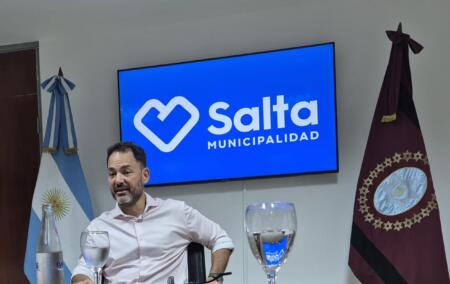
Milei has caused Argentina to wake up. “There is good and bad about Milei,” says Emiliano Durand, the Mayor of Salta. “It’s good that we have stability and can plan for the long-term. It’s bad that our budget has been cut, though this gives us much more freedom to operate.” As a result, Salta, a city of 640,000, can break free of the shackles of past ideological and policy foibles. On the prospect of mining, for instance, he says that “this is a big opportunity for the city, a solution for unemployment, perhaps the only way for us to create wealth and jobs for the people”. Or as the provincial Secretary for Mining Gustavo Carrizo smiled, “When do we start?!”
This change of attitude towards private business by what many saw as a notoriously antagonistic and problematic Argentine government is something from which many others might learn.
The theory that certain companies are “Too big to fail” is founded on the belief that their size and interconnectedness would trigger a global economic crisis if they were to stumble, forcing government intervention to save them. Popularised in 1984, this concept was central to the response to the 2008 financial crisis, leading to massive bailouts.
The same philosophy has long protected inefficiencies in government which regardless was too big and too important to change, without grave risks to the poor. But as Daza says, “there is no going back – the election of Milei was itself a signal that the old system had failed”.
Ironically, the same might be said about Milei’s reforms. If he fails, the era of big, expensive, frictional government will continue, with the costs of this failure to be felt beyond Argentina.
Dr Mills has been in Argentina for the Platform for African Democrats.
[Image: Greg Mills]
The views of the writer are not necessarily the views of the Daily Friend or the IRR.
If you like what you have just read, support the Daily Friend