

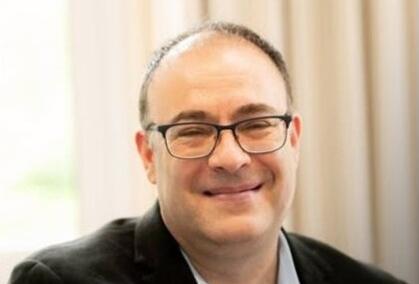
In 2006, having just returned from a four-year stint in Taiwan and looking to get back on a career path, I’d accepted a part-time job helping out at the South African Institute of International Affairs on something called the African Peer Review Mechanism. I arrived at SAIIA’s Jan Smuts House one afternoon in mid February, introduced myself to the receptionist, and before she could reply, a voice came from an adjacent office, “Hey, over here”. I looked over to see a guy of about my age staring intently at a desktop computer, motioning from a desk cluttered with documents. That was Steve.
Those next few weeks were manic. We ploughed through documents, recording the gist of things, relating them to the objectives of the APRM process. Steve was driven. He evinced a professional commitment to getting this over the line, along with a passionate belief in the potential of the APRM to change the trajectory of governance on the continent – and in South Africa. When the report we’d been working on was ultimately released and “validated” (in the prevailing nomenclature), he wept with joy and emotion. That was who he was.
Steve cared. He cared about his work as a political analyst. He cared about the team that worked under him and alongside him. He cared about the relationships he fostered. He was capable of being tough and stubborn when necessary, but he led by example, and had a prodigious capacity for empathy. He treated staff and colleagues with respect and showed an appreciation for their personal wellbeing.
I was privileged to have known Steve during some of my darker moments – most of these post-dating my time at SAIIA. Looking back, there were few who did more practically to help me keep things together. I will always owe him a great deal for that, personally and professionally.
As an analyst Steve cared about facts and accuracy. Boundlessly curious – he once told me he tried to read a book on every country he visited – he was always thoughtful in his approach and measured in any criticism (occasionally taking me to task for a sometimes less restrained manner of making a point…). He was someone who communicated to learn and to understand, not only to expound.
We shared a passion for writing and for verbal expression. He could put complicated and nuanced ideas into comprehensible language, with a gift for the pithy turn of phrase. He appreciated the power of words. He was masterly with humour and word associations. I looked forward to every piece he produced, whether for SAIIA or for the SA Jewish Report. He could interest, entertain and inform. He had a rare skill in this regard.
Steve always gave the impression of seeing his work as more than just a job at a think tank. He understood the potency of ideas, but was equally committed to their realisation. He cared about the society around him, about South Africa, and about Africa. He was never naïve about the scale of the challenges facing each of these, but to me he always exuded a quiet optimism that they were not insurmountable. The emotion he would show about the APRM – an initiative that offered Africa’s people the chance of real agency in shaping their futures – was an expression of this. For Steve, making the future better than the present was a vocation, a vocation he felt and pursued with an abiding passion.
I understand that there is something very Jewish in this. Indeed, being Jewish was always part of Steve’s sense of himself and his place in the world. “I’m very Jewish,” he once said to me. He cared about what it meant to be a Jew, and he cared deeply for the community. My own experience with Judaism and “Jewishness” had been limited, and the Jewish community could have wished no better ambassador or teacher than Steve. He helped me to understand the ideas that motivated this remarkable people, their sense of who they were, their hopes and fears. These matters carry particular poignancy today.
It went both ways. Steve was interested in what I saw in the Catholic Church (I am an adult convert) and occasionally turned to me for advice on matters pertaining to Christianity and the Church in Africa. He and his family attended my son’s christening, and I attended the Bat Mitzah of each of his daughters. They were joyful, moving experiences.
Above all, Steve cared about family. Nothing in his life meant as much to him as his dear wife Mandy, and his daughters Lauren and Megan. To hear him speak of them was to hear the voice of a man who knew what gave his life meaning. That came through without exception whenever he spoke of them. It was also captured in a column about family life and fatherhood he wrote for some time – they embodied not only his considerable talent for wordcraft, but the inspiration of a life shaped by an enduring pride in his family. For them, Steve carried an ardent, soaring devotion.
I heard the news that Steve was no longer with us late on Saturday morning. How does one process that? How does one accept that a constant in one’s life has gone? Each of us has lost a beautiful person, a towering intellect; the cause of good governance on the continent has lost a committed champion. For me, Steve was my friend. He was a good man. He cared. Go well, brother.
*This tribute was written at the invitation of, and was first published in, the South African Jewish Report.
[Image: https://www.facebook.com/photo/?fbid=1364154422415273&set=a.624585533038836]
If you like what you have just read, support the Daily Friend