

On Wednesday night, Donald Trump once again said that “the core strategic objectives” of the strike on Iran “are nearing completion”. Are they?
According to Trump, the US military has delivered “[v]ictories like few people have ever seen before”.
“Our enemies are losing and America, as it has been for five years under my presidency, is winning, and now winning bigger than ever before,” he said, in his characteristic magniloquent style, in a speech on the night of April Fools’ Day.
Like with golden trinkets, ostentatious décor, and young women, Trump has yet to come across a superlative he doesn’t like.
He also said: “…we are there to help. We don’t have to be there. We don’t need their oil. We don’t need anything they have. But we’re there to help our allies.”
This recalls the words of Ronald Reagan, who on 12 August 1986 said: “The nine most terrifying words in the English language are ‘I’m from the government and I’m here to help.’”
Seconds later, Trump contradicted himself: “Operation Epic Fury is necessary for the safety of America and the security of the free world.”
So they don’t have to be there, but it is necessary. In Trump’s own mind, everything he says becomes true, in much the same way that “fiat lux” spoke light into existence.
As Andreas Kluth wrote for Bloomberg, Trump sent “all possible messages at once”.
To war or not to war
If I were to analyse his entire speech, I’d be here all week. He repeated the blatant falsehood that “we were a dead and crippled country after the last administration and made it the hottest country anywhere in the world by far,” for example. Lying comes naturally to Trump.
So let’s just focus on the Iran operation – which, to be clear, is definitely not a “war”, because a “war” would require a declaration of war, and America hasn’t declared war since 1942, when it declared war on Bulgaria, Hungary and Romania.
Korea? Not a war. Vietnam? Not a war. Cambodia and Laos? Definitely not wars. Weren’t even there. Assorted crises in the Taiwan Strait? Not wars. Crises in Berlin? Not wars. Grenada? Not a war. Libya? Not a war. All those central American states? Not wars. The Gulf War? Not a war. Somalia? Not a war. Bosnia and Kosovo? Not wars. Haiti? Not a war. Going after Al Qaeda in Pakistan and Sudan in the 1990s? Not a war. War in Afghanistan? Not a war. Iraq rematch? Not a war. Syria, Yemen and Libya (again)? Not wars. Every other conflict in the War on Terror? Not wars. Twelve Day War against Iran? Not a war.
Exactly like Vladimir Putin’s Russia, America doesn’t go to war.
“Stone Ages”
Forgive the tangent. So, Iran. “Thanks to the progress we’ve made,” said Trump, “I can say tonight that we are on track to complete all of America’s military objectives shortly. Very shortly. We are going to hit them extremely hard over the next two to three weeks. We’re going to bring them back to the Stone Ages, where they belong.”
Let’s unpack that. Trump has been declaring victory in Iran at least since 11 March, more than three weeks ago. The war… sorry, the “hostilities designed to eliminate a threat” was “practically over the first hour it started,” he said. He has declared Iran’s military capabilities “100% destroyed”.
Iran has had to shoot magic missiles at Israel and Gulf states ever since.
Now, more than a month into the war, Trump wants to complete the almost-complete non-war in “two to three weeks”.
To do so, he threatened to “bring them back to the Stone Ages, where they belong”.
I did say, at the outset, that I don’t believe for a minute that Trump cares about the Iranian people. Now we know exactly how inferior he considers Iranians to be.
I also said, at the outset, that I wholeheartedly support overthrowing the regime in Iran.
What concerned me at the time was the bumbling way the US has gone about making war.
What I cannot support, however, is a campaign to “bring them back to the Stone Ages, where they belong”. The regime can go hang, but the Iranian people don’t belong there. Totally destroying a country is a repudiation of every legal and moral value upon which Western civilisation is based.
Objectives
Trump is quick to list the ways in which the US and Israeli militaries have clobbered Iranian forces, and he’s right. Nobody expected anything else – least of all Iran itself.
But the US and Iran are not scoring the war by the same rules. Conventional military success for the US does not necessarily constitute failure for Iran. It could never have expected to counter the world’s most powerful military on a level playing field.
Instead, Iran is playing for survival. As long as the Iranian regime still stands, and its ability to inflict pain on the Gulf region and the world economy survives, Iran will consider that a success.
Trump doesn’t appear to understand the notion of “asymmetric warfare”. He thinks he can bully anyone just by flexing American muscles, and delivering a punch to the nose if flexing does not work.
Iran is not afraid of that. It expects no less from the Great Satan.
Meanwhile, Trump has really not achieved any of the shifting objectives he and his officials have been giving for this war… eh, special military operation.
Regime change
He has not achieved regime change. He now says that they never said “regime change”. It is true they’ve been avoiding that term like the plague, but it isn’t true that they never said it.
Here’s Trump, in 2025: “It’s not politically correct to use the term, ‘Regime Change,’ but if the current Iranian Regime is unable to MAKE IRAN GREAT AGAIN, why wouldn’t there be a Regime change??? MIGA!!!”
In February, when asked whether ousting the ruling clerics in Iran was on the agenda, Trump said, “It seems like that would be the best thing that could happen.”
At the start of the war, Trump called upon the Iranian people to rise up and overthrow their government – which is the very definition of “regime change”, even if you don’t want to use the term because you always said America wasn’t in the regime change business.
The Iranian people have not felt able to do so, which suggests that the ability of the Iranian Revolutionary Guard Corps (IRGC) to suppress revolt and protect the clerical regime remains intact.
Lately, Trump has been saying that regime change has already happened: “…regime change has occurred because of all of their original leaders’ death. They’re all dead. The new group is less radical and much more reasonable.”
But that isn’t true at all. There is no new regime in Iran. There has been a personnel change in Iran, but that is not the same as a regime change – just like the capture of Nicolás Maduro did not change the regime in Venezuela, but merely installed his deputy as president.
The ruling clerics in Iran are still the ruling clerics, and the IRGC still enforces their dictats.
The new Ayatollah, Mojtaba Khamenei, who may or may not be alive, is actually more hardline than his late father was, and is more likely to press for the rapid development of nuclear weapons, not less.
Nuclear objectives
Speaking of objectives, destroying the nuclear weapons programme that Trump declared to have been “obliterated” in mid-2025 has also not occurred.
Trump claimed on Wednesday night that Iran “sought to rebuild their nuclear program at a totally different location, making clear they had no intention of abandoning their pursuit of nuclear weapons”.
While this appears to be inconsistent with assessments that Iran has done little, or nothing, to resume its enrichment programme, the extent to which its nuclear facilities were indeed “obliterated” in the first place has also not been well-established.
Nobody knows (although visible reinforcement efforts at a single tunnel entrance at the Esfahan nuclear complex might hint at) where Iran’s stockpile of about half a ton of enriched uranium is. As long as it retains this stockpile, which is far more highly enriched than civilian use requires, and can rapidly be enriched to weapons-grade, Iran’s long-term nuclear ambitions remain viable.
Missiles and drones
Another goal was to destroy Iran’s ability to lob missiles at all and sundry.
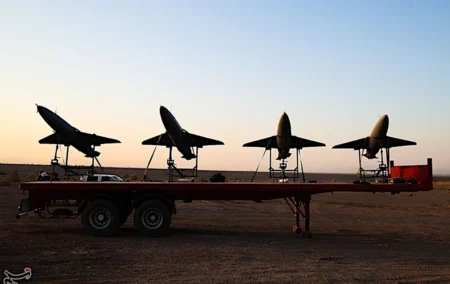
Clearly, its ability to do so has been heavily curtailed, but it hasn’t stopped firing missiles – and more worryingly, long-range drones – at ships and neighbouring countries, as far away as northern Israel and Saudi Arabia’s Red Sea ports.
Meanwhile, intercepting Iran’s missiles and drones has been an expensive and armoury-draining undertaking for both the US and Israel. It can take multiple interceptor missiles, at a cost of several million each, to down a single drone worth a few thousand dollars.
That is how asymmetric warfare neutralises overwhelming military power.
The US has begged Ukraine for help, but as with all its other allies, that country is still smarting from the public insults and humiliations Trump dished out only recently, and needs their anti-drone systems to defend their own country, anyway.
US missile stocks were already low before this war started, and both China and Taiwan have been watching the US waste them against cheap drones with glee and alarm, respectively.
Funding terror
One might think that Iran has at least been prevented from funding terror networks, but Trump, in a flat panic about the closure of the Strait of Hormuz, lifted sanctions on Iranian oil already at sea.
The move released 140 million barrels, which, at a discount price of say, $100 a barrel, would earn Iran cool $14 billion.
The sheer insanity of enabling your opponent in a wa…conflict to replenish its coffers, with which it can sponsor terror, buy more missiles, pay its army, or field more drones, is mindboggling.
The US is literally helping Iran to fund its defence. I may have said before that Trump is no Clausewitz, no Napoleon, and no Sun Tzu.
Strait of Hormuz
Trump thought Iran would capitulate before it could close the Strait of Hormuz. Instead, it has kept that vital oil artery closed for over a month, and appears determined to continue to control it.
It is selectively permitting traffic to pass through the strait, depending on a ship’s destination and its willingness to cough up a toll of about $2 million per passage.
Again, the money is rolling in for Iran.
Trump has been outraged that no NATO allies are willing to come to his aid to reopen the strait. He has gone so far as to threaten to leave the region and leave it up to others, and to threaten to leave NATO (although nothing in the NATO common defence agreement requires anyone to join an offensive war of choice).
He said on Wednesday that opening the strait is easy. Which raises the question why the US, with the best fleet in the entire history of navies ever, has been unable to do so, and expects other, far worse and basically incompetent navies to do so instead.
Trump claims not to be concerned about oil flowing through the strait, since little of it goes direct to the US, but that hasn’t stopped US fuel prices at the pump from going through the roof, just a month or two after Trump bragged about bringing fuel prices down.
War crimes
Trump has repeatedly threatened to commit war crimes against Iran, by targeting civilian energy infrastructure. He has also repeatedly chickened out on his ultimatums, claiming to be in discussions with important people in Iran.
Iran has consistently denied being in talks with the US, and has also denied asking for a ceasefire.
This war is Iran’s destiny. I wouldn’t go so far as to say they’re loving this, but they’re certainly not cowed.
Next steps: Kharg Island
The US is belatedly shipping about 8,000 warm bodies to the Gulf, complete with helicopters and amphibious assault craft.
The exact plans aren’t known, but there are two likely new objectives.
The first is Kharg Island, which lies at the north end of the Persian Gulf, 25 km off the Iranian coast. It has deepwater docking facilities for large oil tankers, and handles about 90% of Iran’s petroleum exports.
Trump has said that taking the island could happen “very easily”. Well, it couldn’t happen “very easily”. It would be an enormously risky undertaking.
First, the US would have to open the Strait of Hormuz, so its amphibious assault forces could traverse it. That, clearly, is not so easy.
To do that, and to protect an assault force once it has landed on the island, the US would have to secure major stretches of Iran’s coastline, to deprive the enemy’s large army of the ability to use artillery to decimate US troops.
Taking the island would require dealing with minefields that can be deployed at a moment’s notice, and against which the US has no minesweepers. Then it would require dealing with about 8,000 civilians, some of whom actually speak “Khargi”, and can therefore be assumed to feel quite possessive about their island.
Safe money would be on an ignominious US defeat, if it tries this.
Next steps: nuclear stockpile
The second possible objective is even harder, and that is to liberate Iran’s nuclear fuel stockpile.
Assuming the US knows where it is buried – and if I were Iran, I’d have spread it around the country – that would require airlifting crack troops, weaponry and heavy machinery into the well-defended interior of Iran, and protecting their perimeter against a few hundred thousand Iranian soldiers, while they build an airstrip for a cargo plane capable of lifting 440kg of highly radioactive uranium, plus the lead-lined containers in which it will be stored.
If you thought the failed rescue of the American hostages in Iran in 1980 was dramatic, you ain’t seen nothing yet. Succeed or fail, a mission like that would spawn blockbuster movies for decades to come.
Now, versus the status quo ante
So, what have the US and the tail that wagged the dog, Israel, really achieved here?
Certainly, Iran’s military equipment and weapons industry has taken a severe beating. That will buy Israel in particular some temporary security, but it hasn’t prevented Iran from lobbing explosive ordnance around.
The Strait of Hormuz, which was open before the war, is now closed, except to shipping that pays Iran a lavish toll.
Iran’s nuclear weapons ambitions appear to be unchanged.
Iran’s regime remains intact, even if its chain of command is fragmented and its new Ayatollah might be incapacitated.
Iran’s people have not risen up.
Iran has not renounced its sponsorship of terror proxies, nor does it look likely to surrender to the US. If it goes down, it will go down in a blaze of glory that will set the entire region on fire.
If the regime does fall, its remnants will undoubtedly mount an insurgency. So will multiple separatist movements, including (but not limited to) Balochi, Kurds, Azeris, Turkmen, Qashqai and Iranian Arabs.
There has clearly been no plan for after the war involving anyone inside Iran, so a US declaration of victory (as it will paint its defeat) and withdrawal will leave behind something resembling Syria or Libya.
Either way, there is no sign that Iran will become any less hostile to US or Israeli interests (or Western interests more broadly). On the contrary: they will have proof positive that the Great and Little Satan cannot be trusted, and pose an existential threat to the Islamic Revolution. They will be more belligerent and more dangerous, once this affair is over.
Economic shock
Meanwhile, the entire adventure has already sparked the biggest oil shock in history, and major disruptions of other critical industrial materials, such as agricultural fertilizer and helium needed for chip fabrication.
Iran used to just threaten the world with chaos. That threat has now been made real, thanks to a rash, ill-considered and reckless war, mongered by the “Peace President”.
Think this month’s fuel price hike was bad? Fasten your seatbelts, because you ain’t seen nothing yet.
The world is headed for a deep and devastating economic shock, which the US will not escape. Expect pandemic-style stagflation, worldwide.
Ironically, the biggest winners in all this will be China, and to a lesser extent Russia. As The Economist put it on its front page, picturing a smug Xi Jinping watching a raging Donald Trump, “Never interrupt your enemy when he is making a mistake.”
It’s absolute pandemonium, and a clown is in charge. Welcome to the Trump Era. I did warn that it would be catastrophic.
[Image: Iranian drones mounted on a truck bed during a demonstration exercise in 2022, Mostafa Tehrani, Tasnim News Agency, used under CC BY-SA 4.0 licence.]
.jpg)
The views of the writer are not necessarily the views of the Daily Friend or the IRR.
If you like what you have just read, support the Daily Friend