

Climate advocacy has routinely downplayed consequences such as job losses, and alternatives like nuclear power.
The movement vilifying the burning of fossil fuels peaked, alongside Greta Thunberg’s prominence, a few years ago. This corresponds with rising cynicism regarding progressive policies — perhaps signalling a shift favouring more centrist positions. Given the Iran war’s potential to significantly alter supply chains, we should freshly assess the politics and economics of efforts to restrict consumption of hydrocarbons.
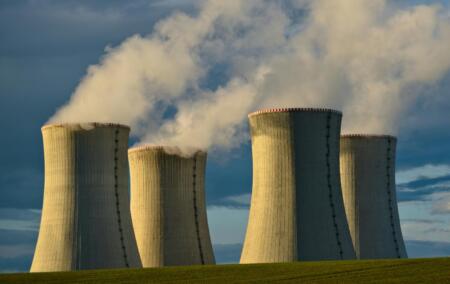
As mega tech companies splash out on AI data centres approaching a trillion dollars, nuclear power production is expected to grow very rapidly after twenty-plus stagnant years. Does this development not strongly suggest that climate activism blocked growth-enabling options? How different would today’s world be if they had adopted a solutions-mindset and advocated for nuclear power?
Voicing concerns about shifts in key metrics, such as rising CO₂ emissions, is laudable. Being concerned about things like poverty is no less laudable. As climate advocacy overlapped sufficiently with cancel-culture advocacy to stifle broad support for nuclear power, the global economy is more perilously reliant on both fossil fuels and freedom of navigation than necessary. As the latest Middle East war now demonstrates, this is highly detrimental to economic development and poverty alleviation.
Risks related to the production of nuclear energy have long been manageable and they continue to decline. Meanwhile, excessive reliance on Middle East hydrocarbons risks proliferation of nuclear weapons across that volatile region.
The underlying dynamic is that progressive politicians identify with their electoral supporters by framing issues within an emotive moral context. They want voters to believe that as there is “no planet B”, only irresponsible people would want to burn more hydrocarbons.
To vilify
Political polarisation makes managing complex trade-offs even more difficult. Using moral constructs to vilify those with different views is an easier path to navigate — yet it provokes further polarisation. As such influences compounded, electoral pressures to pursue solutions while balancing trade-offs waned.
It is certainly plausible that future observers will scorn the post-Cold War period for its indulgent idealism. Closing nuclear power plants to protect the climate has led to rising reliance on burning the filthiest and most abundant energy source: thermal coal. Will this be seen as the post-Cold War’s version of the Vietnam War’s haunting paradox: “we had to destroy the village to save the village”?
With two wars choking growth, idealistic indulgences are being culled to increase defence spending while key supply chains are rerouted or reinforced. While sitting at the bottom of a relatively isolated continent, we rode the tidal wave of idealism that followed the Berlin Wall’s demise. The resulting redistribution-focused policies subsequently provoked the world’s most severe youth unemployment crisis.
The Soviet Union’s demise unleashed a Western-led idealism that eventually morphed into anti-nationalism and anti-Western sentiments. Few young Europeans or Canadians would proudly consent to serve as soldiers.
Progressive voters gravitate toward candidates that further denigrate the people they deem miscreants, such as polluters and billionaires. While negative campaigning is routine among candidates on the right and the left, centrist-leftists and those on the right prioritise growth, whereas those well left-of-centre emphasise redistribution.
Tricky discussions
Consequently, as the more extreme elements of their parties gained influence, leftist candidates were incentivised to sidestep tricky discussions about things like solutions and trade-offs.
Over-indulging the extreme elements of leftist parties has trammelled the potential economic vibrancy of SA, the UK, and most EU countries. It is as if we are experiencing a reversing of the so-called ‘peace dividend’ of the early 1990s. Accrued commitments have somewhat suddenly become unsustainable while peace seems ever more elusive.
SA’s version of the early 1990s peace dividend was the avoidance of a civil war. Excessive favouring of redistribution over growth emerged gradually in SA. Democratic forces slowly lost ground to rampant patronage.
The cost of energy today
A robust pace of economic development requires reliable access to competitively priced energy. The cost of energy today is substantially lower in the US than in most other regions, and the US is not facing meaningful supply disruptions.
Conversely, if the free flow of traffic to and from the Persian Gulf isn’t soon restored, many countries will need to ration key energy sources such as jet fuel. Yet leaders of the nations most vulnerable to supply shocks take the position: “this is not our war.” Such framing is far more political than practical.
If other European nations had followed France’s lead, today they could rely primarily on nuclear power for their electricity needs. Once the battery challenges for EVs were largely overcome nearly ten years ago, reliance on fossil fuels could have been dramatically reduced.
Key European countries could have chosen to rely on nuclear power to fuel electric cars but many chose instead to rely on Russian-supplied energy.
SA could have sustained the efficiency of our national electricity provider, but the political exploitation of empowering the historically disadvantaged led to a government captured by a pervasive patronage culture.
Talk of rising CO₂ levels
Many who are well left of centre were politically mobilised by talk of rising CO₂ levels, yet they remained largely indifferent to the implications of Iran accumulating a massive supply of missiles and drones. Such voices now call for a rapid end to the Iran war.
But if there isn’t a shift in the status quo to prevent the IRGC from restocking its missile and drone stockpiles, the region’s prospects will suffer greatly. The reverse is equally true.
Among the key lessons from this stage of history, advocating for a noble goal — whether it be a sustainable environment or a democracy — must not be allowed to stifle debates about the trade-offs involved.
The spectacularly divergent trajectories of Dubai and Johannesburg over the past generation mostly trace to differences between realistically embracing commercial possibilities afforded by a highly integrated global economy versus the exploitation of ideals to focus on redistribution in a largely isolated economy.
[Image: Lukáš Lehotský on Unsplash]
The views of the writer are not necessarily the views of the Daily Friend or the IRR.
If you like what you have just read, support the Daily Friend