

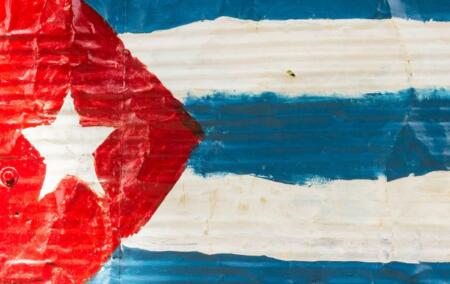
“National security threat” is the phrase being used in the United States as a means of explaining or justifying the increasingly bellicose attention Washington is paying to Cuba.
Since returning to the White House, Donald Trump has made clear his desire to change Havana’s leadership and has openly suggested that Cuba is “ready to fall”.
In March, he suggested the country was in “deep trouble” as he threatened a “friendly takeover”.
The relationship between the United States and Cuba – already strained and fragile for decades – has been rapidly deteriorating in recent weeks.
The US has hit Havana with an oil blockade, sanctions and now an unprecedented murder indictment against former leader Raúl Castro, brother of communist Cuba’s inaugural leader Fidel Castro.
Washington is also warning that a peaceful agreement with the Caribbean nation is unlikely.
There has been no announcement of plans for any military intervention, reports say, but Cuba is on edge, especially as surveillance activity in the Caribbean increases.
In recent days, the US military has been publicly broadcasting the location of its aircraft near Cuba on plane-tracking websites. Flight crews leaving their transponders on has been interpreted as a deliberate strategy intended to increase what one analyst called “the squeeze”.
Earlier this week, when asked about the US using force to achieve regime change in Cuba, secretary of state Marco Rubio said the administration’s preference was a negotiated settlement, but added: “[Trump] has the option to do that [use force] if there’s a threat to the national security of the United States – and he has shown his willingness to do that when he identifies such a threat.”
America has long been troubled by the now 67-year-old communist government in Havana. Cuba has been a US antagonist for decades, since Fidel Castro’s 1959 revolution.
Trump is strongly supported by hardline Cuban-Americans in Florida, who have pushed for US-instigated regime change for decades. His administration has indicated that it is laying the groundwork to unseat Cuba’s government.
Trump himself told reporters at the White House this week: “Other presidents have looked at this for 50, 60 years, doing something [about Cuba]. And it looks like I’ll be the one that does it. So I would be happy to do it.”
In particular, reports say, it has been the lifelong ambition of Rubio, the son of Cuban immigrants who serves as both secretary of state and national security adviser, to see Washington exercise a right to assert its authority across Latin America.
The secretary of state, speaking in Spanish, said in a video released on Cuban independence day this week that a US embargo was not the reason for the country’s privations, telling Cubans that “currently, the only thing standing in the way of a better future are those who control your country”.
Cuba’s foreign minister, Bruno Rodríguez, has said that the island state “neither threatens nor desires war” and accused Washington of building a “fraudulent case” for military intervention.
It is reported that Raúl Rodriguez Castro, grandson of the former president, met this month with CIA Director John Ratcliffe during a rare visit by a US spy chief to Havana, fueling talk he might agree to work with Washington.
Yet, reports say, the younger Castro has no formal position in the Cuban government and is not expected to betray his family. He attended a rally in Havana on Friday to protest his grandfather’s indictment.
Sources: Reuters, BBC, The Guardian
[Image: Juan Luis Ozaez on Unsplash]