

On Tuesday last week, Thomas Massey lost the Kentucky 04 Republican House primary. He lost it because President Donald Trump did not like Massey’s opposition to his policies in Congress, and because he is the primary driver behind the Epstein file release.
Trump put in a record amount of money to dislodge Massey. Not everyone likes Massey’s principles (he is staunchly libertarian) but they agree that he always votes, and otherwise promotes, his principles.
Trump on the other hand is not big on principle. He is dismissive of international law and congressional law, and supports politicians with dodgy records when he thinks they will be loyal to his agenda, such as, for example, Ken Paxton, the current Attorney General, in a Texas Republican primary for a Texas Senate seat. Paxton won the primary on Monday.
Frances Kendall ran for parliament in the 1994 election under the banner of the Federal Party. The vote bargaining that went on cheated her of a seat. She eventually joined the Democratic Party at a local level. She, like Massey, was strictly principled. Most ANC councillors would tell her she was naïve and that principle was not important. She won a court case or two for the DA due to the ANC violating a principle of law.
What do I mean by “principle”, you may ask? Well, in a social context a principle is an objective impersonal and impartial rule governing behaviour that is meant to apply to everyone. Everyone expects everyone else to adhere to it, regardless of their status and how inconvenient it might be. Ideally the term ‘everyone’ truly means everyone, but could also mean any group, from a family on up. An example of the latter is a local rule. Law, and particularly ‘the rule of law’ is a system based upon principle.
In non-principled social interactions (which I call pragmatism for want of a better term) there is no impersonal and impartial rule involved. Who is doing what to whom is what matters. They are based purely upon flexible discretionary impressions of the advantages to the individual, family, tribe or political cadre. They depend mostly on the interests and intuitions of those with high status and authority. You could also call that ‘the rule of man’.
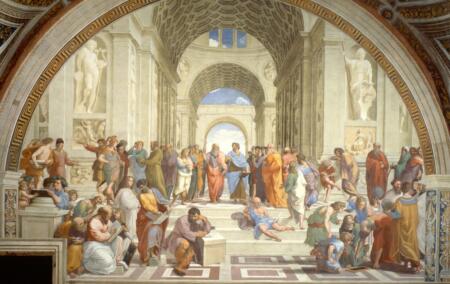
Up until classical Greece, no place in the world relied on principle, and even there it was merely an idea floated by some philosophers. Principle first appeared in Greek mathematics and philosophy in notions that permanent and universal rational laws, which are graspable by humans, govern the universe.
These gave rise to new perceptions of truth, to the idea of logic, proof, mathematics, science, and to formal legal systems. Republican Rome elevated formal law to new levels but rulers throughout the world still overwhelmingly governed by the ‘rule of man’. Notions of capricious gods running things were still in the background. With the decline of Rome and the loss of classical works the world succumbed completely to the ‘rule of man’.
However, the Catholic Church did apply one principle that ended up opening the world to principled behaviour and the ‘rule of law’ more generally. The Church banned marriage between closely related people, mostly cousins. It couched the ban as a principle based on a call by Jesus to leave your family and follow Him. A big motivation for pushing the rule was that inheritance now more often ended up with the Church, rather than families and it undermined the power of the aristocracy relative to the Church. The ban was most effective in western Europe and there the crucial effect was that it forced the expansion of relationships of all kinds to more distant people, including strangers.
To be beneficial, effective and stable, the ‘rule of man’ requires that people know, trust and depend upon each other. Unfortunately, even the more successful of such systems tend to depend on factors like cultivating more land and working more for economic growth, rather than innovation and higher productivity.
The good aspect of ‘rule of man’ systems disappear when you suddenly have to deal with strangers in important ways. The only way to get beyond that is with a common expectation of behaviour. Everyone must understand the rules or principles easily, deem them fair and impartial, and see they need no further input from an elite. Once a rule gains traction and people have faith that most respect it, especially the elite, other rules and systems of rules become possible.
Monasteries were based on Orders – systems of principles. They needed to compete for acolytes, and the main appeal was the rule systems that governed them. How well its rule systems worked for members determined the relative support for any monastery. Rule-system competition soon moved to other enterprises, like city-states, and also created new enterprises like universities or guilds.
These developments changed the way people thought. Instead of considering whole concrete organic social patterns and judging people by group membership, they began to reduce things and situations into basic elements (reductionism). They thought about, rearranged and reconnected these elements analytically (logically) and abstractly. It is part of the scientific method – seeking and thinking in terms of natural laws.
You will also see in it the move away from thinking in terms of organic collectives, like extended families, toward thinking in terms of the nature of individual atomistic people and the possible roles they could play in an imagined enterprise.
Removing a given context opens up a host of possible new contexts. Relationships and society began to form on a voluntary basis. People began to judge others on their personal (meritocratic) characteristics rather than group membership. Seeing people as independent elements, separate from their contexts, led to a psychological switch from an external to an internal locus of control.
People saw one another as capable of, and responsible for, determining their own destiny. Moral control moved from public shame to private guilt. Guilt implies you have internalised principles. This is the only way to manage dealing with isolated strangers stripped of all contexts.
Rule-based systems demonstrated that they could bring strangers together peacefully and productively. Opening up society to strangers radically increased the number of connections, varieties of views and insights and bigger industries and projects. What followed was a historically and globally unprecedented flowering of creativity, productive activity and wealth in western Europe.
Eventually the vast majority of countries paid at least lip service to a principle-based order. Some, like Japan, deliberately adopted it overnight and immediately started thriving. Today, institutions like free enterprise, democracy and justice are obvious principle-based systems.
Principle-based systems are the only way to enter into peaceful, fair and productive relationships with strangers. The label ‘stranger’ includes out-groups like other tribe, foreign countries, and different ethnicities, religions and cultures, but the ultimate target is the individual.
The point I am trying to emphasise is that if you want people to move beyond their immediate family, village, tribe or race in order to coexist peacefully and cooperate to the benefit of all, then a principle-based culture is essential.
A ‘rule of man’ approach is bound to degenerate, at the very least, into friction, distrust and a decline in living standards. More serious outcomes, like civil war, will become increasingly likely.
Trump, and the ANC (current and ex), must understand that the welfare of their own people is as much at stake as that of the Iranian people or the Afrikaner. If either side does not like the principles in operation, then please negotiate them rather than go rogue.
[Image: Raphael’s The School of Athens, https://en.wikipedia.org/wiki/The_School_of_Athens#/media/File:%22The_School_of_Athens%22_by_Raffaello_Sanzio_da_Urbino.jpg]

The views of the writer are not necessarily the views of the Daily Friend or the IRR.
If you like what you have just read, support the Daily Friend