

US President Trump’s unconventional style distracts attention from how long-established geopolitical presumptions no longer apply.
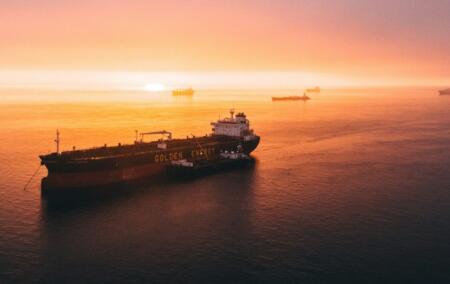
Freedom of navigation in international waters has been fundamental to the prevailing international order. No country has benefited from this more in recent decades than China. Thus, the US must reassess its long-term military investments in maintaining trade flows to and from the Middle East.
The US stock market can hit new highs as reestablishing unfettered navigation through the Strait of Hormuz is neither an economic nor a geopolitical priority for the US. Rather, Trump has rightly recognised that China is the US’s top economic and geopolitical priority. The centre of gravity of American politics has shifted to supporting this view. Meanwhile, there is scant support among Americans for the current war in Iran.
Trump’s 2025 National Security Strategy document depicts sharp contrasts with the US’s post-Cold War strategies. It rejects expansive global leadership, democracy promotion, and multilateralism in favour of a focused, transactional, sovereignty-centred realism.
Trump has long suspected that Europe is stuck in a doom loop; mounting evidence supports this view.
Moscow is dangerously reliant on Beijing. Russia’s trade with China is nearly double that of its next three top trading partners, India, Turkey, and Kazakhstan, combined.
Conversely, China does far more trade with the US than Russia – and China now trades twice as much with Europe than the US.
Europe’s huge trade deficit with China is critical to Beijing. Despite this being a massive threat to EU economies, they seem unable to act.
A horrible idea
Having the IRGC control the proceeds from Iran’s oil exports is a horrible idea. The US or Israel could now decide to damage Iran’s oil infrastructure in ways which would take years to repair. This would make it very difficult for the IRGC to pay their soldiers and it could lead to the downfall of their regime.
The problem with pursuing this path isn’t the economic repercussions of losing Iran’s oil production. The risk is that the IRGC could destroy the energy production and desalination plants of its neighbours.
The IRGC has sought to build a stockpile of missiles and drones sufficient to dominate the Persian Gulf. It would then become, in effect, unassailable as this would make efforts to deter its nuclear weapons programme prohibitively costly.
If the US were to cripple Iran’s oil-exporting capacity tomorrow, would the IRGC be able to do the same to its neighbours? Would this trigger a global recession? Might this be worth it?
Whereas the risks would have been far less, say, two years ago, they would have become prohibitively high within the next several months. The current balance of risks is much higher than what Trump would have anticipated it would be at this stage. A substantial portion of analysts now believe that Iran’s missile programme proved more robust, scalable, and sustainable than pre-war models predicted.
Since the ceasefire stage of the war began, Trump has hoped to starve Iran’s regime of sufficient income to fund weapon development and soldiers’ salaries. There is now much speculation that the IRGC has been able to access abundant funding from a government which is sympathetic in an opportunistic way.
Trump’s response, seeking to pressure key Gulf nations to join the Abraham Accords, seems unlikely to succeed. On the surface, this seems like an effort to exploit the crisis to build formal support in the region for Israel. If, however, it were to succeed, it would expand on the strategic linkages between the region’s only two highly robust economies, those of the UAE and Israel.
Can’t justify the costs
The deeper consideration is that the US can’t justify the costs of keeping the Strait open. Trump can say to the leaders of Saudi Arabia, Qatar, and others: if you aren’t going to join the US-led alliance – which is as much a response to China as Iran – then the US is going to wind down the military bases which have protected your regimes.
This could also be a prelude to the US inflicting severe damage on Iran’s oil exporting capacity. While such a move might eventually lead to the demise of the IRGC, a near-term outcome could be a sharp and prolonged reduction of the entire region’s energy production and exporting capacity.
The US and Israel could justify such risks. So could the UAE as it has developed a huge economy that isn’t reliant on exporting commodities. Other countries in the region want the Iran problem to be solved but they don’t want to risk their energy exporting and water desalination plants being destroyed. Asian heavyweights, like Japan, South Korea and, eventually, China are also vulnerable as are many lower-income countries in Asia and Africa.
The best-case scenario for the US had been a Venezuela-styled outcome whereby the IRGC would no longer be able to use export proceeds to fund weapon purchases and terrorist groups. Now it involves destroying Iran’s oil exporting capacity and hoping that its neighbours can then withstand the resulting attacks from Iran.
It doesn’t seem that Trump wants to roll the dice but it’s also possible that this is exactly what he plans to do. The official strategy document his government released six months ago almost certainly reflects how he sees the world. He intends to deemphasise the US’s relationship with Europe while improving commercial relations with Russia. Likewise, the Middle East will become less of a strain on US military assets while the US will seek closer relations with successful countries in the region, particularly, the UAE.
Today’s geopolitics mostly reflect competition between the US and China. Recent highs in the US stock market trace to strong corporate earnings and investments in AI. Europe is growing ever weaker whereas prospects for the Middle East could plunge or soar depending on whether the IRGC’s grip on power is challenged by relinquishing its access to oil export proceeds.
Markets seem to believe that a deal will soon be reached to open the Strait of Hormuz. The range of prospective events and outcomes is far wider.
[Image: Ian Simmonds on Unsplash]
The views of the writer are not necessarily the views of the Daily Friend or the IRR.
If you like what you have just read, support the Daily Friend