

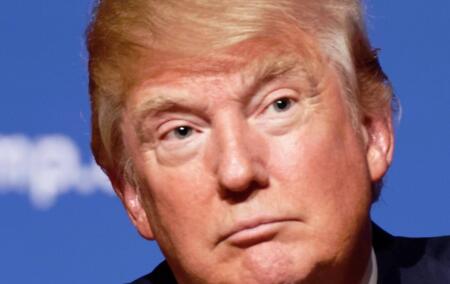
President Donald Trump’s deal with Iran has severely damaged his administration. Even though it is highly unlikely that the deal will be fully implemented, Trump has turned himself into a lame duck President.
Giving so much away to open the Strait of Hormuz makes him and the US look weak. That is one big outcome of the short game.
But the conflict remains unresolved and there is a far longer and uncertain game at stake. There are likely to be multiple rounds.
Iran’s attack on Gulf states has set off an alarm that Tehran remains intent on moulding the Middle East into compliance. Iran might now be betting that the Trump administration, under growing domestic pressure from a large isolationist strain in public opinion, will withdraw from deeper foreign involvement.
Much has changed with this war. Iran is militarily weakened, but it can still use threats to close the Strait to gain substantial leverage. It risks becoming more of an international pariah in using this leverage, but it might be its best tactic to avoid pressure.
Another change is that Trump has been damaged and has turned out to be an unreliable and difficult-to-predict ally. And the signs are that the US might have a greatly decreased appetite for external involvements.
The damage to the Trump phenomenon over the past week has been substantial. Trump can no longer come across as the astute negotiator and the President who can resolve the big problems. Instead, it highlights his rushed and poor judgement and mercurial nature.
What has done the real damage to Trump is agreeing to a one-sided deal which allowed Iran to declare victory. Even if he now declares that Iran has breached the deal and calls it off, the damage will remain.
There has been heavy opposition to the war among Make America Great Again supporters and outright hostility to the deal within the Republican Party. Many Republicans now wish to distance themselves from Trump as they fear electoral damage.
Real purpose of the war
Americans are left asking what was the real purpose of the war. The deal does not come close to meeting the stated objectives – unconditional surrender, regime change, no nuclear programme, and no ballistic missiles.
Handing over Iran’s stockpile of enriched uranium is specified in the memorandum, but talks on this must still take place, and Tehran is unlikely to easily yield.
The clause of the memorandum which states the US will “ensure” financing for “the rehabilitation and economic development of Iran” to the extent of $300 billion is a non-starter. The Gulf states will certainly not want to offer Iran financing to rebuild its arsenal, and nor will the US Congress.
In a search for the reasons for Trump’s actions, there is much that is inexplicable. And that is what makes him a difficult ally.
Did Trump sign the deal, knowing full well that it could not be fully implemented, on the chance that the Iranians would still see to it that more tankers were allowed to sail through?
With the mid-terms just months away and the urgency to bring down oil prices, this might have been the only deal Trump could get.
Since talks between Iran and the US stalled earlier this week, some tankers have been allowed to pass, but traffic through the Strait is down on last week. So the signs are that the Iranians are allowing through a trickle. Iran needs that oil revenue, so it has no interest in blocking traffic itself or having its tankers blocked by the US Navy. But it also needs the leverage over the US.
The oil price (Brent), at just under $78 a barrel, is well off the price in excess of $100 in the early days of the conflict. So this might be the most expedient deal for Trump at the moment, although all could go terribly wrong.
What alternatives did Trump have to the deal he signed with Iran last week?
Hindsight
With hindsight, this sort of regime-change project might best have been left well in the future when there was sufficient pipeline capacity to bypass the Strait.
But once the war started, Trump could have just waited, in the hope that because Iran needs oil revenue, it would open the Strait at some stage.
And then, why was Iran’s ability to close the Strait not thought of well in advance of Operation Epic Fury?
Was this neglect or a miscalculation that Iran would not block traffic on the assumption that it needed the oil revenue?
Iran has repeatedly threatened to attack tankers when the West has imposed sanctions in response to its nuclear programme.
Missing these sorts of plays follows a pattern, and adds to the problems in having Trump as an ally.
When Trump raised tariffs on China to punitive levels, Beijing imposed tight controls on its exports of rare earth minerals that are widely used in the production of magnets and defence electronics. China controls close to half of global production of rare earths and its squeeze offers a powerful point of leverage on the US.
But now the US has belatedly woken up to its vulnerability to a Chinese squeeze on its access to rare earths and is attempting to raise its own production.
Rash decision-making makes life difficult and uncertain.
That is precisely why European members of NATO, Ukraine, the Gulf States, and Israel will advance their plans for far greater defence self-reliance. Even if a fresh, more internationally minded administration is elected in the US, the lesson of over-reliance on the US has been heavily reinforced over the past few years.
More difficulty
The latest war with Iran has made the Gulf states well aware of the need to bypass the Strait of Hormuz with oil pipelines. These countries have also woken up to the need for heavy investment in air defence and ballistic missile technology. It will be a lot more difficult for Iran to survive future rounds of war once the new investments in the Gulf are in place.
The last few months have reinforced that regime change cannot be brought about by air power alone. But the recent war does mean that Iran faces far more serious internal and external threats.
Regime change will continue to be high on the agenda for the Gulf states and Israel, and even a more isolationist US. The saga has some way to play out.
[Image: By Michael Vadon – https://www.flickr.com/photos/80038275@N00/20724666936/, CC BY-SA 2.0, https://commons.wikimedia.org/w/index.php?curid=42609338]
The views of the writer are not necessarily the views of the Daily Friend or the IRR.
If you like what you have just read, support the Daily Friend