

There is a ritual that plays out every few months in Pretoria. A newly arrived political counsellor, three weeks into a posting, sits down for an introductory coffee and asks a version of the same question: who actually decides things here now?
It is a fair question, and it deserves a better answer than the one most missions are working from. For thirty years the answer fitted on an index card. The African National Congress (ANC) decides. Learn its factions, track its national executive committee, cultivate its deployees, and you understand the South African government.
Every handover note passed from departing head of mission to successor was built on that foundation. With no overlap or understudy period between an outgoing ambassador and an incoming one, the handover note is the principal vehicle of institutional memory, consulted for months into a new posting.
In Pretoria, that inherited memory now describes a country that no longer exists. The foundation is gone, and the notes have not caught up.
The Centre for Risk Analysis (CRA) has spent the past two years answering that counsellor’s question for clients. Our working assessment through that period has held true: that the Government of National Unity (GNU) would survive its first eighteen months despite repeated predictions of collapse, that the 2025 budget fight would end in a renegotiated framework rather than a rupture, and that coalition friction would remain a domestic phenomenon without spilling into the foreign policy machinery.
The reshuffle that ran backwards
On 30 June, President Cyril Ramaphosa reshuffled six Democratic Alliance (DA) positions in his executive. John Steenhuisen, until recently the DA’s leader, lost the agriculture ministry and became Deputy Minister of Trade, Industry and Competition, serving under an ANC minister. David Maynier, a former Western Cape finance MEC and one of the more capable technocrats the DA has produced, took over Forestry, Fisheries and the Environment. Willie Aucamp moved to Agriculture and inherited the foot-and-mouth disease crisis that had made Steenhuisen’s position untenable. Three deputy ministers were swapped for new faces.
On the surface, this may look like routine, but look at who set it in motion. Not the president, but instead Geordin Hill-Lewis, who took the DA leadership from Steenhuisen in April, and wrote to Ramaphosa with a list of changes the party wanted made to its own cabinet representation. The list became public before the president had signed anything, and Ramaphosa granted every request.
Section 91 of the Constitution says the president appoints ministers. Nothing in the text changed. Yet a coalition partner’s internal leadership contest just redrew part of the national executive, and the president’s role was to formalise the outcome. No reshuffle in democratic South Africa has worked that way before. This one was a party managing its own house, with a presidential signature at the end.
That is the single most important thing a diplomat needs to absorb about South Africa in mid-2026. Cabinet composition is no longer a presidential decision that parties react to. It is a negotiated outcome that the presidency ratifies.
Count the seats, not the parties
The GNU is not a shared national project as the name suggests, but more of a transactional marriage. The MK Party and the EFF, who between them speak for a large slice of the electorate, sit outside it. The ten parties inside did not gather around a programme, they gathered because the ANC fell below 50% and somebody had to govern.
The arithmetic is doing more work than the name. The ten parties hold 287 of the National Assembly’s 400 seats. Take away the DA’s 87 and the government stands at 200, one short of a majority. That single seat is the most consequential number in South African politics, and it sorts the coalition into two kinds of member. The eight smaller parties are surplus, as each could walk tomorrow without moving the majority, which is why none of them can extract much by threatening to. The DA is the exception, the one partner whose seats are load-bearing. When the ANC promised at the GNU’s formation that no single party would be able to hold its agenda hostage, it was describing an insurance policy that came up exactly one seat short. Hill-Lewis’s letter succeeded for that reason and no other. A president does not grant a junior partner’s full list out of courtesy. He grants it because the partner’s caucus is the difference between a government and a minority.
The same arithmetic explains why the DA pushes hard and never walks. Its veto is total but brittle. A recruitment of parties from outside the tent by the ANC erodes the DA’s veto. Leverage of that kind gets spent inside the government or not at all, so the party’s periodic threats to leave are bargaining noise, not intent. The test to apply to any coalition dispute is not who shouts loudest, but who can do arithmetical damage.
Parties that need each other more than they trust each other produce a particular kind of government. Decisions take longer; confident announcements get walked back; and every major policy file becomes a negotiation, then a renegotiation.
Diplomats trained on ANC-era South Africa treat a minister’s stated position as a forecast of policy. It used to be one, because behind the minister stood a single party’s internal consensus. Now a ministerial statement is an opening bid in a negotiation the minister may not control. The better predictor is the coalition bargain underneath: which partner can block this, what that partner needs domestically, what it will trade.
Redraw the map, then price everything
The first task of political work in any capital is an accurate understanding of the power structure of the host country. It is important to identify the principal players, map the tactical routes, and build the web of contacts on that map, then pass those contacts to successors, because the work is part of a continuum. The difficulty in Pretoria is that the power structure itself has changed shape faster than most missions’ contact books.
An embassy that built its network on the ANC-era map, ministers, Luthuli House, is now working from an incomplete organogram. The new nodes of power include party leaders who hold no executive office at all. The classical injunction to identify the second echelon of leadership and cultivate it for the future now points into party structures, provincial congresses and leadership races, not just into deputy ministers’ offices. A mission that waits for someone to enter cabinet before cultivating them will keep arriving after the decision has been made. The CRA’s advice, to make contact with opposition leaders ahead of an election, acquires a coalition twist here. The governing parties are also each other’s opposition, just like coalition politics in any other country.
The second habit to complete the upgrade is to price every outcome. Coalition partners do not give things away, so when a concession arrives without a visible price, the price is somewhere you are not looking, usually domestic and usually unannounced. Ramaphosa granted the DA’s list in full, and nothing in the public record says what he received for it. Either the ANC banked a concession that has not yet surfaced, in which case finding it is worth a month of conventional reporting, or the list was granted for nothing, which would say something far more alarming about the presidency’s bargaining position. A mission that can answer the question, ‘What did the ANC get?’ before its peers do will understand the next six months of this government better than any briefing can manage.
Continuity under strain
Our most probable scenario for the GNU is continuity under strain. The coalition holds through the local government elections in November and into 2027, because both anchor parties lose more from divorce than from an unhappy marriage. The ANC cannot easily govern with the DA’s assertive alternatives; and the DA cannot demonstrate national governing credentials from opposition. Policy output remains slow, contested and reversible, but the arrangement survives. A ten-party cabinet spreads blame, and when policy disappoints, no single party owns the failure. Both anchors have learned to use that cover with their own bases: the ANC for concessions to the market, the DA for concessions to the ANC. Governments that can share blame this way are consistently more durable than their public quarrelling suggests, which is why the predictions of collapse keep missing, and will probably keep on missing the mark.
The alternative scenario, lower probability but severe in impact, is a DA exit or expulsion, most plausibly triggered by the ANC upcoming post-election fever. This scenario plays out if the ANC concludes the coalition costs it more voters than it retains. For signalling tripwires, watch how the anchor parties campaign against each other between now and November, because parties that govern together nationally must fight each other in every municipality, and the tone of that fight is the best gauge of the coalition’s condition. Watch the ANC’s succession manoeuvring, since Ramaphosa is in his final term, and the next leadership contest will determine whether the party’s centre of gravity stays with the coalition or swings against it.
Above all, watch the guest list. Because the DA’s veto rests on a single seat, the cheapest move available to the ANC is not confrontation but recruitment. Expanding the coalition downgrades the DA to become merely a surplus like everyone else. Any ANC courtship of the parties still outside, however informal and however deniable, is the clearest available signal that a squeeze is being prepared. And the DA’s own behaviour will tell you whether it believes recruitment is coming. A party that senses its veto expiring spends it faster.
The machinery holds, the appetite shifts
The Department of International Relations and Cooperation (DIRCO), Defence, Finance and the Presidency remain ANC-held, and the foreign policy decision-chain runs through them unchanged. Treaty work and joint commissions still move through the same machinery that governed them before 2024, and that machinery is codified, not customary. Section 231 of the Constitution assigns the negotiating and signing of international agreements to the national executive, and DIRCO’s 2019 directive on concluding them prescribes the rest, from legal opinions and certification by the Chief State Law Adviser’s office to the President’s Minute that must precede any signature. There are however two wrinkles worth noting. Agreements requiring ratification are binding only once both houses of Parliament approve them, and no party now holds a majority in either. And the President’s Minute is counter-signed by the line-function minister, so an agricultural agreement now carries a DA signature inside an ANC-run process.
Distinguish the state’s capacity to commit, which is unchanged, from the government’s appetite to commit, which is not. Every binding undertaking must now survive an internal negotiation before it reaches the President’s Minute, because a cabinet that spans the ideological centre has to agree with itself before it can agree with anyone else. The symptoms will be familiar from any coalition capital where there are longer gaps between announcement and signature. But the same structure occasionally produces the opposite surprise, a decision no single-party government would have risked, taken precisely because ten parties dilute the blame for it. When Pretoria does something abroad that seems out of character, do not ask which party wanted it. Ask which parties wanted it and needed the others for cover.
Differently governed, not ungovernable
South Africa has not become ungovernable but rather differently governed, and the difference rewards those who study it.
The diplomats who will thrive in Pretoria are the ones who redraw the power map to include party structures, track coalition bargains as closely as cabinet announcements, read unity rhetoric as a strain gauge, and check who holds the veto before believing any ministry’s stated intentions. The ones who struggle will be those still working from the old index card, or from a handover note written for a country that no longer exists.
The CRA will continue monitoring South Africa’s political developments alongside its diplomatic activities, while engaging with the relevant stakeholders.
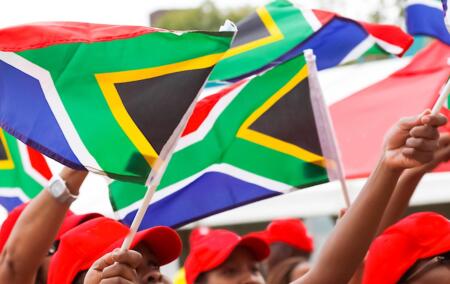
[Image: by wirestock]
If you like what you have just read, support the Daily Friend