

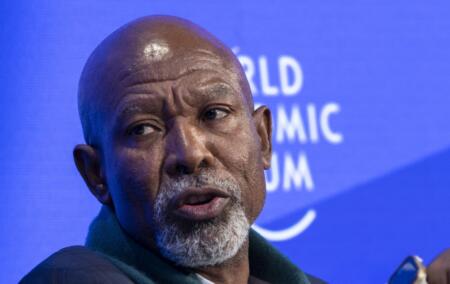
Last week, the Governor of the Reserve Bank, Lesetja Kganyago, asked those holding power in the country, the vested interests in government, and those close to them, if they truly wanted the country to grow.
It might seem a redundant question, but it is not. Our growth has been sluggish for years, and there has been minimal reform that could change the situation.
It was a diplomatic speech, and he did not identify those who rule and those who benefit from state capture. He referred to “we” – that is, all South Africans, rather than those holding up growth reforms.
The message was that reform is minimal and far too slow. It is state capture, corruption, and the municipal mess that are killing growth and the investment climate. Although there are risks to reform and political costs, we had best face up to these now.
Central bankers are only paid to speak about the economy, so he did not speak about the full consequences of our high unemployment-low growth trap.
Most of the media seemed to have missed the significance of his speech at the University of South Africa.
It was a call for powerful interests to speed up economic reform. It presented our fundamental economic predicament to those who really matter.
Kganyago’s solution is far faster economic growth, which international experience shows can alone deliver improved human well-being.
The Governor cited an article by economist Lant Pritchett, “Economic growth is enough and only economic growth is enough,” which shows that rising national income is the fundamental driver of improved human well-being.
“You don’t need to be sidetracked by alternative policies and caveats. You don’t need ‘growth with adjectives’, where growth is only worth doing if it’s the right kind of growth. Just go for growth,” the Governor said.
You don’t hear that from ANC politicians. Listen to ANC officials speak about economic policy. They call for faster transformation and an end to inequality. Yet, inequality tends to rise in the early stages of a growth process, but the lives of the vast majority are still improved.
Growth crisis
SA is in a growth crisis, although the country has not experienced an economic collapse or lost a war, the Governor pointed out.
The consensus growth forecast for this year is between only one and 1.4 percent. Over the past five years, growth has averaged only one percent. With a population growth rate of 1.2 percent, we have been getting poorer for some time.
Living standards are lower now than they were in the early 2010s. “The population has grown faster than the economy for a long time – something very rarely seen without a crisis,” Kganyago noted.
This is despite us having achieved basic economic stability and resilience to crises. Unlike during the 1990s, our foreign exchange reserves are substantial, our monetary policy is gold standard, our public sector debt is now under better control, and overall the markets and credit rating agencies are looking upon us with greater favour. And because of all of this, we are most unlikely to require an IMF bailout.
SA and other emerging markets learned key lessons from the crises in the 1990s and fundamentally changed their approach and adopted far more prudent policies.
In the 2007-08 Great Financial Crisis, we and other large emerging markets held up far better than in the 1990s and averted catastrophe. Most emerging markets, particularly China and India, have done exceptionally well.
Like other emerging markets, Kganyago stressed, we have established economic resilience, but “resilience is not growth”.
That’s because of our vulnerabilities – government spending resulting in public debt expanding from 30 to nearly 80 percent of GDP – “one of the worst debt deteriorations after the great financial crisis of any major economy.”
That resulted in SA losing its investment-grade credit rating and debt service becoming one of the largest items in the budget. Now Treasury has a stabilisation plan, which the markets and credit rating agencies seem to like.
“Similar macro-frameworks”
But it’s the growth crisis that is at the heart of our economic problems.
As Kganyago said: “Many emerging markets adopted similar macro-frameworks, and almost everyone has grown faster than us.”
South Africa’s “real problem” was “institutional destruction” in the form of state capture.
“It devastated capacity in national government; it just about broke the state-owned enterprises; and it persists in the municipal failures we see around us today.
“In this context, the private sector cannot flourish.
“That private sector has been in survival mode. Investment has stalled. Firms are not pouring their energies into growing their South African business; the ones that are here are treading water.”
Reform, “spearheaded by the government’s Operation Vulindlela, tackles all the right areas, like energy and ports and municipal governance. But progress is slow.”
So, Kganyago asks, “do we truly want to grow?”
Reform for growth involves facing down vested political interests. In the case of SA, it will also involve imposing law and order at all levels of government.
There is a price that the tenderpreneurs, many of whom are party insiders, may have to pay if the system of national and municipal government procurement is changed. If the labour laws and the national wage-bargaining system were changed, it would mean the unions would pay a cost.
The public enterprises, which rule over key enabling parts of the economy, such as power generation and transmission, and transportation, are a drag on productivity and growth. Privatising would potentially impose a heavy price on management and those who benefit from contracts.
“Risky”
The problem, Kganyago says, is that “growth means trying things that are risky. This is not always comfortable, especially for people who already have power and wealth.”
Any reform attempt in SA is bound to involve a pushback from the losers. That imposes risks on its own.
“South Africans like to gamble, but when it comes to growth, it turns out we are risk-shy. We like protecting incumbents. We like detailed rules, regulations, and controls.”
Essentially, economic reform for growth can be done two ways. The first is by shock therapy, which is often the result of an economic crisis. The second is gradualist, which often means protracted negotiations between power brokers to obtain deals.
A crisis can pave the way to reforms that politicians would not be able to engineer in more normal times.
Through its conservative monetary policy stance, the Reserve Bank has ensured that SA has not fallen into crisis and required an IMF bailout. A crisis and IMF bailout would almost certainly mean tough conditions to bring about reform and growth.
As long as the central bank is independent, it is unlikely there will be a crisis. That saves the ANC from having to make the really politically tough decisions to embark on a reform programme.
Having analysed our predicament, it would be good to hear from the Governor on how SA could best engineer and sequence the big reforms. His answer might be, “Just do it!”
[Image: https://www.flickr.com/photos/worldeconomicforum/52635124824]
The views of the writer are not necessarily the views of the Daily Friend or the IRR.
If you like what you have just read, support the Daily Friend