

A persuasive WhatsApp history of Iran reveals less about the past than about how arguments are constructed.
It came through from my father.
Not unusual. Like most people, his phone is a landing strip for things sent by friends — long, scrolling messages that are supposedly ‘informative.’ Usually, they are right on the cusp of conspiracy. You skim them, maybe roll your eyes, and move on.
This one I read properly.
Not because I agreed with the premise, but because it was so clearly working a specific angle. It had that distinct tone: calm, structured, and heavy on the specifics. It moved through dates, names, and organisations without the usual capital-letter shouting or obvious nonsense of the fringe. It read like someone who had actually done the homework.
But I could smell a rat.
What follows is a slightly condensed version of the message. It is worth reading it properly before dismissing it. Much of it is grounded in real events, and that is precisely why it works:
1901: A British businessman secures exclusive rights to Iran’s oil. Iran receives very little from its own resource.
1908: Oil is discovered. The Anglo-Iranian Oil Company is formed (later BP). The British Royal Navy converts from coal to oil, making Iranian petroleum a strategic military asset for the British Empire.
For decades, Iran’s oil is extracted by a foreign corporation while the country receives only a fraction of the profits. When Iran later asks for a fairer arrangement, similar to the 50–50 split negotiated elsewhere, Britain refuses.
1951: Iran’s democratically elected Prime Minister, Mohammad Mossadegh, nationalises the oil through a parliamentary vote. His argument is simple: this is our oil.
Britain responds with an international blockade.
1953: The CIA and MI6 overthrow Mossadegh. They bribe officials, fund protests, and run disinformation campaigns. The Shah is restored, and Western oil interests return. The CIA formally acknowledged its role decades later.
1953–1979: The Shah rules as a Western-backed authoritarian. His secret police suppress dissent. Iran becomes a key strategic ally and major purchaser of Western arms.
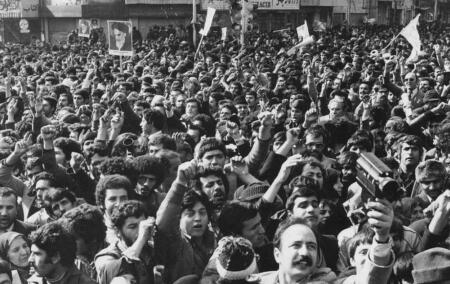
1979: The Shah is overthrown in a popular revolution. This is often presented as an abrupt turn to religious extremism, but it follows decades of foreign intervention and domestic repression.
The U.S. embassy is seized during the revolution. This is often portrayed as an unprovoked attack, but the memory of the 1953 coup shapes how the revolutionaries view American presence.
From here, the pattern repeats across the region.
Lebanon: Groups like Hezbollah emerge in the context of foreign invasion and occupation.
Iraq: After the 2003 U.S. invasion, instability allows Iranian-backed militias to form and expand.
Yemen: A Saudi-led coalition, supported by the U.S., carries out a prolonged bombing campaign, contributing to a humanitarian crisis. The Houthis emerge as a response to this conflict.
Across these cases, actions attributed to Iran are often responses to earlier interventions.
The nuclear issue follows a similar pattern. Israel possesses nuclear weapons and faces no comparable sanctions or inspections. Iran signs agreements, allows inspections, and is still treated as a threat. The U.S. withdraws from the 2015 nuclear deal.
Taken together, these events suggest a broader pattern: Western powers intervene, shape outcomes, and then frame subsequent resistance as aggression.
The result is a narrative in which Iran is consistently presented as the source of instability, while the history of intervention that precedes its actions is downplayed or ignored.
At first glance, it holds together. It moves cleanly from one moment to the next, building a story that feels coherent, even obvious.
And that is the point.
It starts in 1901 and moves forward step by step. It all feels factual. It all feels logical.
And that is exactly how it earns your trust.
Then 1951. Mohammad Mossadegh nationalises the oil. It was democratic, it was legal, and the Parliament voted for it under the simple banner: ‘This is our oil.’ For the first time, a Middle Eastern nation was asserting its right to its own resources against a colonial power.
Then 1953 happened. The coup. CIA. MI6. Operation Ajax.
The message describes the street-level chaos — the hired mobs, the bribery of the military, the calculated destabilisation of Tehran. Mossadegh was out, and the Shah was back in. The Americans have since acknowledged their role. The British role is well-documented.
Again, solid ground. This is not fringe history. If you want a clean example of Cold War intervention, this is it.
At this point, you can feel the message carefully laying track. It isn’t asking you to believe anything radical yet; it’s just asking you to follow a sequence where nothing triggers your immediate resistance.
You are being groomed by facts. Following is always easier than questioning, especially when the person telling the story hasn’t given you a reason to push back.
The Shah rules for the next quarter-century. He is authoritarian. The SAVAK, his secret police, spreads its wings through torture and surveillance. Western backing keeps the oil flowing and the arms deals signed.
The message paints a picture of a puppet state.
Again — this is a broadly accurate, if somewhat flattened, version of the mid-century. What begins to drop out of the story are the messy parts that don’t fit neatly into a single direction.
It ignores the ‘White Revolution’ — the Shah’s attempt at land reform and secularisation that alienated the traditional clergy. It ignores the dizzying, uneven pace of modernisation that created a massive urban-rural divide. It ignores the fact that the opposition wasn’t just religious; it was a broad, fractious coalition of Marxists, liberals, and students.
By the time the message hits 1979, the Revolution is presented as a simple, delayed reaction to 1953.
In this version of history, the 1979 hostage crisis wasn’t a calculated move by a new regime to consolidate power; it was a ‘defensive memory’ of the previous coup. The message suggests that the students took the embassy because they were terrified the CIA was going to pull the same trick twice.
The story starts to feel like a physics problem: Force A leads to Reaction B.
But history isn’t physics.
The Islamic Republic wasn’t just a ‘reaction’ that happened to go the wrong way. It was a deliberate, ideological project.
While the 1953 coup certainly destroyed trust in secular democracy, the regime that followed was built on the ruins of every other political movement. Khomeini and the clerics didn’t just inherit a vacuum; they spent the first few years of the revolution systematically liquidating their rivals. They purged the leftists, they executed the liberals, and they shut down the universities.
When the message ignores that internal engine, it isn’t just simplifying — it’s erasing the independent will of the people who actually built the current Iranian state.
The message then applies this same ‘Action. Reaction. Blame.’ template to the entire region. It suggests a perfect causal chain for every conflict.
Hezbollah is framed purely as a response to the 1982 Israeli invasion of Lebanon. The Iraqi militias are just a response to the 2003 U.S. invasion. The Houthi movement in Yemen is simply reacting to Saudi bombs and Western logistics.
There is a kernel of truth in every one of those points. The 2003 war in Iraq was indeed a catastrophic catalyst for regional instability. The invasion of Lebanon in 1982 did provide the vacuum in which Hezbollah grew.
But notice what happens to the timeline.
Decades of local rivalries, religious friction, and the self-directed strategies of these groups are compressed into a single moment of origin. They are treated as ‘outputs’ or ‘products’ of Western meddling.
In this narrative, Hezbollah has no independent political soul. It has no internal Lebanese agenda. It is just a reaction. This is where the ‘History Lesson’ becomes a tool of advocacy. By stripping these groups of their own agency, the message also strips them of their own responsibility. If they are just ‘outputs,’ then the only person whose decisions matter is the one who ‘started it.’
It turns the Iranian state into a mere ‘reactor.’ It suggests that if the West had just behaved differently in 1953, the current regime wouldn’t be doing what it’s doing today.
That is a comforting thought, but it’s a fantasy.
The post-1979 system has its own internal logic. It has its own institutions and its own cold-blooded calculations of power. It isn’t just lashing out because of a seventy-year-old grievance; it is actively seeking regional hegemony.
You can see this most clearly in how the message handles the nuclear debate. It leans hard on a ‘hypocrisy’ framework.
It points out that Israel has the bomb and no sanctions, while Iran has signed agreements, allowed inspections, and still has a decimated economy. It points to the 2018 U.S. withdrawal from the nuclear deal as proof that ‘no matter what Iran does, the West will move the goalposts.’
The inconsistency is real.
The withdrawal from the JCPOA (Joint Comprehensive Plan of Action) was a massive blow to international diplomacy, but the comparison is too blunt to be useful. It ignores the fundamental difference in how these states operate.
Israel’s security posture exists within a state that has internal dissent, elections, and a pluralistic political soul. It is a state that, for all its flaws, operates within a recognisable international framework.
Meanwhile, in Tehran, ultimate authority sits with an unelected clerical leadership that filters every candidate for office. That system has now passed to Mojtaba Khamenei, consolidating power within a narrow clerical elite and ensuring the ideological project continues into another generation.
One is a state; the other is a revolutionary project that views its own borders as temporary obstacles. It operates through a global network of non-state actors, using them to project power while maintaining plausible deniability. That isn’t a ‘reaction.’ It is a strategy.
The message ignores the internal repression of the ‘Woman, Life, Freedom’ protests. It ignores the execution of dissidents. It ignores the way the IRGC has swallowed the Iranian economy to fund its regional ambitions.
Why? Because those details create ‘noise.’ They make the ‘straight line’ look jagged and messy. By the time you reach the end of the message — where it tells you that the ‘real enemy’ is something the media and governments are hiding from you — the conclusion feels earned.
You’ve been walked there step by step. You feel like you’ve cut through the propaganda and arrived at a rare, hidden clarity. It has that satisfying, ‘in-the-know’ hum to it. It tells you that you aren’t a victim of complexity; you are a witness to a conspiracy.
But what you’ve actually been given is a partial story dressed up as a complete one.
A serious reading of this history is much more demanding than a WhatsApp forward. It requires the intellectual stamina to hold two truths at once.
You have to accept that Western intervention, particularly in 1953, did profoundly warp Iran’s trajectory. It destroyed political trust. It contributed to the conditions in which a revolution could be hijacked by a single, narrow ideology.
But you also have to accept that the regime which emerged isn’t just a ‘product’ of that intervention. It is an independent, often brutal system built on its own foundations. It is an actor with its own will, its own strategy, and its own responsibility for the state of the region.
Both are true.
The WhatsApp version only allows for one, because once you acknowledge the grit and the messiness, the story stops being so easy to sell. It turns history into a straight line because straight lines are easier to believe. And in a world of overwhelming noise, we are all suckers for a straight line.
[Image: https://picryl.com/media/first-quds-day-tehran-17-august-1979-3abde6]
The views of the writer are not necessarily the views of the Daily Friend or the IRR.
If you like what you have just read, support the Daily Friend