

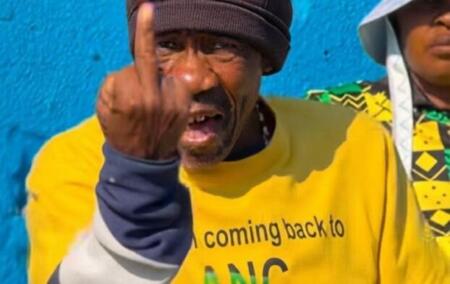
Last weekend, during a voter registration drive in Johannesburg, the DA’s mayoral candidate, Helen Zille, was greeted by an ANC activist with a long show of a middle finger.
The ANC is very worried about a significant loss to the DA in Johannesburg. It would amount to the ultimate humiliation for the ANC at the hands of what it has long labelled as an apartheid party.
A DA victory would give the DA a platform for significant growth in the national election in 2029 and arguably amount to the greatest change in South African politics since 1994.
And ending corruption and patronage politics in Johannesburg, and putting in a new management system would be a sound basis for the big task of change in national government.
With voter registration for the November 4th local government election ending this Friday, the campaign for Johannesburg is about to get a lot more tense.
The ANC knows it needs to put up a big fight to even have a hope of maintaining its position.
By the election on November 4th, Zille will have been running her mayoral campaign for more than a year. The ANC has yet to announce its mayoral candidate for Johannesburg, although former clergyman and Mbeki advisor, Frank Chikane, is widely expected to be its choice. Action SA is putting up its leader, Herman Mashaba, and the EFF’s candidate is a medical doctor, Tlanleng Mofokeng.
With voter registration out of the way, the DA campaign will focus on showing what can be done. Ten bakkies, all painted blue, will drive around repairing potholes, water leaks, and pavements. Being more responsive than the council shows the DA can talk, but also do – a good vote winner.
But a win with an outright majority is far from guaranteed for the DA in Johannesburg. An outright majority requires a party to achieve 136 out of the 270 seats on the Council.
If the DA fails to achieve a majority, governing the city through a coalition promises five more years of waste and indecision. The DA will probably be the largest party in Johannesburg once the vote is counted, but having to form a coalition will shatter business confidence in the city.
The DA managed a coalition of seven parties in Cape Town in 2006, but that was difficult and only temporary.
Zille says she can win a majority if around 490,000 people vote for the DA on both the ward and proportional representation ballots. She says it is a matter of seeking out the DA voting base and making sure that they go to the polls.
Educating voters on the voting mechanism is an important part of the Zille campaign. Splitting votes between parties on the two ballots would be of severe disadvantage to the DA and is likely to favour the micro-parties. Voting for the DA on both ballots gives the party far greater leverage.
Under our local government voting system, voters are given two ballots. One is for the election of a ward councillor, who represents residents of a defined geographical area in a city. The other ballot is for the election of proportional representation (PR) councillors. Half the councillors are ward councillors and half are elected by proportional representation.
In effect, voters have three votes, as half the ward council votes also go to the election of the PR councillors in proportion to the vote received by each party.
But the 490,000 number might be difficult to achieve. The DA achieved its highest ever vote in Johannesburg of 510,000 in 2014, at the provincial election. Since then, the DA vote in Johannesburg has slumped in every election.
At the 2016 local government elections, the party received 480,000, and at the 2024 provincial election, it received less than 354,000 votes.
Lifting the vote count by about 140,000 in two years is a big ask. Will Zille’s long campaign, her name recognition, force of personality, and magic as well as the disastrous state of the city bring in the votes in November?
Those are all significant factors, but the sort of jump required in the vote is a big hurdle. In percentage terms, the DA received 25 percent in 2024. Increasing the share of the vote by ten percentage points in five years would amount to great success, so doubling the DA’s vote share in two years seems overly ambitious.
Rather than the ANC, the greatest threat to the DA achieving a majority in Council are the smaller parties which split the DA’s vote. On their own, they can’t form a government but can act as kingmakers. The smaller parties are the reason Johannesburg has had ten mayors in ten years.
To mobilise voters, the Zille campaign is making great efforts to reach supporters behind the walls of townhouse complexes, blocks of flats, and retirement homes.
One of the real barriers in this campaign is that many traditional DA supporters have simply lost hope for the city and the country. They are turned off by the endless news of corruption and collapse, and now follow Trump and Manchester United.
That is why her campaign theme is, “Believe in Joburg.”
There are those who I know who don’t like Zille or the DA, but given the city’s emergency, they say they will give her a chance. Potholes, urban grime, garbage piling up on streets, and an unresponsive Council drive voters towards solutions they would not otherwise support.
That is what brought about the turnaround in Detroit. Last year, voters gave a new Mayor a mandate to get rid of the city’s patronage machine and turn around a city that had been in decline for years.
As is frequent in SA election campaigns, the ANC will be bringing all they have to bear on the campaign.
Last week, the finance minister said that after all, the Treasury would allow the 49 municipalities with poor audit outcomes, including Johannesburg, to receive state grants. Political pressure has been brought to bear from the ANC on the National Treasury.
The ANC will almost certainly have problems in coming up with a credible campaign, so it will have to call on traditional loyalties. It has little else to rely upon.
The campaign slogan on ANC T-shirts is “Fixing Local Government,” which stands as a bizarre admission of the disaster for which the party is largely responsible.
The EFF has promised free electricity and water to recipients of social grants and has said it will redistribute abandoned municipal buildings to the youth and black communities.
The DA can only promise to break patronage politics and improve service delivery. “We are not promising to reduce rates and taxes because the city is bankrupt,” Zille says.
And Zille chooses not to answer questions about what she will do about pushback from the ANC cadres and unions, should she get that majority.
There is also the question of what happens if there is no DA majority and a coalition mess. Pressure from business and the Treasury can’t really solve the problem if the voters are not prepared to act.
[Image: https://www.facebook.com/61578116483695/posts/122181111440937216/?rdid=K8c6k3ytYw4ZQKTv#]
The views of the writer are not necessarily the views of the Daily Friend or the IRR.
If you like what you have just read, support the Daily Friend