

Many South Africans live in two societies simultaneously: the everyday geographical confines of their own country and the cultural and intellectual context of the United States. I’ve made this observation before on a few occasions, and I was intrigued to see someone else picking up on it.
This was a column by News24 columnist Jonny Steinberg towards the end of August. Its title caught my attention: “SA is feeling battered and small and terribly weak”.
Steinberg presented a view of South Africa stranded between a self-important elite, out of its depth and prepared to make the country suffer for its hubris, and a panicked response that sees prostration before the US as the only way out. “It seems,” he says presciently, “that when the US flexes its muscles, everyone at the tip of Africa loses their heads.”
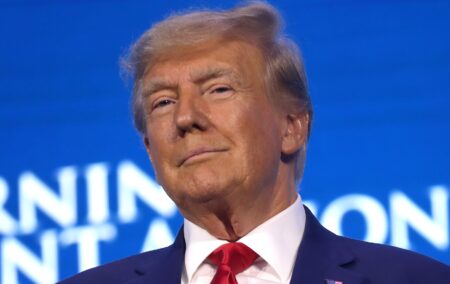
Naturally, the figure of President Donald Trump looms large.
For South Africans who feel a real sense of attachment to the US, there is both something threatening and oddly exhilarating about the current moment. It’s threatening in the damage that the failing relationship and loss of competitive trade access will bring; exhilarating – at least for many among the country’s thought-leaders – that South Africa has been drawn into the vortex of American political debate. No longer confined to haughty (but impotent) op-eds in the local media about goings-on in places the writers might struggle to find on a map, I detect a real sense of satisfaction at our being able to “fight Trump” directly.
There are hazards in this.
Trump’s outsized personality, disregard for decorum and the “right wing” appellation (whatever that may mean) have made him the centre of the story. But the breakdown of the relationship between the two countries has been decades in the making. The ANC has for generations harboured suspicions towards the US and was often unable to restrain its instincts in this regard.
Imperialist villain
This was seen in its substantive positions. Its voting record at the United Nations, for example, and its rhetoric conveyed this. The US was invariably cast as the imperialist villain, the root of most (if not all) geopolitical tension. Even protest and democratisation movements in authoritarian societies could be ascribed to its meddling.
If anything, this has become more pronounced and performative in recent years, as the proposed renaming of Sandton Drive to Leila Khaled Drive – explicitly and publicly intended as an insult to the US – indicated.
This might have been manageable, had South Africa retained countervailing influence. Sadly, the country has neither the diplomatic capacity to make its case, nor indeed the global heft to make it an indispensable partner.
South Africa’s declining relationship with the US – perhaps better expressed as its declining ability to conduct such a relationship – is part of a larger story of national decline. It’s about a failure to safeguard its institutions, a “rejection of meritocracy” (as per the National Planning Commission, one of the most important phrases to come out of post-apartheid South Africa), chronic insecurity, ideological fixations and a population whose people are getting poorer every year.
“Battered and small and terribly weak” describes not only the feeling in the country, but is also a credible reflection of what South Africa has become.
Remarkably, and most concerningly, South African officialdom seems hardly to understand the gravity of all this. There appears to be a naïve (or arrogant) confidence in the country’s exceptionalism, its supposed moral authority, and that its pathologies can be “explained”.
Dysfunction
Indeed, the President wrote recently that “our economic diplomacy is centred on securing market access, attracting investment and promoting sustainable development”. Recent news reports have highlighted the dysfunction in South Africa’s missions abroad. South Africa has had no trade counsellors in 30 of its 45 trade offices abroad for close to two years. The office in Washington is one of these; so are those in its BRICS partners, as well as in the UK, Germany, Belgium, France and South Korea. And across Africa too. Not much economic diplomacy going on there, even in those alternative markets that, we’re told, will be our salvation.
So the infrastructure for securing market access barely exists, investment is not attracted (last year, it came in at 14.6% of GDP: less than half of the National Development Plan’s envisaged 30%), and there is not much of an engine for sustainable development.
The hard reality of the situation is that South Africa – South Africa as a whole, and not only its elite or its state apparatus – might need to recognise that the relationship between the two countries might be icy and hostile for the foreseeable future. It’s a painful prospect for those invested in a vicarious Americanism. It’s also not a “Trump thing”, however reassuring that thought may be.
And, as director of the Centre for Risk Analysis Chris Hattingh remarked to me after a recent visit to Washington, Trump might in fact be the more reasonable and pragmatic side of the MAGA movement. Some of his colleagues and successors may be inclined towards a less forgiving, more ideological approach to South Africa. Nor would a Democrat administration necessarily reset things, since South Africa’s posture has alienated many in that camp too, and some feel that Trump’s protectionist agenda is the wave of the future. This is not a happy situation for South Africa.
Internal malaise
Ironically, South Africa’s best hope for repairing that relationship, and reconstituting it on the basis of something approaching mutual respect and utility, is dealing with South Africa’s own internal malaise.
And, perhaps doubly ironically, some of what has been floated as the conditions for resetting relations with the US make sense. Take South Africa’s empowerment legislation, aggressively ramped up recently. It is a burden in doing business, a disincentive to investment, and an all-round brake on the economy. Ignoring normative questions, a country with South Africa’s governance dysfunction, failing logistics, dismal education system and crippling crime problem simply can’t make an investment case for a 30% upfront tax on investment and quotas on staffing, backed by ruinous penalties, or for that matter, expropriation at below market value. South Africa needs growth-first solutions; instead, it imposes a tax on growth. It makes an inhospitable business environment a prohibitive one, even for domestic firms.
Likewise, it’s surprising that South Africa’s President is reluctant to speak out against incendiary political rhetoric (that chant…). It is deeply threatening and rank with racial overtones. It also romanticises violence: disturbing in a country like South Africa, in which political disputes are at times resolved by assassination. Whether it is legally hate speech or not, it would seem fitting for the President as the head of a constitutional democracy to take a public stand: that this sort of political behaviour is a relic of a sad past and has no place in the society South Africa aspires to. It would be a small part of reclaiming the promise of a peaceful, pluralistic and non-racial democracy.
Steinberg is, however, correct. This may have no effect on Trump. The issues go much deeper and may defy resolution. But South Africa needs to take these decisions for itself and for its own benefit. The route it has taken is beggaring it. The country’s own choices have in no small measure left it “battered and small and terribly weak”.
I fear that fixating on Trump’s capriciousness obscures the true nature of South Africa’s crisis. South Africans are – irrespective of their interest in it – not part of the US polity. We have limited ability to alter American political dynamics. But we can, and must, alter those of our own country.
[Image: https://www.flickr.com/photos/gageskidmore/53066690422]
If you like what you have just read, support the Daily Friend