

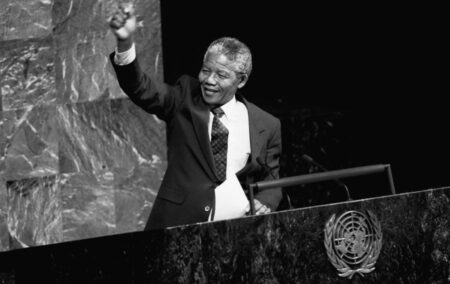
The 23rd Nelson Mandela Annual Lecture, delivered in Johannesburg by UN Special Rapporteur Francesca Albanese on the theme “Enhancing Peace and Global Cooperation”, should have offered South Africans an opportunity to reflect on reconciliation, dialogue, and mutual security.
Instead, the event largely became an echo-chamber of anti-Israel rhetoric, boycott appeals, and one-sided narratives that ran counter to the peace-first principles Nelson Mandela lived by.
From dialogue to denunciation
Reports from attendees and media coverage show that the focus was not on the fragile U.S.-brokered ceasefire currently holding in Gaza, nor on the delicate hostage-release process still underway. Rather, several speakers used the platform to promote political grandstanding, reviving calls for boycotts of Israeli-linked institutions and urging South Africa to sever ties with organisations they labelled as complicit. These calls signal a dangerous shift. The lecture morphed from a space for intellectual reflection into a venue for public condemnation of Israel, its allies and Business.
This is deeply ironic. Mandela himself insisted that peace is made with one’s adversaries, not against them. In Long Walk to Freedom, he wrote that true reconciliation demands “working with your enemy, for then he becomes your partner.” The lecture’s tone characterised by condemnation and applause for economic isolation betrayed that ethos. Instead of using the platform to advocate for constructive dialogue and humanitarian progress, the speakers focused on demonising one side of a complex conflict.
What could have been: using the lecture to promote real peace
The 23rd Mandela Lecture could have served as a beacon for diplomacy, especially considering South Africa’s own history. After all, South Africans know the painstaking process of negotiation and compromise. We remember how, in the early 1990s, the African National Congress, the apartheid government, and civil society leaders navigated tense political negotiations to avoid a descent into full-scale civil war. That experience taught the nation and the world that dialogue, patience, and incremental steps toward mutual recognition are more effective than endless confrontation.
Similarly, the ongoing U.S.-brokered ceasefire and hostage-release process in Gaza represent a delicate opportunity for peace. These negotiations, though imperfect, are fragile lifelines that could save countless lives. The lecture could have highlighted the importance of supporting these processes: ensuring safe humanitarian corridors, facilitating aid, and encouraging both sides to honour agreements. Yet, the rhetoric largely ignored these crucial efforts, leaving the impression that continued conflict and punitive measures were more important than pragmatic steps toward resolution.
Activism or warmongering?
The tone of the event was troubling. Activists speaking at the lecture sounded less like proponents of peace and more like advocates of continued confrontation. By emphasising boycotts and economic isolation, they sent a signal that escalation, rather than negotiation, is the preferred path. For South Africans, this should ring alarm bells. We know from our own history that calls for one-sided sanctions without dialogue do not lead to justice; they prolong suffering. The same is true in Israel and Gaza: attacks, reprisals, and blanket condemnations hurt civilians on both sides, and obstruct pathways to reconciliation.
Some of the sentiments during the lecture cast the conflict in stark binaries: “coloniser and colonised,” “oppressor and oppressed.” While such framing may appeal to activist audiences, it erases decades of efforts toward coexistence, joint initiatives, and grassroots peacebuilding. It also disregards the legitimate security concerns of Israeli civilians, many of whom live under the constant threat of rocket attacks and terror infiltrations. To frame Israel exclusively as an aggressor while ignoring Hamas’s documented use of civilians as human shields and its targeting of schools and hospitals is to simplify a conflict that is deeply complex.
Mandela’s example: building bridges in the face of hatred
Nelson Mandela’s moral authority lay in his ability to see humanity on both sides of a divide. He built bridges when it was easier to burn them. In the 1990s, he engaged directly with the architects of apartheid, even those who had imprisoned him for decades. He met with P.W. Botha and F.W. de Klerk not to punish, but to negotiate, reconcile, and ensure a peaceful transition. That is the lesson we must apply today: moral authority comes from advocating for justice and peace, not from issuing unilateral condemnations.
Imagine if Mandela had taken the same approach in the Middle East. He would have used his voice to encourage the continuation of the U.S.-brokered ceasefire and the hostage-release process, urging all sides to act responsibly while protecting civilians. By not focusing on these tangible steps toward peace, the lecture missed an opportunity to offer South Africans an example of leadership that blends justice with pragmatism: a hallmark of Mandela’s approach.
Lessons South Africans understand
South Africans can relate to this in very real terms. We know the agony of living through conflict: the apartheid-era townships, the violence between political factions, and the tense negotiations that prevented a civil war. We also understand the importance of compromise: the Truth and Reconciliation Commission, which allowed perpetrators of human rights abuses to confess and seek forgiveness, was not a strategy of denial, it was a strategy of forward-looking peace. Similarly, the Middle East needs processes that prioritise saving lives and building trust over symbolic gestures of condemnation.
We also understand the dangers of rhetoric divorced from reality. In the 1980s, international campaigns often called for sanctions against South Africa. While some were justified to pressure the apartheid regime, those campaigns sometimes ignored the nuanced work of negotiators and community leaders working quietly to maintain dialogue. Activists calling for wholesale boycotts today against Israeli-linked institutions risk repeating the same mistake: prioritising moral posturing over practical steps that can reduce human suffering.
The human cost of ignoring negotiation
Every delay in supporting ceasefire mechanisms and hostage-release operations has a human cost. Civilians, both Palestinian and Israeli, bear the brunt. Hospitals run low on medicine, children cannot attend school, and communities live under the shadow of fear. By failing to highlight ongoing diplomatic progress, the lecture effectively condoned the stagnation of peace processes. South Africans know the consequences of ignoring dialogue: communities fracture, violence escalates, and generations are scarred.
Mandela’s legacy reminds us that peace is not abstract. It requires patience, courage, and a willingness to sit together with those you mistrust. Any platform that invokes his name should model those virtues. Using it to call for economic boycotts and to rally anger undermines both the lecturer’s moral credibility and the international understanding of Mandela’s principles.
Where the lecture could have made a difference
The lecture could have been transformative. Speakers could have:
- Emphasised support for the U.S.-brokered ceasefire, showing South Africa as a mediator advocating for the protection of civilians on both sides.
- Highlighted the hostage-release process, stressing the importance of maintaining momentum and transparency to ensure lives are spared.
- Offered guidance to South African civil society on constructive engagement: funding humanitarian aid, supporting dialogue initiatives, and promoting education for coexistence.
- Counselled against blanket boycotts that punish innocent people, noting that such actions can entrench divisions rather than resolve them.
Had these elements been central to the lecture, it would have honoured Mandela’s legacy, fully demonstrating that justice, empathy, and diplomacy can coexist even in the most complex conflicts.
Why South Africa must care
South Africans have long been vocal on issues of international justice, and rightly so. Our nation’s history gives us a unique moral perspective. Yet this moral voice is credible only when it is principled and balanced. When our advocacy devolves into one-sided condemnations, we risk losing the very legitimacy that Mandela worked for decades to establish.
By elevating rhetoric over reconciliation, the lecture sent the wrong message: that protest and denunciation are sufficient, while the painstaking, messy work of negotiation is secondary. That is a lesson South Africa learned painfully during apartheid, and it is one we cannot afford to forget in the context of Israel and Gaza.
Reclaiming Mandela’s legacy
The Nelson Mandela Annual Lecture should be a space for unity, for grappling with complexity, and for promoting pathways to peace. Transforming it into an anti-Israel platform diminishes Mandela’s global standing as a reconciler. South Africa, with its own history of negotiation, compromise, and bridge-building, should model what responsible advocacy looks like: support for diplomatic solutions, humanitarian action, and reconciliation.
Mandela knew the difference between justice and vengeance, between confrontation and dialogue. He understood that meaningful peace requires courage, patience, and moral clarity. As South Africans, we should insist that platforms bearing his name uphold these principles. That means advocating for an end to hostilities, supporting ceasefire agreements, and encouraging dialogue while rejecting inflammatory rhetoric and one-sided political posturing.
If we truly honour Mandela, we will use our voice not to fan the flames of conflict, but to support every initiative that brings Israelis and Palestinians closer to the shared peace they desperately need.
[Image: https://www.flickr.com/photos/un_photo/3312299914]
The views of the writer are not necessarily the views of the Daily Friend or the IRR.
If you like what you have just read, support the Daily Friend