

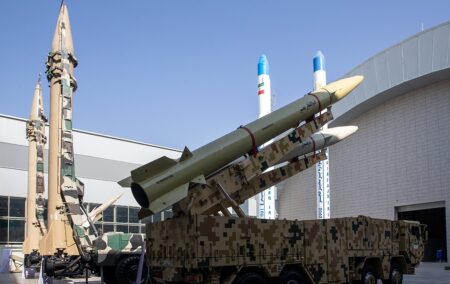
The peace deal holding Gaza together right now works for a reason most people don’t understand: Arab states fear Iran more than they care about Palestinian statehood.
That cold reality — not moral evolution — is what’s keeping the ceasefire intact.
TL;DR
The October 2025 Gaza ceasefire works because Arab states now fear Iran more than they care about Palestinian statehood. The UAE, Bahrain, Saudi Arabia, and Morocco are funding reconstruction not from solidarity but from threat perception. Iran and its proxies (Hamas, Hezbollah, Houthis) represent existential danger to Sunni regimes. This realignment, born from the Abraham Accords, inverted decades of conventional wisdom that said peace with Israel required solving Palestine first. Hamas’s warfare tactics — embedding fighters among civilians, diverting aid, preventing evacuations — guaranteed massive civilian casualties during Israel’s military response. The result is a containment arrangement held together by Iran-phobia and exhaustion, not justice. It could last decades or collapse tomorrow, depending on whether Tehran escalates or Israel alienates its new Arab partners.
Path forward needs credible post-Hamas authority
This essay was written after the October 2025 ceasefire, as Gaza enters an uncertain peace. This essay focuses on Gaza and Hamas. The West Bank — governed by the Palestinian Authority and complicated by settlement expansion — is a separate if related crisis.
Over the past two years, the war between Israel and Hamas has been one of the most scrutinised conflicts in modern history. To understand it requires more than sympathy. It demands clarity about responsibility.
Media narratives often flatten the picture, portraying Israel as aggressor and Palestinians as passive victims. Yet Hamas initiated the 7 October 2023 attacks, murdering and kidnapping civilians (several not even Israeli or Jewish) on a scale not seen in decades. Israel’s military response was overwhelming, and humanitarian consequences severe, but it followed from a reality in which Hamas used Gaza’s population as both shield and stage.
The current ceasefire, brokered in October 2025 by the United States, Egypt, and Saudi Arabia, has frozen large-scale fighting. According to reporting by Reuters and the Associated Press, negotiations are under way for a transitional framework involving representatives of the Palestinian Authority, Arab states, and international agencies. Day-to-day services, however, remain in the hands of local municipal workers, UN agencies, and NGOs. Conditions are precarious: infrastructure is ruined, aid entry remains tightly controlled, and renewed violence is possible if talks stall.
The regional diplomatic structure first established under the Trump-era Abraham Accords now anchors these negotiations. The same Gulf and North African states that normalised relations with Israel — the UAE, Bahrain, and Morocco — have joined Egypt and Saudi Arabia in funding relief and reconstruction. Their role is diplomatic and financial, not military. This ‘outside-in’ alignment, once derided as cynical, is now the main stabilising force keeping the ceasefire intact.
Yet structure is not sovereignty. Unless a legitimate Palestinian administration emerges to govern Gaza without violence or corruption, the region will relapse.
| A Compressed Timeline: Gaza 2005: Israel withdraws unilaterally from Gaza. 2006–2007: Hamas wins elections, then seizes power by force. 2007–2022: Repeated rocket wars, Israeli blockades, and short truces. 2023: Hamas’s October 7 attacks kill over 1 200 people and trigger a full-scale Israeli invasion. 2024–2025: Two years of heavy fighting; Hamas’s command network destroyed; tens of thousands of civilians killed; Gaza left in ruins. 2025: Ceasefire reached through U.S., Egyptian, and Saudi mediation; regional states pledge billions in aid under UN supervision |
How Hamas fights — and why civilians suffer
Hamas’s warfare method is well documented by the UN, Amnesty International, and numerous journalists. Fighters and weapons are deliberately placed in or beneath schools, mosques, and hospitals. Tunnels run under civilian neighbourhoods. These tactics guarantee that every Israeli strike produces both tactical gain and moral damage.
Fuel, food aid, and other supplies are routinely diverted to military use. Civilians are prevented from fleeing combat zones. The purpose is political theatre: the image of Palestinian suffering as proof of Israeli cruelty.
Israel’s warnings to civilians — text messages, phone calls, ‘roof-knocking’ munitions — have no parallel in modern urban warfare. Yet these precautions could never erase the inevitability of civilian casualties when Hamas operated from among its own population.
When Hamas seized Gaza in 2007, Israel and Egypt imposed border controls to prevent weapons-trafficking. Naval and land inspections followed. Critics call the blockade collective punishment; Israel and Egypt call it necessity. Both are partly right.
Under international law, blockades are permissible if declared, applied impartially, and if humanitarian relief continues. Israel’s system, while controversial, has met those criteria in form, though not always in practice. Every escalation has produced tighter restrictions; every pause has brought small relaxations.
Since the 2025 ceasefire, Egypt has continued to manage inspections at Rafah, coordinating with Israel on aid entry. The UAE and Bahrain have provided funding and monitoring through UN and Arab League mechanisms, according to UN OCHA (United Nations Office for the Coordination of Humanitarian Affairs) briefings, but they do not conduct border inspections. The inspection process remains an Egyptian-Israeli responsibility overseen by international monitors.
This arrangement — regional involvement, multilateral oversight — is the clearest sign of the pragmatic diplomacy that grew out of the Abraham Accords: Arab states willing to work with Israel for stability, even without a final peace. These border controls, combined with the war’s civilian toll, have fuelled the most serious accusation levelled at Israel: genocide.
Since 2023, the accusation of ‘genocide’ has been levelled repeatedly at Israel. The UN Genocide Convention defines genocide as the intentional destruction, in whole or substantial part, of a national, ethnic, racial, or religious group. Israel’s actions — however destructive — targeted Hamas’s military capacity, not the Palestinian people as such. Gaza’s population has increased steadily since 2005, and Israel demonstrably has the capacity, but not the intent, to annihilate.
Civilian death, however vast, is not itself proof of genocidal policy. Intent must be demonstrated. Israel’s conduct — warnings before strikes, humanitarian corridors, and the continued flow of aid even in combat — contradicts that intent. This position has been echoed by analyses from the International Institute for Strategic Studies and other legal observers.
The term ‘genocide’ has moral gravity earned through history; applying it where it does not belong erodes that gravity.
Selective outrage: the pattern at a glance
Syria’s civil war has killed over 300 000 civilians since 2011; Yemen’s conflicts more than 150 000. Sudan’s renewed fighting has displaced millions. Yet global outrage, media attention, and university activism reach fever pitch only when Israel is involved.
The disproportion is not in the deaths but in the discourse. Israel’s actions are scrutinised with a moral intensity denied to others. That scrutiny is not inherently unjustified — democracies should be held to high standards — but when applied selectively, it turns moral language into political theatre.
Consistent moral reasoning would condemn both Hamas’s deliberate brutality and Israel’s occasional excesses without equating them.
The volatile present
As of October 2025, the ceasefire has largely held, though Gaza remains unstable. Humanitarian convoys move through Egyptian-Israeli crossings under UN supervision. Hostage-and-prisoner exchanges have slowed but continue. Sporadic clashes persist.
According to UN OCHA and Al-Jazeera reports, roughly 1.2 million Gazans remain internally displaced. Reconstruction is proceeding but at minimal pace. Disease and unemployment are severe.
The Abraham Accords bloc — particularly the UAE, Bahrain, and Morocco — has pledged billions in reconstruction funding, with oversight shared by the UN and Arab League. Saudi Arabia’s participation, motivated by regional stability and rivalry with Iran, adds weight but also fragility: one diplomatic rupture could unravel the arrangement.
Iran and its proxies — Hezbollah, Islamic Jihad, and the Houthis — remain active but constrained. The region’s balance is tense, not transformed.
Realignment beneath the peace
The peace deal only works because of a fundamental realignment most people still don’t grasp: Arab states are now more afraid of Iran than they are committed to Palestinian statehood.
This matters for four reasons.
1. The Abraham Accords weren’t a side deal — they’re the load-bearing structure.
The UAE, Bahrain, Saudi Arabia, and Morocco are funding Gaza’s reconstruction and providing diplomatic cover, not because they suddenly love Israel, but because they see Iran — and its proxies, Hamas, Hezbollah, and the Houthis — as the existential threat. Palestinian suffering has become, coldly, a secondary concern to Sunni Arab regime survival.
2. This is ‘outside-in’ diplomacy actually working.
For decades, conventional wisdom held that no Arab-Israeli normalisation was possible without solving Palestine first. The Abraham Accords inverted that logic. By normalising first, the Gulf states gained leverage over both Israel and the Palestinians. What was once dismissed as cynical has become the region’s only functional stabiliser. It is, in geopolitical terms, an earthquake that most commentary misses.
3. The fragility is structural, not just political.
If Iran destabilises the region — through Houthi attacks, Hezbollah escalation, or nuclear breakout — the Gulf states could withdraw support overnight. The peace isn’t held together by goodwill; it’s held together by shared threat perception. One Saudi-Iranian rapprochement or major Israeli provocation could collapse the entire arrangement.
4. Palestinians have lost their veto.
For seventy years, Palestinian rejection could block regional diplomacy. That power is gone. Arab states are now proceeding around the Palestinians, offering reconstruction but not unconditional support. It is a humiliation for Palestinian leadership — and it creates perverse incentives. If the PA or any successor fails to govern effectively, Arab states may simply work with Israel directly to ‘manage’ Gaza indefinitely.
This is not a peace built on reconciliation or justice. It is a containment arrangement, held together by Iran-phobia and exhaustion. It could last a generation or collapse in six months. Its endurance depends entirely on whether Tehran overplays its hand — or Israel undermines its own partnerships.
Israel’s right to exist and defend itself is non-negotiable. Recognising that does not mean excusing its mistakes, but denying it is to reject moral reality. Israel remains a democracy bound by law and subject to self-criticism. Its courts prosecute its own soldiers; its citizens debate its wars. Its enemies do neither. That distinction — law versus absolutism — defines the moral terrain of this conflict. Palestinian suffering is undeniable, but it is perpetuated above all by those who weaponise it.
Hamas’s rule destroyed any hope of peace by entwining politics with death. To stand with Israel’s right to defend itself is not to endorse every act it commits, but to affirm that democracies under attack retain the right to fight back.
Paused, not ended
The war has paused, not ended. Gaza’s reconstruction, Israel’s restraint, and Arab diplomacy will decide whether this ceasefire matures into peace or decays into another cycle.
The framework now guiding events — born partly from the pragmatic diplomacy of the Trump-era Abraham Accords — is not a peace plan in itself, but a scaffold. It works because exhaustion and shared threat have forced realism on all sides.
Still, realism is not morality. The moral test will be what Israel does with its security, and what Palestinians build from their suffering. Peace will require both courage and restraint: courage to confront extremism, restraint to avoid becoming extremist.
[Image: https://commons.wikimedia.org/wiki/File:IRGC-AF_SRBMs.jpg]
The views of the writer are not necessarily the views of the Daily Friend or the IRR.
If you like what you have just read, support the Daily Friend