


Bad news sells. If it bleeds, it leads. Yet it pays to be reminded of progress and prosperity and their causes.
There’s a good reason the news media tends to focus on the apocalyptic horsemen of war, disease, famine and death.
These are issues of which we must be aware, for self-protection, and to take measures to blunt their impact or avoid their recurrence. We need to do something about bad news.
Crime must be solved and prevented. Environmental threats must be ameliorated. Illness must be cured or avoided altogether. Corruption must be prosecuted. Incompetent people must be fired. Poverty must be alleviated. Inefficient companies must go bust. Badly invested capital must be reallocated.
News that appeals to our innate sense of self-preservation and our desire to act in order to improve our own lot – and that of our families, communities and the world – is news that people not just want, but need.
Instructive
Nobody needs good news, in the same sense. It’s nice to hear, but doesn’t demand action.
Yet good news can be instructive regarding what sort of action we ought to take to remedy the bad news. Good news offers object lessons in cause and effect. If certain policies or actions result in favourable outcomes, we should seek to replicate those successes.
And when we take action to remedy bad news, we should always keep in mind the favourable outcomes we desire, lest we throw out the baby with the bathwater.
With that in mind, let’s start the year with an overview of recent progress and successes, and note their causes. Lord knows there is enough bad news that needs fixing, and how we do that depends on the forces for good that we would like to preserve.
Disaster resilience
The trend towards ever-fewer deaths due to natural disasters continued. Data up to October 2025 is included in this decadal chart:

In no decade since the 1960s have reported deaths due to natural disasters exceeded 100,000 per year, on average, even though the number of reported disaster events has skyrocketed – not because of climate change, but largely because of better reporting.
The reasons for the lower casualty rate are related to prosperity. Richer countries build safer structures, build better defences against floods and storms, build better early warning systems, build better disaster response capacity, and can cushion the effects of disasters by, for example, importing more food.
This is also why droughts and other natural causes of crop failures no longer cause the kind of widespread famines that prompted doomsayers in the 1970s to predict global mass starvation.
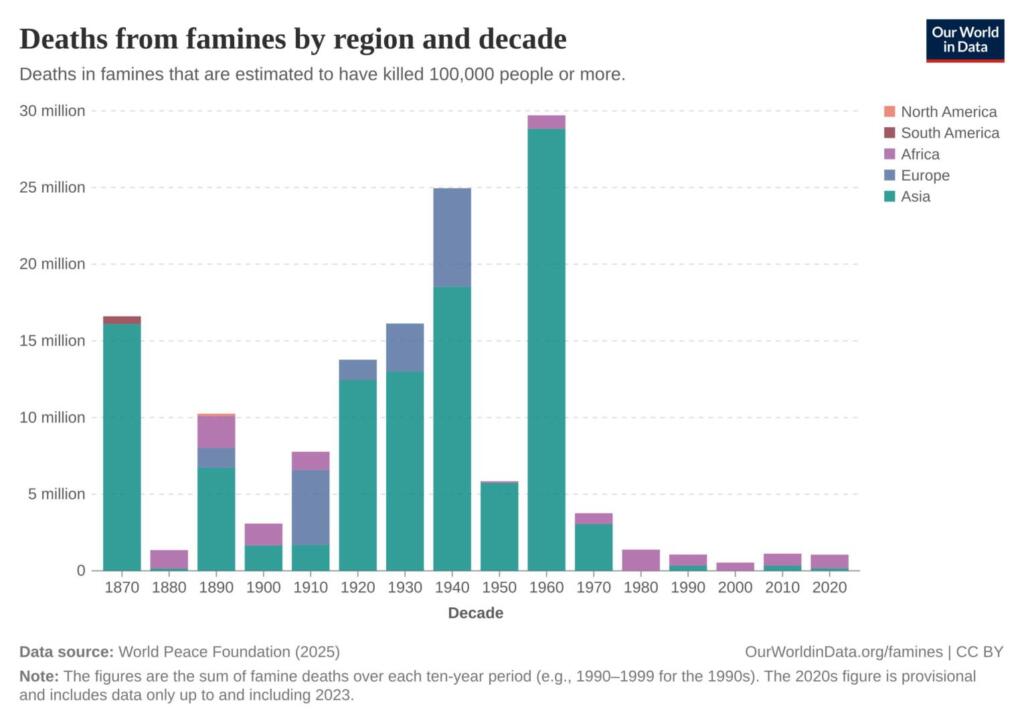
More flexible markets, better international trade connections, more drought-resistant crops thanks to genetic engineering, and the recognition that shipping tons of free carbs to poor countries only serves to put local farmers out of business for good, has resulted in far lower rates of hunger around the world.
This is a win for free markets over the socialist-style “sharing” that characterised so much international aid of the mid-to-late 20th century.
Food abundance
The alarmists of the 1970s, like Paul Ehrlich and the Club of Rome, predicted Malthusian catastrophe as population growth outstripped our ability to produce food.
Instead, increased food production has handily exceeded population growth for over 60 years, and continues to do so.
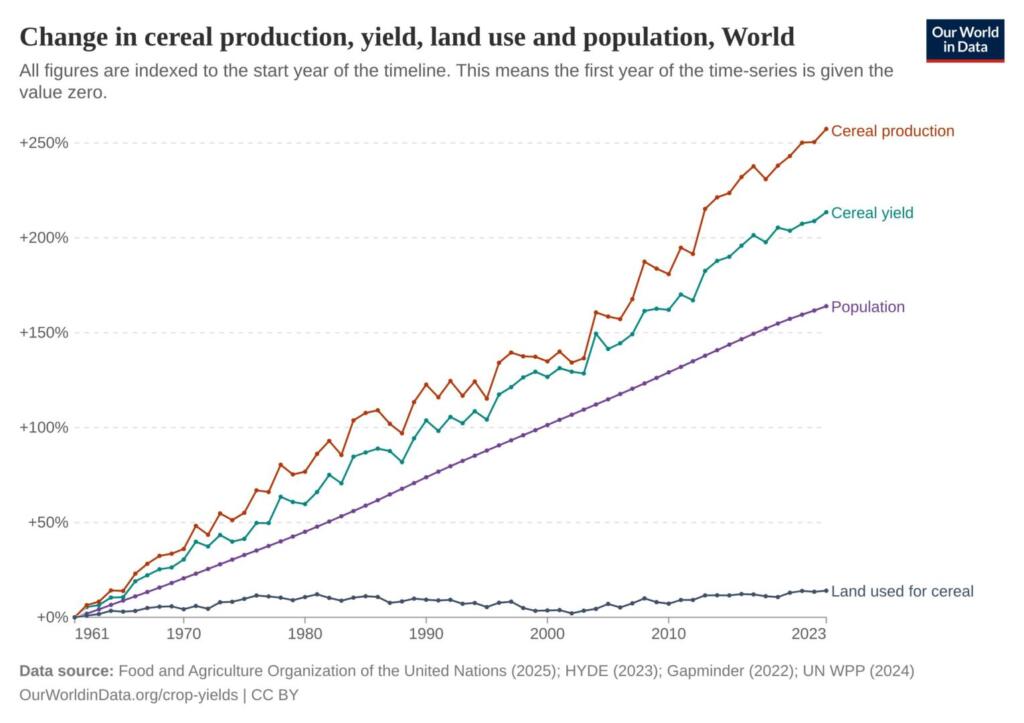
Improved agricultural yields are attributable to better crop varieties, improved fertilisation practices, better pest control, and, more recently, better genetic engineering of food crops to resist droughts, weeds and insects.
Contrary to the propaganda of anti-science activists, farmers aren’t forced into deals with the devil. Farmers are not stupid. If advanced agri-tech companies aren’t selling what they want, they simply won’t buy. Yet in Africa and around the world they choose to buy better seeds because those seeds produce better business outcomes for their farms.
Better farming techniques halted the 20th century trend of expanding farmland. In the 21st century, the total area used for agriculture has actually decreased, and some arable land has been returned to nature.
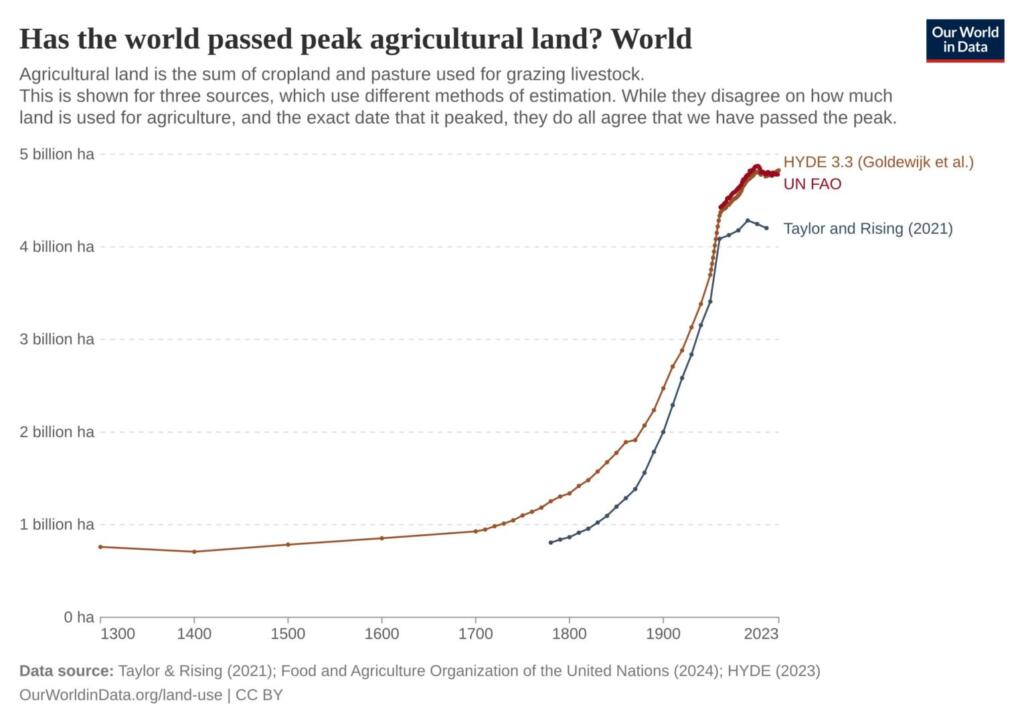
Progress has not been uniform, of course, and in many poorer regions, the encroachment of farmland on forests and wild landscapes remains a threat, but the principle has been demonstrated: improved agri-tech is not some sort of curse of modernity. Instead, it is the solution to both feeding the world, and reducing humanity’s footprint on the planet.
The challenge is not to denounce efficient, large-scale farming in favour of small-scale subsistence farming, as the socialists would have you believe, but to expand modern agricultural techniques and technologies to those parts of the world where food security remains fragile – in particular in sub-Saharan Africa and south Asia.
Poverty
Despite a reversal due to the Covid-19 pandemic, caused largely by draconian shutdown measures that the World Health Organisation itself belatedly described as a “ghastly global catastrophe”, the world’s poverty rates have resumed their downward trajectory.
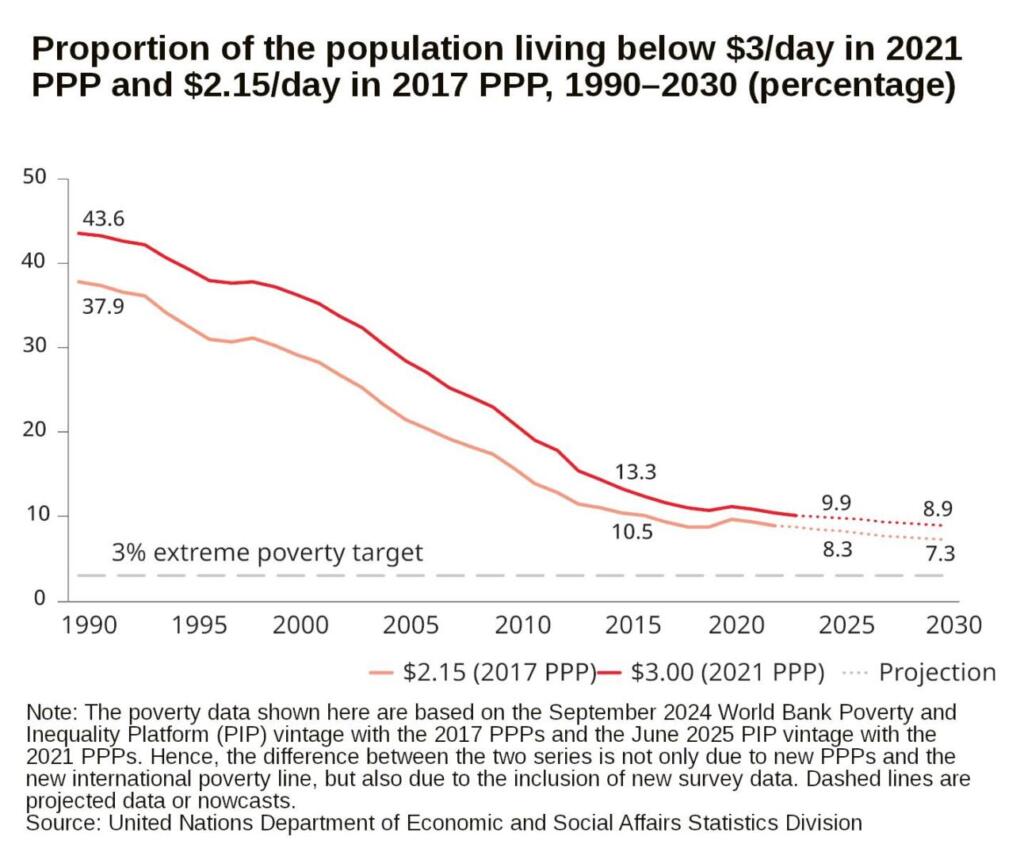
Contrary to left-wing narratives, the prosperity improvements are apparent at all notional poverty lines, right up to $30 a day, which is equivalent to about R15,000 per month.

It is no secret why poverty rates have fallen so sharply. A simple correlation with measures of economic freedom tells us all we need to know.
The poorest countries in the world are socialist, corrupt, unstable, or at war. By contrast, countries with sophisticated market-based economies (including the capitalist welfare states of Scandinavia), strong institutions to protect property rights and enforce contracts, and sound fiscal and monetary policies, are those where fewer people are poor, the poor are themselves less poor than the poor in unfree countries, and standards of living are higher no matter where on the income scale one falls.
Greater economic freedom, and more expansive free global trade, are also strongly correlated with other measures of well-being, including social mobility, social equality, life expectancy, life satisfaction, and peaceful co-existence with other nations.
Health
The healthcare industry has been under fire in recent years, and sometimes with good reason. It now faces its most challenging time yet, as the US turns its back on evidence-based medicine and gives credence to frauds, hoaxes, conspiracy theories and quackery.
Yet that same industry continues to produce groundbreaking results.
New weight-loss drugs are changing lives around the world, and reducing the incidence of obesity-related cardiovascular diseases and cancers.
New gene therapies, high-tech prostheses and surgeries are giving hope to people with disabilities that in the past would have condemned them to lives of blindness, deafness or other physical limitations.
The probability of dying due to chronic lifestyle- and age-related diseases like cancer, diabetes and heart disease has declined for both women and men in four out of five countries around the world.
We’ll never find a “cure for cancer”, because cancer is an umbrella term for a wide range of different diseases.
Slowly but surely, however, by a thousand small victories rather than a few grand breakthroughs, we are winning the war against cancer. The age-adjusted death rate of cancer has been in steady decline for decades, and many previously incurable cancers now have far better prognoses than they once had.
For example, the death rate due to childhood leukemia has more than halved. Before the 1970s, 10% of children diagnosed with leukemia survived five years. Now, 85% do. Less dramatic but still significant improvements are evident in other childhood cancers.
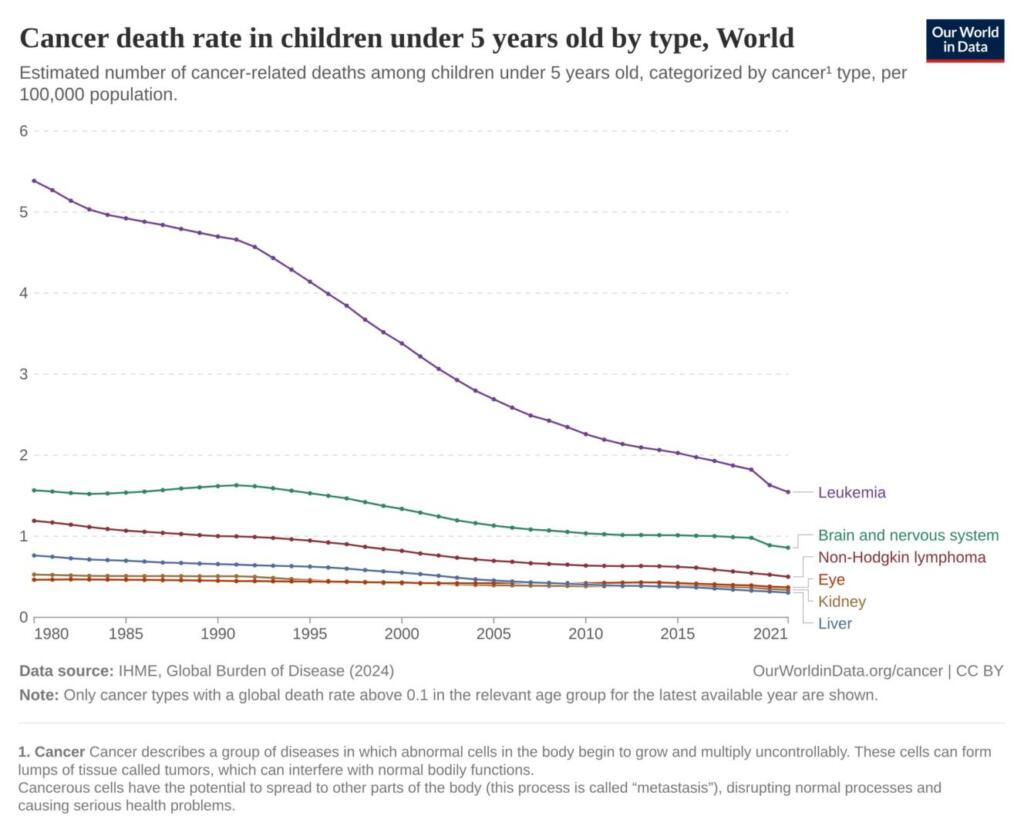
Various new drugs are significantly improving cancer risk, cancer progression, or cancer treatment in patients with a range of cancer types.
The vaccine against human papillomavirus (HPV), the cause of almost all cervical cancer in women, is saving 17.4 lives for every 1000 immunisations. Denmark has almost wiped out the most dangerous strains of HPV, and research shows that girls vaccinated before the age of 16 were 80% less likely to develop cervical cancer.
It also prevents vaginal, vulvar, penile, anal, mouth and throat cancers and pre-cancers, as well as most types of genital warts. It is an astonishingly effective vaccine for both girls and boys, and no, preaching abstinence is not a sound policy response to preventing sexually transmitted diseases. Even if a child does choose to abstain from sex, which is not something parents have much control over, far too many have no choice in the matter, and suffer rape at the hands of the very adults they trust.
When calling for healthcare reform, it is important to recognise that for every high-profile failure, there are a thousand new drugs and treatments that are safe and highly effective, thanks to investment in academic research, and the commercial innovation fostered by market competition.
The fight is not over
There are many other signs of progress around the world. My fellow Council-member of the Institute of Race Relations, Marian L. Tupy, documents them relentlessly over at Human Progress, an initiative of the Cato Institute. Here’s a list of over 1,000 good news stories from 2025 that prove the world isn’t falling apart.
Likewise, Our World in Data, the source for many of this article’s charts, maintains statistics on almost every indicator you can imagine. They highlight problems that need addressing, but they also prove that most indicators, in most places, are going in the right direction.
That this is so is largely attributable to the spread of market-based economies and liberal policies over the last few centuries.
The advance of liberal values has never been without its challenges.
As Noah Smith pointed out on Sunday in this excellent essay, the freedoms promised by the Enlightenment and the French Revolution soon fell victim to the bloody Terror, Napoleonic autocracy, and the conservatism of the Congress of Vienna.
Yet the ideals of freedom did not die. The torch was picked up by others, and liberal democracy became the ideology that produced individual freedom and general prosperity for those countries that most diligently espoused it – the countries that we now call “developed”.
Wherever liberal values came under threat from autocracy, socialism, populist extremism, corruption or war-mongering, their effects – peace, freedom and prosperity – also declined.
It is important to recognise that liberalism – market economies, secure property rights, the rule of law, equality before the law, mutual tolerance, and free trade – has been the cause of most of the progress in the world, and that we largely still benefit from those favourable effects.
When we cheer illiberal actions because they appeal to our sense of identity, or justice, or partisanship, or vengeance, we ought to think carefully about the consequences of tolerating illiberalism.
When the ends appear to justify the means, consider that if illiberal means can be used for desirable ends, they can surely also be used for evil.
And they will be, because once we have ceded our freedom to politicians and their corporate cronies, we no longer have the power to restrain them.
In taking stock of all the peace, progress and prosperity in the world, never lose sight of the principles by which they were won.
[Image: Rising Chart.png]
The views of the writer are not necessarily the views of the Daily Friend or the IRR.
If you like what you have just read, support the Daily Friend