

South Africa’s defence relationship with France has been shaped less by ideology than by geography and shared responsibility in the maritime domain. This is a partnership grounded in the reality of the southern oceans, where security is regional by nature and unilateral approaches carry limited value.
France is not a distant European presence operating episodically in African waters. Through its permanent base in Réunion, it is a resident maritime actor in the southern Indian Ocean, with enduring capabilities and a direct stake in regional stability alongside African partners.
In a period of rising geopolitical tension, disrupted trade routes, and strain on multilateral security arrangements, the importance of dependable regional partnerships has grown sharply. Maritime security around southern Africa cannot be sustained through isolated national efforts. It depends on cooperation that is predictable, transparent, and rooted in shared interests rather than tactical alignment. Unity among regional and resident partners is no longer aspirational. It is operationally necessary.
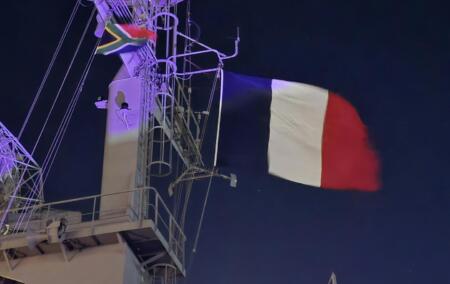
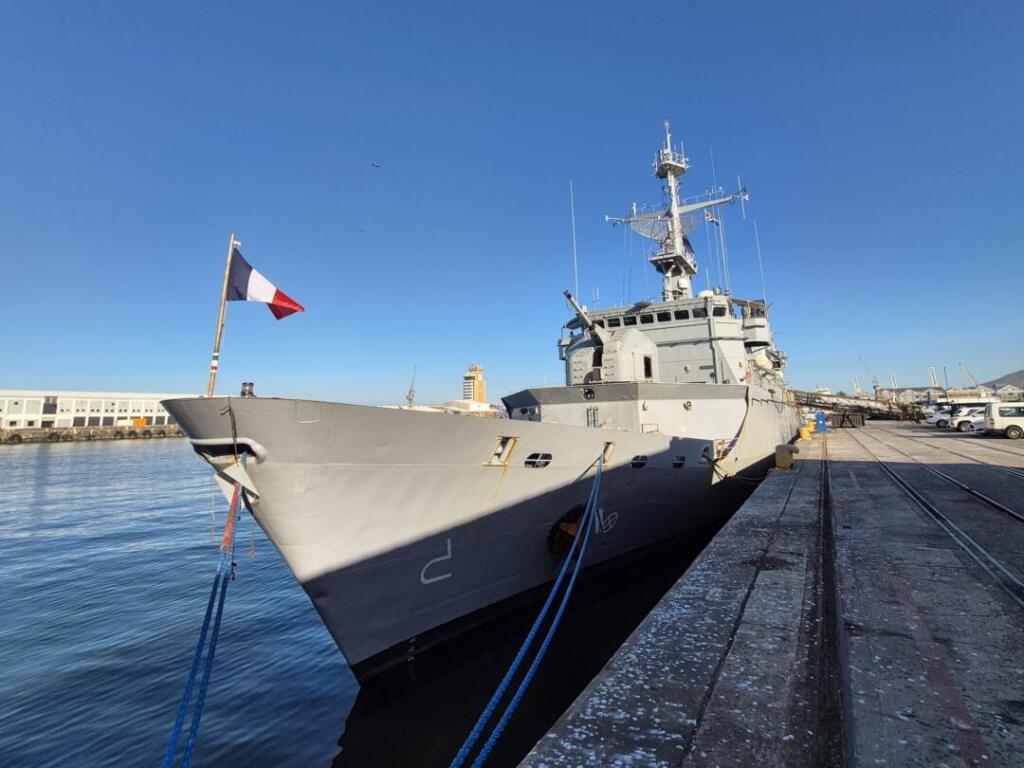
The visit of the French surveillance frigate Nivôse to Cape Town should be understood in this context. It was not ceremonial posturing, but a deliberate demonstration of presence in support of collective maritime security. The sea lanes around the Cape are central to global commerce, and as instability in the Red Sea diverts increasing traffic southwards, the strategic burden on the region grows. Cooperation at sea is therefore not a diplomatic courtesy. It is a requirement imposed by geography and risk.
Yet recent events have shown that cooperation is increasingly complex. Exercise Will for Peace, conducted in South African waters in January 2026, did more than assemble multiple navies. It exposed the limits of South Africa’s strategic coherence in a contested environment. Intended to showcase South Africa’s ability to host a multinational exercise and engage major powers on its own terms, it instead highlighted uncertainty, inconsistent political signalling, and a gap between declared intent and operational reality.
By hosting forces from China, Russia, and Iran, the exercise moved beyond a technical naval drill into overt political territory. Military exercises are never neutral. The responsibility for their strategic meaning rests with the host nation. Once foreign warships entered Cape Town and Simon’s Town, Pretoria assumed ownership of the message conveyed to the region and beyond.
The episode demonstrated how poorly defined strategic boundaries can erode credibility. Conflicting accounts over whether Iranian participation was meant to be observational or operational pointed either to weak civilian oversight or ineffective execution of political direction. Both interpretations raised concerns about coherence at the highest levels of decision-making, with direct implications for South Africa’s standing as a regional security partner.
This matters because maritime engagements signal choice as much as capability. Beyond training value, they indicate alignment, intent, and reliability. South Africa’s failure to articulate clear objectives for Will for Peace, what it sought to gain in readiness, capability development, or diplomatic leverage, left space for external interpretation. In a region where perception carries strategic weight, ambiguity in the face of reputational risk is not a strategy.
It was against this backdrop that the speeches aboard Nivôse took on greater significance. The remarks by the French defence attaché, Colonel Frédéric Jardin, emphasised a practical truth often overlooked in political debate. Maritime security is sustained by a broad regional ecosystem. Navies are essential, but they operate alongside rescue services, maritime health units, academic institutions, port authorities, and industry partners. Resilience at sea depends on coordination across borders, sectors, and institutions. The ocean does not recognise artificial divisions. It exposes fragmentation and rewards collective preparedness.
General Jean de Monicault, Commander of French forces in the Indian Ocean region, translated partnership into operational terms. Shared patrols, embarked personnel, and coordinated missions are not symbolic gestures. They are mechanisms for building trust and interoperability through routine cooperation. Exercises such as Will for Peace only serve their purpose when they test command relationships and information flows within a clear strategic framework. Without that framework, they risk generating confusion rather than cohesion, as the January exercise demonstrated.
The clearest strategic framing came from the French Ambassador, David Martinon. He emphasised that maritime security in Southern Africa is contested, fragile, and consequential for the entire region. Illicit trafficking, piracy risks, and vulnerabilities in undersea cables and offshore infrastructure are shared challenges with shared consequences. In this framing, security is a collective good. It cannot be monopolised by any single state, nor managed through fragmented partnerships.
The Ambassador also drew an important distinction between episodic cooperation and sustained partnership. Effective regional unity requires predictability, long-term commitment, and a willingness to confront limitations openly. Gaps in training, interoperability, and capability transfer are not weaknesses to be hidden, but realities to be addressed through structured, measurable cooperation. Credibility is built through delivery, not declaration.
What unites all three interventions aboard Nivôse is a clear rejection of complacency. None suggested that existing cooperation is sufficient or complete. Each pointed to continuity as the true test of unity: sustained deployments, regular personnel exchanges, and cooperation that becomes routine precisely because it works.
The sea does not reward rhetoric. It rewards preparation, coordination, and clarity of purpose, and it penalises distraction. The arrival of Nivôse in Cape Town, following the controversies of Will for Peace, suggests that France understands both South Africa’s strategic importance and the broader regional reality. The lasting value of this visit will not be measured in speeches or imagery, but in the strength and coherence of regional partnerships long after the frigate has sailed.
[Image: Ricardo Teixeira]
If you like what you have just read, support the Daily Friend