

There’s a place called Lygone Street in Melbourne, Australia, that was once the patch of a violent thug called Alphonse Gangitano. Gangitano featured in the hit series Underbelly (2008) detailing the carnage of the city’s gangland killings. He was originally described as “the black prince”, but modern Australians – being as they are – were terrified of committing an ism of sorts, so pivoted to “the dark prince” (Gangitano was second generation Italian).
Last year the deputy editor of News24, Pieter du Toit, released The Dark Prince – about ANC deputy President Paul Mashatile. The book’s sales are said to have disappointed the publishers.
But as dark princes go, neither Gangitano nor Mashatile have a sniff on the UK’s Peter Mandelson, now easily the country’s most illustrious politician in recent UK memory, first named “The Prince of Darkness” in the 1990s by a former Secretary of State appalled by his skill and the abandon he practised it with.
It should be the least surprising thing you hear today: the UK Prime Minister is hanging by a thread thanks to one gay man who resigned in disgrace twice previously. Cynically, or seen in the context of the country’s recent fortunes, you could say that it’s probably the (arithmetic) fate of the place, one of the less-controlled symptoms of a controlled demolition.
Mandelson crawled out of north London, a place synonymous with sneering, deranged but prosperous whites – mostly via inheritance – who write books about other whites being racist, forever urging the government of the day to heap more taxes on the middle class. The grandchild of a Labour politician, he was never seized for grooming as it was apparent he already contained an irresistible darkness – stuff you can’t teach. It was Mandelson who built the Labour parties of Tony Blair, Gordon Brown and Keir Starmer.
But no scheming genius is without its blind spots or temptations – in Mandelson’s case, men and cash and men with lots of cash. But even when events involving both brought him down on multiple occasions, what he possessed, how he got stuff done, was too valuable to political colleagues conscious that the theory of the gentleman’s game was something only the annoying electorate believed. From every scandal Mandelson emerged, more powerful and prominent than before.
Mandelson’s sexuality is important. In the stuffy member’s club language of yesteryear, he would have been referred to not as gay, but “a gay” – as in: “Peter Mandelson, he is a gay”. The UK’s awkward, hard-fought adjustment will forever be stalked by astonishing spectacles, one of which being the chemical castration of Alan Turing, the man who broke the Nazi’s Enigma code.
Mandelson was a beneficiary of the characteristically English over-correction, as were many other male MPs caught with rent boys, or discovered bondaged up in public parks with gag balls strapped to their heads. In many cases in UK politics, being “a gay” became being immune, prompting sympathy – even respect.
In the recently released Jeffrey Epstein files, it is abundant that Mandelson enjoyed being a gay. In Berlin, as his correspondence to the paedophile reveals, he was hunting a Russian. Elsewhere, he can be found pining for a Cuban American (he ended by marrying a Brazilian who Epstein reportedly financed). Sharing this level of intimacy is only possible if participants acknowledge mutually blackened hearts.
One of the arts in Mandelson’s repertoire was his understanding of how the media operates, but more importantly, how a reporter thinks and behaves. This positioned him, almost uniquely, to snooker any journalist stupid enough to plot an article critical of his government. A phone call was all it took: remember that line of coke you sniffed at your paper’s Christmas party? How would your wife of 30 years like to know about that Spanish hunk you were holding hands with on Shaftesbury Avenue last week Tuesday? This model appealed to Tony Blair’s communication chief Alistair Campbell, whose fabrications would go on to make wars, and who has since tried to re-invent himself as an anti-Trump, centrist dad podcaster specializing in agonizingly bad takes.
UK legacy media today is a by-product of Mandelson’s work in government, where creatures like, amongst others, Emily Maitlis (News Agents, former BBC), Paul Brand (ITV), Robert Peston (also ITV) and Beth Rigby (Sky News) insulate the establishment with lines of defence from the more curious quarters of the industry. What he did to these people is as close to a contemporary example of a Tolkien-esque curse you’ll find.
Mandelson counselled Starmer on his ascent by grooming his chief of staff and former election strategist, Morgan McSweeney, but Starmer’s notoriously poor judgement, his inability to read rooms and loyalty to human rights law would always result in fragile grip.
But Starmer becoming a casualty of his own decision – executive command authority – to appoint Mandelson as the UK Ambassador to the US (despite Mandelson performing well in the role) isn’t the only story here. The other is that of the dismantling of north London man – the profile of new Labour voter Mandelson built – the Guardian-reading, luxury-beliefs worshipping, punching-down, expert-idolizing DEI and CRT and net-zero enthusiast who interferes in other country’s elections. Fewer identities have been more damaging to the modern Anglosphere than this specimen.
It could get much worse. The darkest of dark princes is also said to possess both a formidable memory and an insatiable appetite for revenge. In which case: good luck to the UK uniparty, past and present.
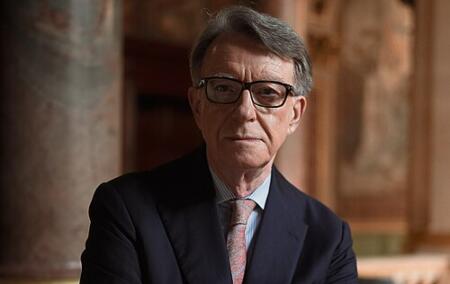
[Image: https://commons.wikimedia.org/wiki/File:Lord_Mandelson_official_headshot_2_%2854367603923%29.jpg]
The views of the writer are not necessarily the views of the Daily Friend or the IRR.
If you like what you have just read, support the Daily Friend