

With our recent economic growth rates falling below the rate of increase of our population, we are getting poorer. With the war in the Middle East and the Iranian blockade of the Strait of Hormuz, the world, and SA, could face a major shock.
The oil price remains at over $100 a barrel, promising a wave of global inflation and, with that, a downturn, if not a global recession. This shock could replicate the stagflation of the 1970s that emerged from successive oil price increases.
Due to our structurally low growth rate, high unemployment, and poorly considered economic and energy policies, we are particularly vulnerable to this shock. SA shows no sign of being resilient in the face of such shocks. Our growth rate never fully recovered from the 2008 Global Financial Crisis or the Covid pandemic shock that began in 2020.
Last year, our growth rate of 1.1 per cent was a few percentage points below what most economists expected, and well under our population growth rate of 1.33 per cent. In 2024, the growth rate was only 0.5 per cent. In the recent Budget, the National Treasury said it expected a growth rate of 1.6 per cent, but that now looks most unlikely.
SA is particularly vulnerable to economic shocks due to its low growth rate, high unemployment, and lack of serious reforms. Our energy policies, driven by bureaucratic inertia and heavily influenced by environmental targets with short time frames, are restricting exploration for new sources of oil and gas, as well as production at refineries.
The answer to the question of how much the economy will slow depends on how long the war lasts and how long the Strait remains closed. If the oil price remains just above $100 a barrel and does not rise much further, before retreating, it will be a one-time increase in inflation. However, the longer the war lasts, the higher oil and gas prices may climb.
Iran says it will attack ships of the US and its allies transiting the Strait, while those of other countries will be allowed free passage. However, if tankers are sunk or left adrift, there is potential for hazards in the Strait. There is also the possibility of Iranian forces mistaking a vessel from a friendly country for a foe. Protecting convoys through the Strait is likely to be a very complex task.
From what the US and Israel are now saying, these conflicts could continue for weeks at least. This means the Strait will remain highly treacherous for all shipping and a source of global economic instability.
The timing of social disturbances is difficult to predict, but past experience suggests that we may be entering a period of heightened risk.
In the 1970s, oil price shocks caused significant difficulties for governments across the world. The Heath government fell in the UK; the Shah of Iran was overthrown, in large part because economic hardship sparked massive street protests; and other governments, both elected and unelected, met similar fates. In SA, the immediate cause of the Soweto Uprising was the forced introduction of Afrikaans as the language of instruction in schools, but the recession, lay-offs, and inflation intensified popular dissatisfaction.
From next month, South Africans could be paying significantly more for petrol and diesel. Higher oil prices mean increased transportation and fertiliser costs, which in turn lead to higher food prices. Beef prices have already risen due to an increasing number of outbreaks of foot-and-mouth disease. Eskom is also raising its tariffs by about nine per cent in April for domestic customers and by the same amount in July for municipal customers. All of these risk fuelling a cost-of-living crisis and growing frustration.
In SA, tougher economic conditions — combined with the water crisis and the overall collapse of municipal services — point to a poor ANC performance in the upcoming local government elections. By the time voters go to the polls, the war and the closure of the Strait may be over, but the economic aftershocks may persist.
The ANC will be stretched in its ability to provide additional relief in response to this crisis. If the government is to meet its fiscal debt targets, it cannot introduce a special grant to alleviate distress. The Social Relief of Distress grant was introduced during the Covid pandemic, and due to the political backlash, its cancellation would provoke, the ANC has not dared to end what was intended as a temporary measure.
If SA could achieve faster growth and generate significantly more jobs, the economy would provide some buffer against such shocks. However, even under these improved conditions, we could still be hit harder by an oil shock than other countries. Our fuel supply chain is simply not equipped to deal with the emerging price and supply pressures.
In 2010, SA was able to produce 80 per cent of its refined fuel requirements locally, but today it can produce only 35 per cent, according to Ciaran Ryan writing in Moneyweb. Several refineries have shut down due to the R40–60 billion in upgrades required to meet environmental standards.
Our heavy dependence on imported refined products creates multiple layers of vulnerability in ensuring final delivery. As a result, we face greater risks from logistical disruptions, such as the closure of the Strait of Hormuz, increased price volatility, and potential issues at foreign refineries.
About a quarter of our crude oil imports — sourced from Saudi Arabia — pass through the Strait of Hormuz. Around 50 per cent of our refined petroleum imports, mainly from the United Arab Emirates, Bahrain, and Saudi Arabia, also transit the Strait. We also import refined products from Turkey and India. Most of the crude we import comes from African suppliers: Nigeria supplies 29 per cent, Angola 7 per cent, and Algeria 4 per cent. Therefore, in the event of a total closure of the Strait, we would be highly vulnerable.
The Minister of Mineral and Petroleum Resources, Gwede Mantashe, has called for increased local exploration, production, and refining, but much of what the ANC has done so far has worked against these goals. Shell and Total have put their exploration in the Deepwater Orange Basin on hold following a court order overturning environmental authorisations for the projects. TotalEnergies has indicated it may freeze its projects in SA due to “unacceptable delays”, according to Moneyweb.
While oil exploration in SA has been hindered by repeated delays, Namibia is on track to become a significant oil exporter within three years.
One of Mantashe’s proposals to improve fuel security is the creation of a state-owned South African National Petroleum Company. Lessons from past mismanagement of state-owned enterprises do not appear to have been learned.
Much seems to be in place for the perfect oil shock.
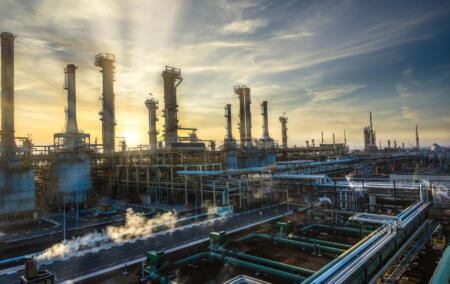
[Image: https://commons.wikimedia.org/wiki/File:ADNOC_Refining_Ruwais_Site-187.jpg]
The views of the writer are not necessarily the views of the Daily Friend or the IRR.
If you like what you have just read, support the Daily Friend