

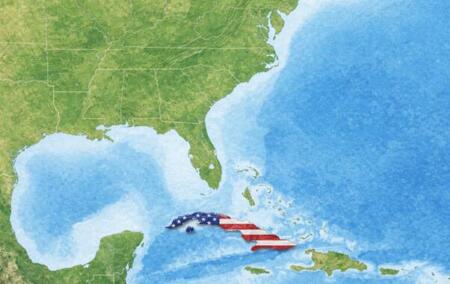
“I do believe I’ll be having the honour of taking Cuba”.
That sentence, uttered by Trump in remarks on March 16th, does a lot of work. From the jaunty faux-Victorian phrasing “I do believe” to the dissonant noun “honour” to the euphemistic “take”. Then there is the next sentence, an unsurprising finger-flip to international norms, saying he can do “anything I want” with Cuba. In other words, Cuba is my chattel.
Still, this shocker of a Trumpism aside, one does have to try fairly to analyse whether this would be a good thing for Cuba and its long-suffering citizens.
The timing mattered. Cuba had just suffered another nationwide grid collapse. Reuters and AP reported that the island has gone roughly three months without oil imports, after Washington tightened the screws on fuel flows and leaned on would-be suppliers. The result has been the sort of modern unravelling that sounds medieval when described out loud: blackouts, crippled hospitals, suspended transport, spoiled food, shortages of medicine, and a public mood that oscillates between fury, exhaustion and grim improvisation. Even now, with some service restored, electricity remains precarious.
Some context is necessary. On 11 January, Trump posted that there would be “NO MORE OIL OR MONEY GOING TO CUBA – ZERO!” Reuters later reported that his administration’s pressure campaign has included cutting off Venezuelan oil shipments and threatening tariffs on countries that sell fuel to Cuba. In Washington, this is being framed less as an invasion than as economic asphyxiation with plausible deniability. In plain English: squeeze the island hard enough and perhaps the regime buckles, or somebody inside it blinks first.
A great deal of the outside commentary turns on whether this is clever hardball or deranged imperial nostalgia. That matters, because Cuba is not just any country in the American imagination. It is the old theatre of U.S. intervention, anti-communist obsession, exile politics and Cold War mythology. Trump did not merely threaten pressure; he revived the grammar of possession. Not negotiation with a sovereign neighbour, but acquisition of a weakened one.
The best compact commentary came from the excellent online news outlet Tangle, which does something increasingly rare in media. It lays out the competing arguments without instantly losing its mind (it is probably the most useful news site anywhere for understanding multiple worldviews).
Editor Isaac Saul wrote that “the cases for and against some form of U.S. intervention are compelling”, while also warning against lazily treating Cuba as just another Iran or Venezuela. That is useful. Cuba is geographically close, strategically symbolic, and economically broken in a way that tempts outside meddlers into thinking history is finally ready to cooperate. But as Tangle also noted, many of the most hawkish arguments assume that more pressure will succeed where six decades of pressure have mostly failed.
Other analysts are blunter. In Foreign Policy, William LeoGrande and Peter Kornbluh argue that Trump is seeking a “deal” that is “tantamount to surrender”. Their larger point is more important than the phrase itself: Cuba may concede on commerce, investment, even some economic opening, without handing Washington the regime-change trophy it seems to crave. Another Foreign Policy analysis makes an equally sobering argument – that Cuba’s state may not collapse so much as continue “managing decline,” growing poorer and hollower while still surviving. That is an ugly but plausible scenario: not liberation, not reform, just a slower and crueller ruin.
That fear runs through much of the critical commentary. Tangle, summarising a New York Times argument from Christopher Sabatini and Katrin Hansing, warned that a continued squeeze could produce “chaos and perhaps even a new refugee crisis”. Danny Valdes, writing in The Guardian, made the moral case more personally, arguing that the consequences for Cuban families are “immediate, and devastating”. Whatever one thinks of the Cuban state – and there is no shortage of reasons to criticise it – there is something morally suspect about a policy whose operating theory is to make civilians miserable enough that power changes hands. That is not strategy in the abstract. That is pressure applied directly to refrigerators, pharmacies and kitchen tables.
And what do Cubans themselves think? Here, caution is essential. There is no clean island-wide polling to lean on. A recent BTI country report says no independent surveys on democratic approval are allowed in Cuba, while Human Rights Watch notes that the government controls media, censors critics and restricts access to outside information. In other words, anyone claiming to know what “the average Cuban” thinks is either guessing or campaigning. What we have instead are fragments: interviews, protests, graffiti, silences, refusals to speak, and the political eloquence of people trying to survive.
Those fragments suggest not a single mood but a cracked mosaic. Reuters found many Havana residents wanted dialogue, not confrontation. One woman said Trump should “leave us in peace”; another interviewee said he did not trust Trump even if talks might improve things. AP, meanwhile, found some Cubans so desperate that they welcomed outside intervention. Matilde Visoso, caring for a sick daughter amid the shortages, said “Cuba is waiting for Trump and Marco Rubio” because “we can’t wait any longer.” Another Havana doctor, Jesús García, pushed back hard: “The ones who decide what is done here in Cuba are the Cuban people.” That does not amount to consensus. It amounts to what prolonged breakdown usually produces: anger at the regime, anger at the blockade, fear of war, hunger for change, and profound uncertainty about who is really offering salvation and who is merely auditioning for dominance.
There are smaller signs, too, though they should be handled carefully. Tangle observes that The Washington Post reported that a U.S. Embassy cable described anti-Communist graffiti appearing beside “Viva Trump” slogans in parts of Havana. That is evidence of something, but not of everything. Graffiti is not a referendum. Nor are violent protests, though Cuba has had those too: AP and Reuters both reported rare eruptions of unrest tied to blackouts and shortages. The broad picture is clearer than the precise percentages. The island is hurting. The state is brittle. The public is not monolithic. And Trump, far from merely observing the crisis, is actively trying to convert it into leverage.
What makes this moment dangerous is not only the possibility of direct intervention, though that is dangerous enough. It is the older fantasy behind the rhetoric: that Cuba is a thing to be “taken”, a weakened property awaiting firmer management from abroad. That fantasy has a long American history, and it has never ended tidily. Perhaps Trump is bluffing. Perhaps he wants a commercial opening; perhaps he sees it as a mega real estate deal for family and crony-aligned golf courses and hotels; or perhaps he just wants to beef up the Latino vote. Maybe there is interest in the island’s deposits of cobalt and nickel – not huge, but not trivial either. Maybe it is just “we rule this hemisphere” optics.
As has so often been the case with this administration’s foreign policy, its strategies and intentions are always a little hard to pin down, as in Iran. What is certain, though, is that we have not heard enough Cuban voices. Ironically perhaps, that is the one problem that “taking” Cuba might inadvertently reveal.
Steven Boykey Sidley is a professor of practice at JBS, University of Johannesburg and a partner at Bridge Capital and a columnist-at-large at Daily Maverick, Daily Friend and Currency News. His new book “It’s Mine: How the Crypto Industry is Redefining Ownership” is published by Maverick451 in SA and Legend Times Group in UK/EU, available now.
[Image:ChatGPT]
The views of the writer are not necessarily the views of the Daily Friend or the IRR.
If you like what you have just read, support the Daily Friend