

The following is the text of a speech I delivered yesterday at an event hosted by the University of the Third Age.
I have always liked the idea behind the University of the Third Age, that learning never ends – that curiosity is not something from which we retire.
And I want to suggest today that the same applies to citizenship. Some people might want to disassociate themselves from the noise of politics, but we can never retire from the consequences of government.
Let me begin with a very simple example.
Imagine that you wake up one night and smell smoke. You realise that your house is on fire.
What do you do?
You phone the fire station.
That seems obvious. But stop for a moment and ask: how did the fire station get there?
Who bought the fire engines? Who makes sure they are maintained? Who recruits and trains the firefighters? Who determines how many must be on duty? Who maintains the hydrants? Who ensures that the roads are passable so that the engine can reach you?
And, of course, who pays for all of this?
The answer to every one of those questions is: politics.
Long before you made that emergency call, people you probably never heard of made hundreds of decisions that would determine whether your life would be saved when you needed help.
They drew up a budget. They imposed rates. They appointed officials. They awarded contracts. They purchased equipment. They adopted safety standards. They either maintained the vehicles – or failed to maintain them.
By the time your house catches fire, the decisive choices have already been made.
That is the central point I want to make today:
Politics is not merely what politicians say, or the shouting matches that you see in Parliament, or the posters on lampposts every five years.
Politics is the process through which we decide what must be done, where we ‘decide who decides’, and who will pay for it.
The water that comes out of your tap is politics.
The traffic light that works – or doesn’t work – is politics.
The refuse truck, the electricity substation, the police station, the public hospital, the school and the title deed are all products of political decisions.
Good governments are almost invisible. They’re like plumbing: people seldom discuss it when it works. But the moment it fails, it dominates their lives.
You will often hear somebody say: “I am not interested in politics.” And then I reply: But politics is interested in you.
It determines how much tax you pay, whether your savings retain their value, whether your grandchildren can find work, whether the streetlight outside your home functions and whether the fire engine arrives.
That is why I have often said: if you don’t do politics, politics will do you.
The reason we need government is quite simple. There are some things that individuals can do for themselves, and other things that can only be done collectively.
You can maintain your own driveway. You cannot, on your own, construct and manage an entire road network.
You can install a rainwater tank. You cannot individually build dams, reservoirs, treatment works and thousands of kilometres of water pipes.
A functioning economy depends on enforceable contracts. Property depends on recognised ownership. Trade depends on roads, ports, electricity and communications. Personal liberty depends on laws that protect every individual from crime and the arbitrary power of others.
It is part of the foundation on which society rests.
But this creates a profound problem.
The institution we need to protect us also possesses enormous power over us.
So the real question is not simply: do we need government?
Of course we do.
The deeper question is: how do we control the people who control the government?
This is where democracy enters the picture.
The great virtue of democracy is not that voters are always right. They are not.
Nor is it that democratic governments are always wise, honest or competent. They are not.
The great virtue of democracy is that it gives society a peaceful way to correct its mistakes. For fallible human beings to try again.
It allows us to dismiss rulers without violence. It permits opposition. It protects criticism. It makes it possible for the governed to become the government and for the government to become the opposition.
Democracy is often slow because it deliberately places obstacles in the path of unchecked power.
The debate, the opposition, the independent court, the free press and the public consultation can all be frustrating. But they are not design flaws. They are the safety mechanisms.
A seatbelt can also feel restrictive. Until the moment you need it.
But democracy only works if citizens understand what they are doing when they vote.
A vote is not a love letter.
It is not a thank-you card for history.
A vote is a job interview.
And, when necessary, it is a dismissal letter.
When we vote, we are appointing people to manage enormously complex institutions. We are giving them control over billions of rand. We are authorising them to appoint senior officials, maintain infrastructure, enforce laws and determine priorities.
And when we don’t vote, we are still voting, except that we are voting for someone other than ourselves to make the decisions as to who will have power and responsibility over your life.
The relevant question is therefore not merely: do I like these people?
The question is: can they do the job?
Incompetence is not morally neutral. Its costs are paid most heavily by people who cannot buy alternatives. The poor pay the greatest price for incompetence.
And there is no better place to see this than in local government.
Municipal government is where politics emerges from abstraction and comes out of the tap. Or lightens your room. Or flushes your toilet and removes your refuse.
Our Constitution says that local government must provide democratic and accountable government and ensure that services are delivered sustainably.
It puts these two ideas together: democracy and delivery.
That is because one cannot be sustained without the other.
Let us consider Cape Town and Johannesburg.
Johannesburg is the city that shaped me. It was the great city of opportunity – the economic heart of South Africa and a magnet for ambitious people from across the continent and even the world. The City of Gold had a special allure.
Johannesburg does not lack talented residents. It does not lack an economic base.
What it has lacked is stable, accountable and competent government.
Over recent years, its politics has become a revolving door. Coalitions have been assembled and dismantled. The City has had ten mayors in ten years.
Infrastructure, however, does not wait for politicians to negotiate positions for themselves.
Pipes continue to corrode. Bridges continue to crumble. Transformers continue to age. Roads continue to deteriorate.
In the 2025/26 financial year, Johannesburg budgeted total expenditure of approximately R89 billion – more than Cape Town’s R85 billion.
But look at what the two cities chose to do with that money.
Cape Town budgeted nearly R13 billion for capital investment: pipes, substations, roads, public transport, water and sanitation infrastructure.
Johannesburg budgeted R8.7 billion (and only actually spent half of that).
In other words, although Cape Town had the smaller overall budget, it allocated almost double to capital investment. And spent three times the amount of Joburg.
That difference may sound technical. It is not.
It is the difference between replacing a pipe before it bursts and sending a water tanker after it has burst.
It is the difference between upgrading a substation and fixing exposed wires with Duct Tape until the next fuse blows.
Maintenance is not glamorous. But maintenance is one of the clearest tests of whether a government is thinking beyond the next headline.
The Auditor-General found that Johannesburg was losing 45 per cent of the water entering its system, worth approximately R2.8 billion. About R2 billion of that was attributed to leaks.
Electricity losses amounted to around R5.7 billion – 30 per cent of the electricity purchased.
Cape Town replaced 177km of water and sewer pipes last year, but Joburg only replaced 35km.
Last year, the AG found more than R9 billion in unauthorised expenditure in Joburg. In Cape Town, guess what the figure was? Zero.
Across the UIFWE category of audited outcomes (unauthorised, irregular, fruitless and wasteful expenditure), Joburg figures outnumbered Cape Town’s. Not by a few million rands. But by 28-times more. Joburg’s UIFWE came in at almost R14bn. In those rare cases where irregularities are uncovered within the Cape Town administration, consequences followed.
Cape Town has serious problems too. No honest person should pretend otherwise.
But the different in the quality of living between these two great cities could not be more stark.
Cape Town has maintained stable political leadership. It has protected its technical capacity. It has kept investing in infrastructure. It has been able to plan beyond the next coalition negotiation or motion of no confidence.
And the economic consequences matter.
Cape Town’s official unemployment rate is approximately 19 per cent. Johannesburg’s is over 33 per cent.
Of course, a municipality does not single-handedly create every job. But businesses notice whether electricity is reliable. They notice whether water flows, whether building plans are processed, whether accounts are accurate and whether infrastructure is expanding.
Capital goes where it has confidence.
Skills go where people can build a future.
Critics sometimes respond that Cape Town is an exception: that it is wealthier, better located or somehow easier to govern.
So let us look elsewhere.
Midvaal is not Cape Town. It is a much smaller Gauteng municipality with a mixture of towns, farms, industry and poorer communities.
In 2024/25, Midvaal received its twelfth consecutive clean audit.
A clean audit is not the same thing as clean streets or working streetlights. An audit cannot fill a pothole. But clean financial management tells us whether public money can be accounted for – and persistent financial disorder almost inevitably produces service-delivery failure.
In Midvaal, the Auditor-General also recorded that the municipality spent 97 per cent of its budget and achieved 89 per cent of its service-delivery targets.
It replaced ageing water infrastructure, repaired leaks and reduced electricity distribution losses to 7.3 per cent – far below the national norm.
That is what administration looks like when the basics are taken seriously: collect the revenue, protect the infrastructure, spend the budget, measure the results and hold people accountable.
Then consider uMngeni in KwaZulu-Natal.
When the DA took office there in 2021, it inherited a mess. Within its first years, the municipality moved to successive unqualified audit opinions.
Its 2025/26 budget increased capital expenditure from approximately R98 million to R117.5 million – an increase of almost 20 per cent. It provided funding for roads, electricity infrastructure and more than R34 million in repairs and maintenance.
More importantly, these inputs are beginning to show up in outcomes. KwaZulu-Natal’s Provincial Spatial Integration Report ranked uMngeni first among municipalities in the province for household access to essential services, with a score of 93.8 per cent.
These places are not identical. Cape Town is a major metro. Midvaal is a semi-rural Gauteng municipality. uMngeni is a KwaZulu-Natal municipality centred on Howick and its surrounding communities.
Their circumstances differ. But certain governing habits recur: stable administrations, appointments based on competence, disciplined financial management, investment in infrastructure, regular maintenance, measurement of performance and consequences for failure.
The difference is not between paradise and disaster. It is between two directions of travel. Good government compounds over time. So does bad government.
And that brings me back to the role of citizens.
Many people become cynical about politics and conclude that all politicians and all parties are the same.
That is one of the most dangerous conclusions in a democracy.
If all parties are assumed to be the same, no party has any incentive to be better. Success receives no reward and failure carries no penalty.
Cynicism does not punish bad government. It protects it.
Our responsibility as citizens is to make distinctions.
We must compare outcomes. We must examine budgets. We must ask whether commitments were fulfilled. We must distinguish between explanations and excuses.
We must be willing to change our minds when the evidence changes.
And we must be willing to change our government when it repeatedly fails.
That is particularly important for those in the University of the Third Age.
Many people in this room have lived through more than one political order. You have seen institutions built, transformed, strengthened and, in some cases, weakened.
You know that what appears permanent can disappear remarkably quickly.
You also know that institutions are difficult to build and very easy to destroy.
That experience is enormously valuable.
You have the historical memory to test extravagant political claims. You know that every generation believes it has invented both crisis and idealism. You have seen enough slogans to ask what lies behind them.
And you can help younger South Africans understand that democracy is not only about expressing anger. It is about exercising judgement.
Citizenship does not begin and end at the voting station.
But the vote remains the moment when the citizen becomes the employer.
It is the moment when we decide who will manage the common platform on which all our individual lives depend.
So let us return, finally, to the burning house.
You make the call.
If a trained person answers, if the fire engine starts, if the crew is properly equipped, if the hydrant works and if the road is passable, that is not an accident.
It is the accumulated result of thousands of political and administrative decisions.
And if nobody answers – if the vehicle has broken down, the post is vacant, the hydrant is dry or the road is impassable – that is also a political outcome.
We cannot opt out of politics because we cannot opt out of its consequences.
The real choice is not whether we will be governed.
The choice is whether we will pay attention to how we are governed, by whom, according to what standards and with what consequences for failure.
Democracy is not a spectator sport. Nor is it an inheritance that maintains itself.
It is more like the infrastructure beneath a city. It must be watched, maintained and renewed. If we neglect it for long enough, it too will fail when we need it most.
So, by all means, let us avoid the worst excesses of party politics.
But let us never withdraw from citizenship.
Let us follow the money. Let us defend institutions. Let us compare results. Let us insist on standards. And let us vote according to the evidence before us.
Because if you don’t do politics, politics will do you.
And when we do politics properly, it enables government to fulfil its highest purpose: turning millions of separate individuals into a community capable of protecting the freedom, dignity and future of every one of its members.
Thank you.
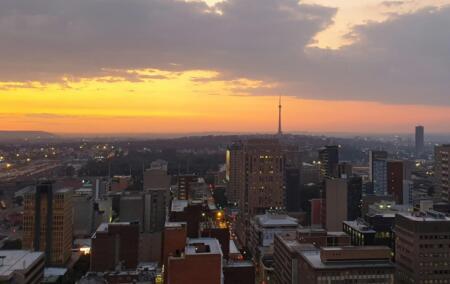
[Image: Tania Melnyczuk on Unsplash]
The views of the writer are not necessarily the views of the Daily Friend or the IRR.
If you like what you have just read, support the Daily Friend