

The Peruvian author Mario Vargas Llosa, who died last year, is not only remembered as one of the greatest novelists in recent history, but also as one of the main voices defending political freedom and individual rights in Latin America.
In 1990, he referred to the Mexican political system as the “perfect dictatorship”, since it mimicked democratic institutions and processes while being governed by a single party for more than seven decades.
After serial revolutions and civil wars, the late Mexican President Plutarco Elías Calles founded what, after several iterations, became known as the Institutional Revolutionary Party (PRI), which governed Mexico from 1929 until 2000. This effectively single-party regime endured until the election of Vicente Fox, in the process breaking the PRI’s stranglehold of hegemonic power through corporatism and electoral fraud.
The Mexican case resembles the contemporary political struggle Angolans and many southern Africans face: elite-based rule reliant on its liberation history and unification of the country for its legitimacy, and authoritarianism for its perpetuation.
Angola’s modern history begins in the independence war against Portugal in the 1950s alongside the global decolonisation movement. This conflict, like Mexico’s revolution, highlighted ethnic, geographical and social schisms within Angolan society. And just like Mexico, when the country finally gained its independence from its European metropole, the struggle shifted but did not disappear.
On 10 November 1975, Admiral Leonel Cardoso announced the handover of Angola from Lisbon to the Angolans. Yet there were no effective or united institutions to govern the country. Instead, three different national liberation movements declared independence in their own domains: MPLA (Popular Movement for the Liberation of Angola) in Luanda, UNITA (National Union for the Total Independence of Angola) in Huambo, and FNLA (National Liberation Front of Angola) in Ambriz.
Strategic clash
This inaugurated three decades of civil war fed by the Cold War’s strategic clash between the Soviet Union and the West, and apartheid South Africa’s defence of white rule in Namibia. The MPLA, which was allied to the Soviet empire, brought a similar menu of Marxist-Leninist dirigisme to Angola. And like the Soviet example, while it denied basic freedoms for the majority in ruining a dynamic economy, albeit one structured around colonial interests, not all were equal. In the Orwellian world of Marxist economic fantasy, the MPLA pigs got decidedly fatter than most, fed by a diet of preferences and Angolan oil.
Oil production had begun in the 1950s, but major offshore developments only started to bear fruit in the 1980s. Peak oil production by 2010 hit nearly two million barrels per day. Now the country produces 1.1–1.3 million bpd. Oil provides roughly 95% of foreign exchange and over 90% of total exports.
Even though the war technically ended the single-party system in 1991 through the Bicesse Accords, in reality diplomacy proved to be simply war by other means. The MPLA under Eduardo dos Santos and UNITA were soon fighting again after an abortive election in September 1992.
Although the longest civil war on the continent finally ended in February 2002 with the death in combat of Dr Jonas Savimbi, the founding leader of UNITA, the focus shifted to the political arena.
A new ceasefire agreement was reached in 2002 between both parties that led to the demobilisation of more than 84,000 UNITA militia. This second democratic transition, which signalled the emergence once more of UNITA as a formal political party, simultaneously boosted the integration of the country into the international system. This transition involved constitutional reform which, in 2010, granted more power to the executive. But these ‘reforms’ simply finessed the continuity of Angola’s “perfect dictatorship”.
However, while the MPLA doubled down on authoritarian democracy, new leaders were rising in the opposition ranks. Enter Adalberto Costa Junior as leader of UNITA in 2019. An electrical engineer by training, having studied at the Instituto Superior de Engenharia do Porto in Portugal, and the Pontifical Gregorian University in Italy, he was born in May 1962 in Chinjenje in the province of Huambo into a UNITA family. A godson of Jonas Savimbi, he spent many years as the party’s representative in Portugal, Italy, and the Vatican. He returned to Angola in 2003, serving as the party’s spokesperson and the head of the UNITA parliamentary group from 2015 to 2019.
Angola: Africa’s perfect dictatorship
Costa Junior embodies Angola’s new reality, where nearly half of the population of 39 million is under 15 and the median age under 18, making it one of the youngest world-wide. The majority of Angolans had not been born when the struggle ended, and would seem to have little in common with a party that has governed for 50 years in a country half of which is afflicted by poverty. Despite – or perhaps because of – its status as a major oil producer, the country faces high inequality reflected in rural-urban disparities, and severe food insecurity, particularly in its southern regions.
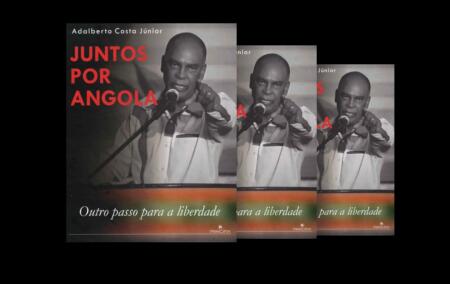
In his photographic memoir titled Juntos por Angola: Outro passo para a Liberdade, Costa Junior describes in detail the challenges and risks he faced to build an electoral alternative to the MPLA.
Under his leadership, UNITA has shed its warlord image and is the face and hope of a new young generation willing to transform the country from its roots and build a solid democracy. This is not going to be easy, given the level of impunity among the ruling elite.
As Costa observes, the 2022 elections could not be considered as free and fair as the process was riddled with irregularities, including fiddling with the electoral law, limiting political debates and banning independent polling. The MPLA government also manipulated the electoral register by including 2.5 million dead people, setting the stage for widespread fraud.
Regardless, Costa Junior drove a campaign that pushed for major changes, such as the direct election of the President, making the process more transparent. As he points out, he proposed a reduction of presidential powers and the creation of an Electoral Tribunal to ensure democratic guarantees. This refreshing political programme gained support from those civil society groups pushing for electoral and political modernisation. Whereas the people ensured Costa’s popularity, the regime censored him in the state-controlled media, forcing him to design a different campaign strategy based on social media.
As the European Commission states in its review of the 2022 elections, the opposition and several civil society groups complained about the electoral procedures that led to the MPLA winning a new majority in the Congress and gaining the Presidency. The European electoral observation mission urged the government to “make every possible effort to respond” to the opposition’s criticisms. Despite such international pressure, the Constitutional Court dismissed the allegations of electoral malfeasance to allow the MPLA’s João Lourenço to start his second presidential term.
Confront the Angolan regime
As the leader of the opposition, Costa Junior now faces his defining challenge: to build the systems and structures to confront the Angolan regime at the polls.
As UNITA’s leader states, Angola’s democracy has serious structural weaknesses, such as the limitations imposed by the regime on civil society organisations and opposition parties. Costa also points out how the lack of public administration capacity negatively impacts the wellbeing and prospects of Angolans.
There is no easy way to change the path of a country that has been governed for the past half a century by an illiberal regime. Any hope of overturning the MPLA’s brand of elitism has to start from within society, and this demands a credible leader to drive the country through the necessary social, economic and political changes.
After suffering the effects of electoral corruption in 2022, in a disputed narrow election loss, the closest ever in Angolan history, Adalberto Costa Junior will have to complete his task in building a strong opposition. This requires renewing UNITA’s structures.
And there is no easy way to achieve this, though his book hints at his method: tireless engagement, criss-crossing the country to reach every distant community up and down the 1,650km coastline and deep into its interior. In his message, Costa Junior promises to build an efficient state, an open democracy and a thriving economy where all the people are safe to live under fair laws subject to an efficient public administration.
Angola’s struggle for democracy is relevant beyond southern Africa. The 2026 democracy report from V-Dem, a think tank based in Sweden, says a “third wave of autocratisation” is deepening. It holds that the average person’s level of democracy worldwide has fallen to roughly 1978 levels. The US-based think-tank Freedom House reports a 20th consecutive year of global decline in freedom.
Finding the means – and the leaders – to defend and advance democracy against those who seek to deform democracy in their own image is a struggle with which we should all identify, especially those of us in Europe, which birthed the modern African state.
Demonstrable alternative
Angola is now at a moment in history where its ‘perfect dictatorship’ is being questioned by its citizens. For the first time they have a real, demonstrable alternative to the MPLA. But this combination of hope and unease will not alone enable the country’s democratisation. That will require an activist leadership and an active citizenry.
If so, the 2027 election promises Angola’s new dawn.
[Image: Supplied]
The views of the writer are not necessarily the views of the Daily Friend or the IRR.
If you like what you have just read, support the Daily Friend