

I recently came across a tweet by Ntsiki Mazwai, in response to growing anger about illegal immigration, angrily accusing the Ruperts and Oppenheimers of plundering trillions of rands from “us” (I assume she means black people) and lamenting that those who are angered by illegal immigration are “busy with Africans from poor countries but too afraid to confront the people keeping you poor”.
While Ntsiki Mazwai is considered on the loony end of people with public profiles even amongst the netizens of black twitter, she expresses a popular and misguided narrative popularized around the height of the Zuma presidency and taken full blast by the EFF: the narrative of “white monopoly capital” keeping black people from succeeding.
It is, I would like to argue, the broader problem of South Africans across the board misunderstanding the incentives that drive other people’s behaviour. It is why in Rupert’s case, many black South Africans were surprised at his words and tone during that visit to the White House. To me it was not surprising at all. Johann Rupert’s funding of the Khaya Lam project which has facilitated the transfer of title deeds for 21,000 families of colour across the country to the conservative value of R3.15 billion makes complete sense when you understand that it is in the best interests of white elites in South Africa that more and more black people get out of poverty (preferably into the middle class), become homeowners and become participatory members of the economy. A wealthier, more homeowning black South African population is not only good for business, but makes South Africa safer for people like the Ruperts and Oppenheimers, and also protects their long-term interests. While I do not know what Meneer Rupert’s motivations were for the funding, his incentives and even those of the Mouton family in buying out Curro make sense to me from that perspective, and stand in stark contrast to popular narratives of white monopoly capital wanting to keep black people poor.
This same problem of misunderstanding South Africa can be seen in the revelations from Capitec Bank about South Africa’s R1 trillion hidden economy. Capitec has hard data, and as someone who was born in Mthatha and regularly frequents the Eastern Cape, I can believe it because of all the cash-based businesses in the Eastern Cape which couldn’t be bothered by the South African government’s onerous business regulations, and which instead take only cash to minimize their paper trail. Capitec’s claims, which are backed up by Standard Bank’s data (they estimate R900 billion) and informal economy expert GG Alcock, who estimates it at between R750 billion to R1 trillion, have prompted Capitec to design products to respond to this. Meanwhile Stats SA and a broader ivory tower policy establishment continue to design regulations and policy that are divorced from the data that banks are mining. Even political debates around expanding basic income grants ignore the vitality of this hidden economy, and instead of being policy-responsive and pursuing more pro-market solutions and policy to empower this economy, the government and the policy establishment continue to pursue expensive and limiting ivory-tower public policy. As one Capitec head office employee said to me: “There are people who built backrooms with payouts and maybe get R6 000, then they double up and get R5 000 driving for Uber, and then convert their garage into a spaza and make another R4 000”. There are no public policies or public policy discussions that fully account for people who hustle like this in the South African economy. To me it communicates that many South Africans want to work but are in an economy that is not growing. It is bleeding jobs because our industrial and labour policy is nonsensical and ill-fitting and not designed for where our country is and what it needs.
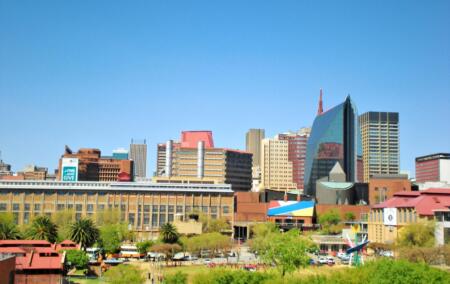
As it stands, as far as I can see, South Africa has a deep problem with negative self- reinforcing cycles. A poor understanding of the country leads to poor politics and policy which breed more poverty, joblessness and racial strife. It is instructive to me for example that the DA, for all the accusations flung at it about racism and white supremacy, has beaten the ANC in metro areas like Nelson Mandela Bay in the last election (though not won an outright majority) but is handily beaten in rural areas and very small rural towns. It tells me that urbanization can really sharpen people’s own understanding of what they need, but that a politics and policy establishment that understands those problems and communicates that in a compelling way (like Zille’s mayoral campaign) may yet just turn the tide and build a South Africa of positive reinforcing cycles, where more and more people of colour get out of poverty and into the middle class, and therefore desegregate and de-racialize communities. It is why, for all the political failings it has, Johannesburg remains the most socially sophisticated and meritocratic place in the country. It is why I personally believe a functioning Johannesburg can and will be the vanguard in dragging this country 30 years into the future.
[Image: https://www.flickr.com/photos/120420083@N05/13920264454/in/photostream/]
The views of the writer are not necessarily the views of the Daily Friend or the IRR.
If you like what you have just read, support the Daily Friend