

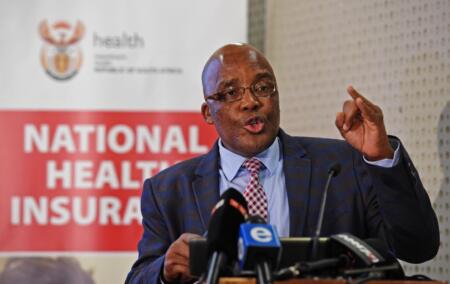
The NHI is a system that risks infecting – like a virus – the entire healthcare system to the public inefficiencies, corruption, waste and mismanagement extremely prevalent in the public healthcare system.
Instead of bringing public healthcare facilities up to the standard of South Africans deserve, the NHI risks exposing the system to the failures widespread in the public sector: chronic under-resourcing, overburdened facilities, increased vacancy rates among healthcare professionals, corruption and maladministration.
Are South Africans expected to believe that NHI is the only solution to achieve universal healthcare? Please. I previously wrote that competition is the backbone of economic freedom – South Africans have a wide range of retailers to choose where they buy their clothes, their food, appliances, cars, furniture and streaming services.
Why should healthcare be any different?
Arrogant government
It is arrogant of the government, the ANC and the broader Tripartite Alliance to assume that South Africans should just accept the NHI as government’s solution to the problem that its inaction has caused. As we’ve noted before, South Africa’s healthcare system is already free at the point of care for those who cannot afford it. That policy goal has already been achieved. The elites’ argument against the “commercialisation” of healthcare doesn’t square with that fact.
Do Ministers, and top executives at the Health Department subject themselves to the public healthcare system? Probably not. The healthcare system that sees patients laying on cold concrete floors, on soiled bedding and without medical supplies to do the most basic procedures. NHI doesn’t solve that problem, it ignores the problem – by admitting callously that the problem isn’t about healthcare – but about money.
Money is not the problem. The government’s budget for healthcare in the 2026/27 financial year is R310.4 billion.
NHI is a deception perpetrated using the people’s poverty against them. It removes their agency and their choice.
Healthcare remains one of the largest shares of government expenditure and over the next three years, the health budget is expected to grow by 4.2%. It has the resources to provide for the three quarters of South Africans who rely on public healthcare.
The hardship that does exist is one that was created by the Department of Health over successive decades of wasteful spending, underinvestment in infrastructure and a procurement system that creates loopholes for abuse, like the R2 billion Tembisa hospital scandal.
Good quality healthcare
Data from StatsSA shows even though the share of individuals covered by a medical aid has declined over roughly twenty years, the number of individuals increased by 2.5 million over the same period. It is also worth noting that the Western Cape and Gauteng – South Africa’s most economically active and employed provinces – have the highest shares of the population who are members of medical aids, at 25% and 21% respectively.
The level of care provided by the private sector is aspirational: IRR polling shows that 56% of South Africans would prefer private healthcare if it were accessible. That number increases to 59% when asked if private healthcare were more affordable.
South Africans want healthcare that is affordable and top-notch quality.
That is exactly what the IRR’s Better Health Bill does. Rather than centralising healthcare funding and decision-making under a single state entity, the Better Health Bill proposes a tax funded Health Voucher System; the deregulation of private healthcare services to remove unnecessary barriers to entry and competition; the facilitation of public-private partnerships to improve the efficiency of public facilities; and the introduction of Health Savings Accounts to encourage personal responsibility and long-term health planning.
The Better Health Bill puts opportunity, choice and the freedom from state failure back where it belongs: in South Africans’ hands.
[Image: https://www.flickr.com/photos/governmentza/34799019143]
If you like what you have just read, support the Daily Friend