

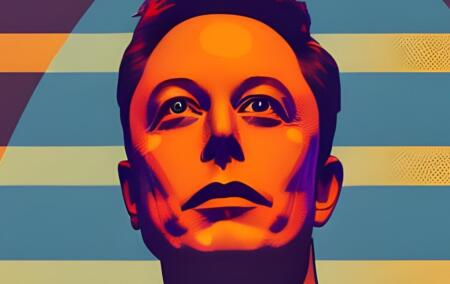
Long before Redi Tlhabi emptied her head to write a neurotic article entitled “Don’t hand South Africa’s democracy to Elon Musk for 30 pieces of silver”, curious things were happening in Washington DC, where Tlhabi and a man called Phillip van Niekerk – upon whose Substack her nonsense was platformed – reportedly reside.
In 2025 National Security News (NSN) revealed that Van Niekerk, a former editor of the Mail & Guardian, was an MTN fixer in the capital of a country scrutinising all manner of the company’s activities in the Middle East. Nice folk, these.
Tlhabi’s argument against Elon Musk’s Starlink is vapid, chiefly because it presents standard European Union bureaucrat grievance templates against social media companies – not high-speed, reliable internet. Five years ago, this position may have been intriguing to reactive progressives, but the “dEmoCracY!” trend was violated to the point of redundancy. Today many of those once seduced by its contrived panic admit to having been duped, so just keep quiet.
Since his acquisition of Twitter and the subsequent repurposing (free speech) into X, tens of thousands of articles have been composed on the subject of Musk presenting some kind of threat or risk. For years, Twitter was satisfied to platform literal paedophiles, but terminated the accounts of users who used the word “retard”. Moderators, empowered as the arbiters of truth, cancelled conservative profiles with abandon, all the while boosting their opponents’ floods of lies.
The establishment’s fury with Musk persists, badly disguised. How dare this wHiTe soUtH aFriCaN suspend or diminish the prominence of those with superior views? Take their verification badges away or make them pay? No, they were disgusted, and because entitlement makes you vindictive and disgusting, they’ve sought to exact revenge on him ever since.
In California you see this on the streets. “Anti-Elon Tesla Club” stickers can be found on his cars. In recent years, ire in the state has widened to include Peter Thiel, David Sacks and even Roelof Botha, grandson of the late Pik Botha – the insinuation being that these tech oligarchs are scheming a new kind of hi-tec apartheid. Before, few were moved to condemn or protest, but puncture the intersection of establishment media and politics in the Venn diagram – and find out.
Musk continues to provoke these forces, not because of how X is managed, or how nat sec risks were associated (which you were misled to believe Tlhabi’s argument was about) – but because he maintains an algorithmically enhanced presence on his own platform. This is personal: the things Twitter used to be about are the same things that destroyed his relationship with his son, now daughter (in Tlhabi’s language, this is known as “lived experience”). Another other reason is ̶ possibly ̶ because of his desire to be funny.
Isn’t funny
Happens to more people than you’d care to think. But Musk isn’t funny – he doesn’t possess the wild spontaneity or timing of Donald Trump or Al Franken, the former Democrat senator whose efforts to challenge the theory that left-wing people aren’t funny (which they aren’t) were admirable. Musk believes he is funny, but every remark aiming here just reminds his critics of what he snatched from them – so they get angry, twitch reflexively or write stupid articles. However, they don’t ordinarily mount defiance against a resource with the potential to help people find jobs, prompt lines of commerce, keep in touch with family or improve their neighborhood’s security.
Which is why it’s odd that Tlhabi published her article on the platform belonging to a man with links to MTN, the ANC of cellphone networks, theoretically capable of competing in the sphere of satellite internet – aided perhaps by a joint venture or two.
Tlhabi’s incoherent muttering also occurred at a time when explicit disinfection routines follow exhausted patience. We saw what happened to former Ambassador Ebrahim Rasool, and now, an annoying dog abuser and internet personality called Hasan Piker has found himself in the crosshairs of the US Treasury Department’s Office of Foreign Assets Control (OFAC) for his participation in a so-called “humanitarian” voyage to Cuba, the subject of a US oil blockade from February.
As if to tap dance on thin ice, Piker on Sunday ran his mouth about the alleged financier of the voyage, an American billionaire Marxist called Neville Roy Singham, now living in China. This remark was seized – thank you, Hasan – because the Singham network is already the subject of investigations by no less than four congressional committees.
If nothing else, Van Niekerk’s choice of words in defending himself against NSN’s revelations last year was boring and lazy: “apartheid smear campaign” is exactly the sort of self-righteous boomer defence that a satellite of Max du Preez would be programmed with. That he’s been consistently poisonous in his coverage of Donald Trump since 2017, well beyond the scope of normal offence, is, well, interesting.
Grounded in reality
But inference of motives must be tempered by important questions grounded in reality. Are the positions of this duo aiding an already stressed diplomatic relationship? How much harder do they intend to make Roelf Meyer’s task? Or, if neither Tlhabi nor Van Niekerk are volunteers to a withered husk of logic, incorporating all managed decline, identity politics and grievance…has Meyer been deliberately set up to fail?
And more importantly: if South African media, business and academic elites feel the need to persist in the repetition of failed ideas, could they at least make their arguments a little more clever and entertaining?
[Image: Marcin Paśnicki from Pixabay]
The views of the writer are not necessarily the views of the Daily Friend or the IRR.
If you like what you have just read, support the Daily Friend