

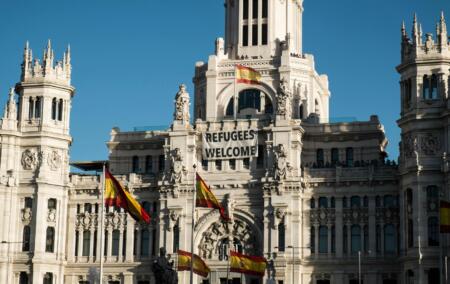
Cultural relativism began as an attempt to understand societies more sympathetically. Over time it became something else: a reluctance to defend liberal values at all. A society that refuses to judge oppressive norms eventually loses the confidence required to defend its own freedoms.
For years, many Western academics, politicians, and intellectuals have repeated a comforting lie: that all cultures are equal. The idea sounds enlightened. It flatters educated people in particular. And it creates a public culture where moral judgment itself starts to feel vaguely embarrassing. In many circles, the refusal to judge has become a subtle virtue signal, a way of appearing humane without having to think too hard about where the logic leads.
This belief grew partly out of guilt. In reaction to imperial arrogance, the West developed a new instinct: never judge another culture too confidently. Over time, large parts of anthropology professionalised that instinct and exported it far beyond academia. Context above morality, interpretation above truth. Cruelty became “culturally embedded practice”. Patriarchy became “traditional gender roles”. Suppression became “community order”. This is perhaps useful for understanding societies, but far less useful once imported into moral and political life.
Eventually, relativism escaped the seminar room altogether. It moved into politics, media, human rights organisations, immigration policy, and university governance. The underlying assumption was that value systems should not be ranked too confidently, even when they produced radically different outcomes. Criticising another culture’s norms increasingly came to feel taboo. Practices once condemned outright were now treated as matters of perspective and sensitivity. Even obvious liberal commitments like free speech, secular law, or equality between men and women started being spoken about as though they were merely local preferences rather than universal principles. Over time, moral paralysis itself began to look sophisticated.
At this point the accusations usually arrive: cultural supremacism, Western chauvinism, moral arrogance. But the charge mostly avoids the argument itself. This is not really about Western identity. It is about whether societies allow people to live freely and safely, whether they protect dissent, whether they treat women as fully human, whether they permit individuals to think, speak, and leave without fear. And if even those standards are dismissed as ‘Eurocentric’, then the word has largely lost all meaning.
Refugees do not flee from Germany to Afghanistan. Migrants do not risk drowning in the Mediterranean to reach Libya. No one escapes South Korea for North Korea. If all cultures were genuinely equal, migration patterns would look far more random than they do. Instead, the pattern is obvious to almost everyone except those professionally committed to denying it. People flee cultures that crush them and seek cultures that protect them.
This becomes especially difficult in the context of immigration. A liberal society can welcome newcomers fleeing illiberal norms, but only if those newcomers gradually adopt the norms that make liberal society possible in the first place. Successful immigration can strengthen a society. But when assimilation weakens, tensions emerge over values that liberal societies usually take for granted: freedom of speech, equality before the law, religious pluralism, and the rights of women. None of this requires hostility toward immigrants. It is simply the reality of trying to maintain a liberal society.
A society cannot absorb large numbers of people shaped by illiberal norms without also importing some of the tensions associated with those norms. And if the host society refuses to encourage assimilation because ‘all cultures are equal’, it can end up protecting precisely the ideas from which many refugees were trying to escape. This is one of the stranger contradictions of modern liberalism: people flee oppressive systems, yet elements of those systems sometimes reappear within the societies that sheltered them. Social segregation increases. Informal community pressures begin to clash with broader liberal norms. And when concerns about these tensions are raised, they are often dismissed too quickly as prejudice.
This is ultimately the problem with tolerance when it loses confidence in itself. Critics will insist that arguments like these are ethnocentric, that valuing equality or secular law is merely a cultural preference. The claim sounds sophisticated until you actually follow it through. If freedom is just a Western taste, then my right to criticise you is also just a Western taste—which rather defeats the purpose. If equality is merely one value among many, then refugees leaving their homes for freer societies aren’t fleeing anything. They’re just exercising arbitrary preference, the way someone might prefer coffee to tea. But people crossing deserts and seas aren’t choosing between equal options. They’re escaping the only life available to them.
Another way of avoiding moral judgment is to dissolve everything into historical context. Colonialism. Capitalism. Geopolitics. The implication is that cultures are simply the products of forces acting upon them, and are therefore not really responsible for the norms they sustain. But explanations are not excuses. History shapes societies, certainly, but it does not absolve them of agency. Cultures still pass laws, enforce norms, reward some behaviours and punish others. Colonialism may explain aspects of a society’s development. It does not relieve that society of moral responsibility for what it chooses to protect or tolerate now.
The next objection is familiar enough. Not every migrant rejects assimilation. Not every tradition is oppressive. Not every example of cultural conflict is representative. Correct. But cultures are not judged by their rare exceptions. They are judged by the norms they reward, the behaviours they tolerate, and the institutions they build around them. When I criticise apartheid, no one excuses it by pointing to the occasional kind white family. Ultimately, it is the broader pattern that matters.
And yes, every culture has horrors somewhere in its history. That is not really the issue. The more important question is whether a society develops ways of confronting those failures or instead turns them into sacred tradition. Some cultures become more open over time. Others become more rigid, more suspicious of dissent, more obsessed with purity or authority. The difference matters because it shapes whether newcomers are gradually absorbed into a society or whether social fragmentation deepens over time.
The relativist position isn’t entirely without merit. Relativists argue that universalism has often been a mask for domination, that moral certainty blinds societies to their own atrocities, and that humility about one’s own cultural assumptions is the only safeguard against repeating those mistakes. It emerged partly as a necessary correction to centuries of Western imperialism dressed up as universal principle. And it is true that power shapes which values get called ‘universal.’ But acknowledging that history doesn’t resolve the problem. It just explains why we’re suspicious of the answer, not why the answer is wrong.
At this point the argument usually retreats into abstraction. ‘But who decides what counts as better?’ The answer is less complicated than people pretend. A society in which children are not married off to adults is better than one in which they are. A society that does not imprison or kill people for their sexuality is better than one that does. A society that does not execute people for changing their mind about religion is better than one that does. A society that does not mutilate girls in the name of purity is better than one that does. If even these distinctions are dismissed as culturally biased, then moral language has more or less collapsed. Nothing can be criticised anymore because everything becomes a matter of perspective. Ethics dissolves into anthropology.
This, then, brings us to the deeper problem with relativism. Liberal societies pride themselves on tolerance. They imagine tolerance should be endless. The thing is, Popper was right: unlimited tolerance eventually destroys tolerance. A society that refuses to judge oppressive values gradually loses the confidence required to defend its own. Eventually it begins protecting ideas fundamentally at odds with the freedoms that made liberal society attractive in the first place.
This is where immigration, assimilation, and relativism begin to collide most visibly. A liberal society cannot indefinitely absorb illiberal norms while remaining fully liberal itself. Tensions emerge when ideas about gender, speech, religion, and authority differ too sharply from the assumptions on which liberal societies are built. A society committed to women’s rights will eventually clash with cultures that subordinate women. A society committed to free expression will struggle with traditions that treat certain speech as criminal or blasphemous. The same applies to secular law and religious authority. None of this is especially mysterious, though modern Western societies often behave as if it is.
There are also more serious objections to all this. Cultures do not change overnight, people inherit norms they never chose, and pluralism is one of the genuine strengths of liberal societies. None of that is unreasonable. No one expects newcomers to abandon everything they grew up with the moment they cross a border. Cultural difference itself is not a threat, and liberal societies are generally quite capable of accommodating different languages, foods, holidays, customs, and forms of worship.
But reasonable disagreement stops being reasonable once it slips into full relativism. Pluralism only works when everyone accepts the basic liberal rules that make pluralism possible in the first place. People can bring different customs, cuisines, forms of worship, and ways of living. Liberal societies are generally strong enough to absorb all of that. The difficulty begins when private belief starts making political demands. A liberal society cannot function if large numbers of people reject equality before the law, treat women as subordinate, regard dissent as criminal, or believe religious doctrine should override civil authority. Those ideas are fundamentally at odds with the freedoms that made refuge meaningful in the first place.
Then there is the humanitarian objection. Migrants fleeing oppression did not choose the norms they inherited. True. But that still leaves the question of whether those norms should be allowed to reshape the host society. Compassion for individuals does not require indulgence toward the beliefs that harmed them. A liberal society can welcome the victims without welcoming the beliefs that victimised them.
Reasonable disagreement does not mean infinite accommodation. It means recognising that empathy has limits and that pluralism is, in fact, conditional. A society cannot remain open if it loses the ability to defend the conditions that keep it open. Welcoming refugees is noble. Importing the beliefs that produced their misery is not.
Western academics still romanticise cultures whose values they would never personally accept. Activists often defend traditions that sit uneasily beside the liberal freedoms they themselves rely on. And politicians regularly speak as though assimilation is either automatic or somehow unnecessary. Yet liberal norms are not self-sustaining. A society cannot absorb large numbers of people shaped by fundamentally different assumptions about speech, religion, authority, and gender without eventually experiencing political and social strain.
We have reached a point where judgment is treated as cruelty and moral clarity as a form of bigotry. This is convenient for those who want oppressive values to travel freely across borders. Values should withstand criticism. If a belief collapses the moment it is examined, it was not a belief worth transplanting across continents.
The claim that all cultures are equal is ultimately an evasion. It shields the comfortable from confronting the consequences of their own passivity. It allows people to act with tolerance while enabling the forces that gradually erode it. And, in the end, it confuses humility with surrender.
Civilisation survives by drawing lines. It protects what is good, criticises what is harmful, and refuses to tolerate intolerance indefinitely. Respect diversity where it enriches life. Celebrate difference where it expands freedom. But stop pretending that all traditions deserve equal honour. Some deserve reflection. Some deserve reform. Others deserve to disappear with time because the societies built around them have outgrown them.
[Images: https://www.pexels.com/photo/facade-of-cibeles-palace-with-national-flags-of-spain-5584973/]
The views of the writer are not necessarily the views of the Daily Friend or the IRR.
If you like what you have just read, support the Daily Friend